Hovawart Training: Useful Skills for Daily Life
Build Hovawart training around arrivals, lead manners, settling, and thoughtful introductions, with clear practice plans for everyday situations.
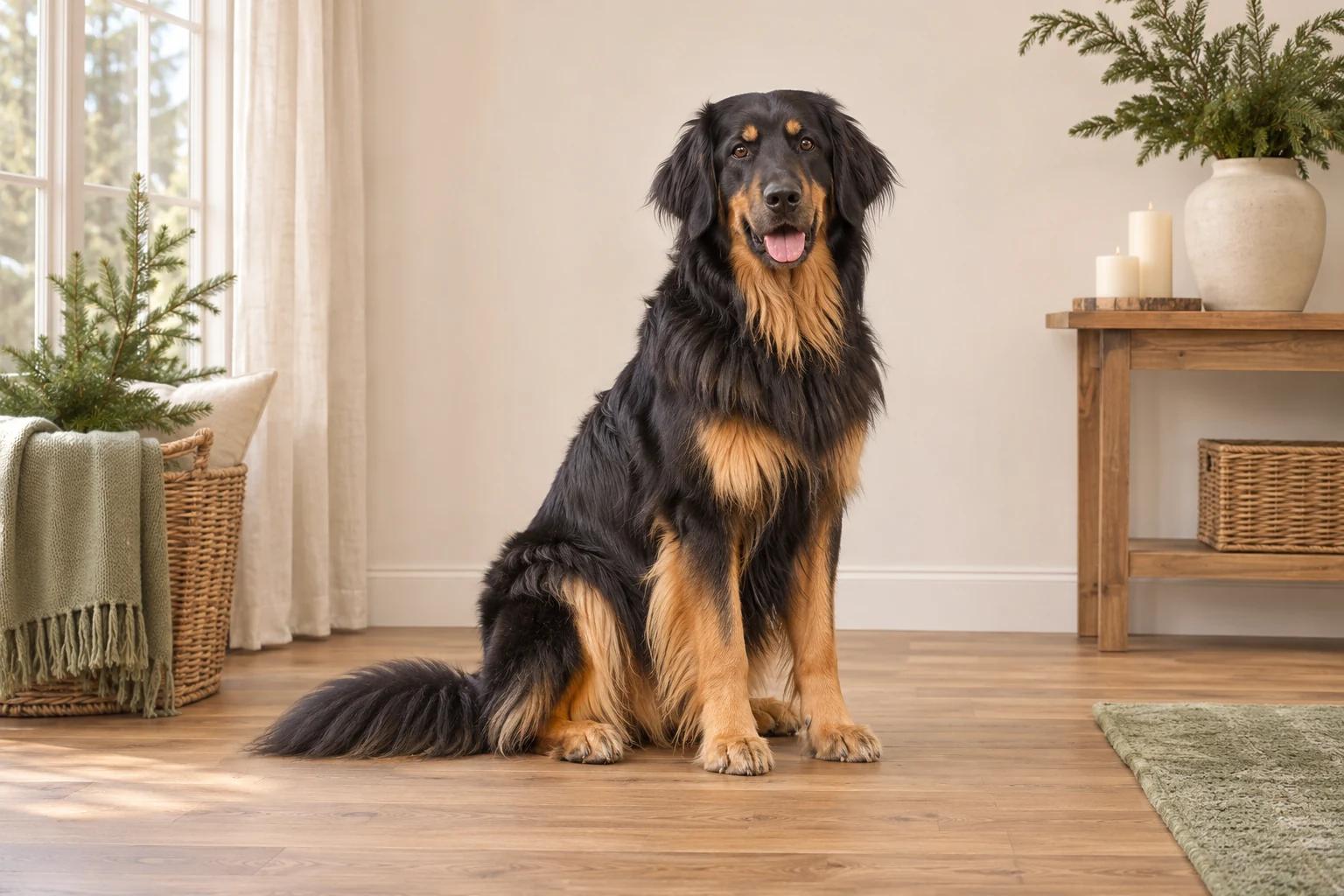
Hovawart training is most useful when it answers ordinary household questions: where to wait when the door opens, how to walk past a distraction, and what to do while people are busy. Start there rather than treating the breed's intelligence as a promise of effortless obedience. A strong dog benefits from understandable routines that everyone in the home can maintain.
The Hovawart profile gives the broader ownership picture. This guide focuses on practical teaching, with examples you can adapt alongside a qualified reward-based trainer who has met your dog.
Hovawart training begins with a clear household plan
The UKC Hovawart standard describes family attachment and protective tendencies. The Hovawart Club of North America stresses teaching appropriate responses rather than leaving a dog to make its own decisions about guarding. Those are reasons to organize everyday encounters, not to encourage suspicion or rehearse confrontations.
List the situations you want to make predictable. For example: putting on walking equipment, opening the front door, receiving a parcel, brushing the coat, and resting during dinner. Write one observable action beside each. “Be good” gives nobody a clear target; “stand beside the bench while the lead is attached” does.
Agree on the words and gestures you will use. If one person says “down” for lying down and another uses it for getting off furniture, the household has created an avoidable puzzle. Keep the vocabulary small and share it with visiting carers.
Build the entrance routine before inviting company
Choose a waiting place away from the door's swing and the visitor's path. Begin when nobody is arriving. Reward the dog for moving there, pause briefly, and release it before interest fades. You are introducing a useful location, not asking for a long performance immediately.
Next, rehearse the human parts separately. Touch the handle without opening the door. Take one step toward the entrance. Pick up a parcel from a table. If the dog leaves its place, make the next repetition easier instead of repeating the cue more loudly.
Use a suitable barrier or other planned separation when a real delivery arrives before the skill is dependable. Training does not remove the need to manage the situation today. Avoid putting a visitor in the position of testing an unfinished exercise.
For a planned guest, explain the routine in advance. Ask them to wait while you arrange the dog and to avoid reaching in or insisting on contact. A successful visit may involve the dog resting separately for part of the time; greeting everyone is not the only acceptable outcome.
Turn walking into a conversation
For how to train a Hovawart on lead, begin with the part you can control: your preparation and route. Have equipment ready, choose a manageable starting point, and decide what behavior you will reward. A few comfortable steps beside you are a clearer first goal than an entire perfect walk.
Practice changes of direction in an easy space. Use the same cue, turn without yanking, and reward the dog for moving with you. This gives you a rehearsed way to leave an awkward situation rather than trying to invent one beside a busy gate.
Keep notes about where walking becomes difficult. Is it the first minute outside, the narrow pavement, or the approach to another dog? That information helps a trainer design a specific plan. “Pulls everywhere” may feel accurate after a tiring outing, but a location and trigger are more actionable.
Do not make greetings with unfamiliar dogs the reward for every approach. You can choose a route with space to pass, reward attention, and keep moving. A Hovawart does not need to meet every dog on the street to have a worthwhile walk.
Socialization is about usable experience
Hovawart socialization should include learning that ordinary sights and people can be present without requiring action. Choose a distance where your dog can observe and still engage with you. Keep the first experience manageable instead of combining traffic, crowds, and close greetings in one ambitious outing.
A quiet bench at the edge of a location may provide a better learning opportunity than walking through its busiest center. You can watch a bicycle pass, reward a comfortable response, and leave while the outing is still going well.
For puppies, ask your veterinarian about appropriate exposure in light of vaccination status and local risks. For an adult with an uncertain background, begin with what the current caregiver knows and avoid assuming that age guarantees experience.
If the dog is repeatedly struggling, increase space and seek qualified help. Do not force contact to prove that a person or object is harmless. The goal is a manageable experience, not a photograph of the dog tolerating something it would rather avoid.
Give settling its own place in the week
Hovawart obedience is not only about movement. Prepare a comfortable resting place where the dog can remain near household life without occupying a doorway. Practice during an undemanding moment, not for the first time while you host dinner.
Reward a brief pause on the mat and then release the dog. Later, practice while you sit down, stand up, or place a cup on the table. Change one part of the scene at a time so you can see what is causing difficulty.
Keep a distinction between training and rest. The dog should also have opportunities to sleep without being watched for the next cue. A household that constantly asks for something may inadvertently make quiet time harder to establish.
If you work from home, plan your calls around the dog's existing routine rather than expecting an unfamiliar schedule to work immediately. Arrange an outing or care task beforehand, then use a predictable resting setup during the call.
Review progress by situation, not by labels
A useful weekly record has three columns: the skill, the setting, and the next small change. “Waited while I touched the door handle” tells you more than “obedient today.” It also makes it easier for different household members to practice the same stage.
Expect a skill learned in the kitchen to need practice elsewhere. Use easier versions when the surroundings change. If progress stalls, review reward timing, distractions, and whether you are asking for too much at once with your trainer.
The article on the Hovawart's name and development provides historical context, but ancestry does not supply a finished training plan. Use the breed quiz to reflect on the time and teaching you enjoy, then build the routine around your actual dog.
FAQ
Are Hovawarts easy to train?
Hovawarts can be responsive learners, but practical training still requires clear cues, suitable rewards, and consistent practice. Evaluate the individual dog's experience rather than expecting intelligence to replace teaching.
Should I train a Hovawart to guard the house?
For a companion Hovawart, prioritize controlled arrivals, calm observation, and moving away when asked rather than encouraging independent guarding. The Hovawart Club of North America emphasizes guiding behavior rather than leaving guarding decisions to the dog.
What should I teach first?
Begin Hovawart training with skills that simplify daily handling: responding to you, accepting walking equipment, moving to a resting place, and waiting away from the entrance. A qualified trainer can help order them for your household.
Does socialization mean greeting everyone?
Hovawart socialization does not mean compulsory greetings with everyone. It can mean watching people and activity from a comfortable distance, then returning attention to the handler. Forced greetings are not necessary for a useful socialization plan.
Sources behind this article
Article source checked: November 16, 2026. Source checked 2026-11-16
Keep reading

Affenpinscher Training: Build Useful Everyday Habits
Read article →