A Greyhound’s movement description is about reach as well as speed
The Greyhound’s FCI standard describes a low-reaching stride and hindlegs coming under the body. Those details explain the intended movement without assigning every dog a top speed.
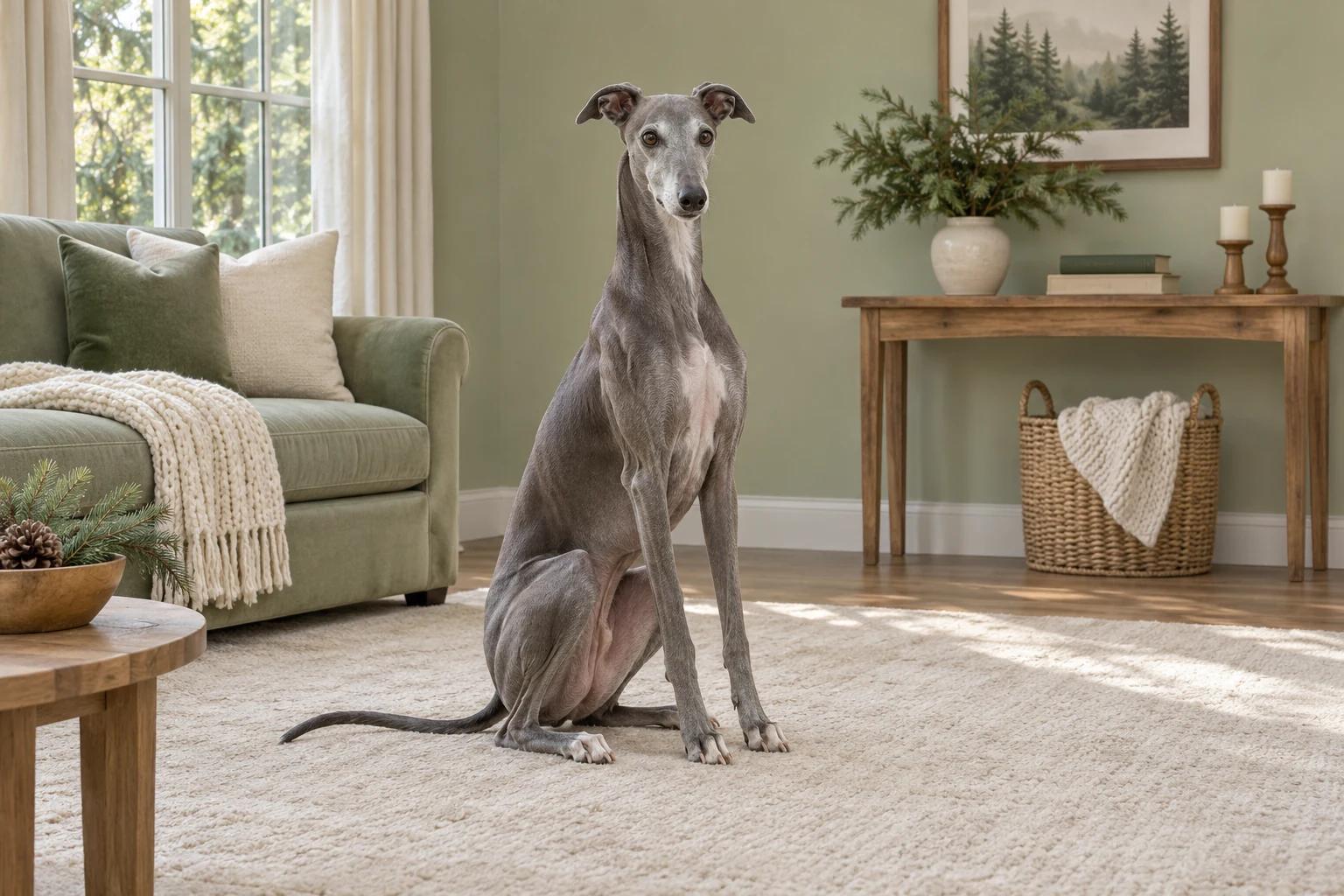
Look at how ground is covered
The Greyhound’s FCI movement section describes a free stride reaching low over the ground, with the hindlegs coming well beneath the body to provide propulsion. The emphasis is on coordinated reach and drive, not just the fact that the dog can move quickly.
That distinction makes a slow-motion view useful for learning about the description. A single dramatic photograph freezes one position; it cannot show the full sequence of a stride.
The outline includes power and flexibility
Elsewhere, the standard describes muscular hindquarters, a powerful slightly arched loin and supple limbs. These features belong to the same account of an athletic body. The long, lean silhouette should not be read as a request for weakness or an absence of muscle.
The standard is describing intended breed form. It does not measure the fitness, comfort or performance of the particular Greyhound in front of you.
Do not turn a description into a speed target
A breed-level movement account is not an instruction to test an individual dog at maximum speed. Age, prior experience and current condition require their own assessment before deciding on activity. If movement appears uncomfortable or changes, bring that observation to a veterinarian rather than trying to score it against a picture.
For everyday discussion, describe what you actually observed and in what setting. The useful lesson from the standard is coordinated ground coverage; it is not a guaranteed speed or exercise requirement.
Sources behind this article
Article source checked: October 20, 2026. Source checked 2026-10-20
Keep reading
Greyhound vs Whippet: Size, Routines, and Choosing
Read article →