Greyhound Exercise Needs: Walks, Running, and Rest
Plan Greyhound exercise with regular walks, suitable enclosed activity, thoughtful route choices, and rest rather than a speed or mileage target.
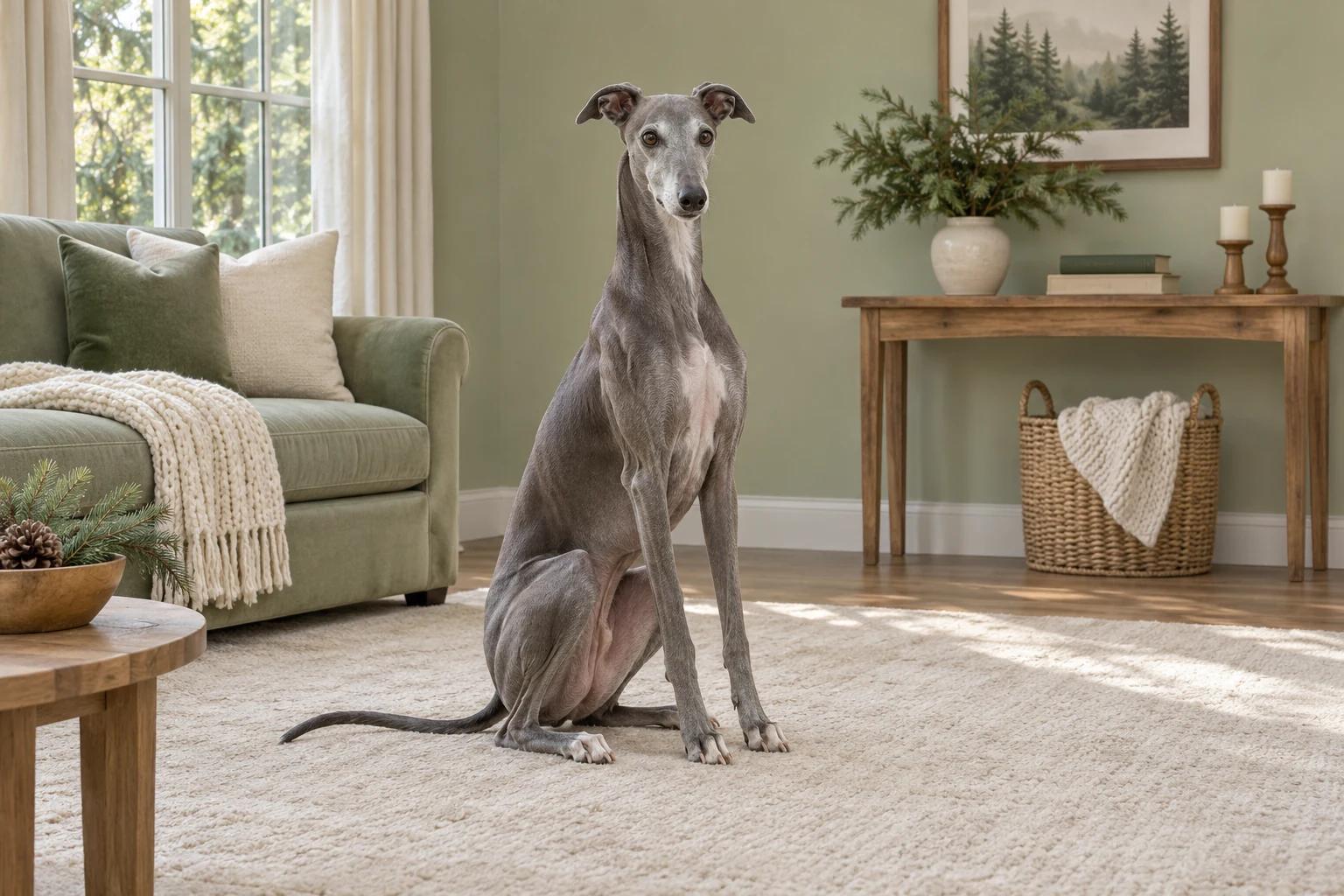
Greyhound exercise needs are easy to misread in opposite directions. The athletic outline may suggest a constant running partner, while a photograph of a sleeping dog may suggest almost no activity at all. Neither image is a daily plan. A useful routine combines outings, appropriate opportunities to move freely, mental engagement, and rest, with the details chosen for the individual dog.
Begin with what the Greyhound already knows. Ask the current caregiver about its usual routes, equipment, enclosed exercise arrangements, and response to unfamiliar places before introducing an ambitious schedule.
Greyhound exercise needs are about access and consistency
The Greyhound Club of America's overview emphasizes regular outdoor breaks and exercise, alongside the breed's periods of resting. VCA's Greyhound guidance also identifies daily activity and secure fencing for off-lead exercise. The shared practical message is to plan reliable opportunities, not assume that a quiet dog needs none.
Map the resources you actually have. Where is the ordinary walking route? Is there an enclosed area you are authorized to use? How would you reach it, and what happens when it is unavailable? Knowing those answers is more valuable than collecting impressive distances from other owners.
A secure garden may provide one option, while a suitably managed enclosed field may provide another. Neither should be assessed only by its size. Access arrangements, boundaries, ground conditions, and who else uses the space all matter.
How much exercise does a Greyhound need?
There is no single minute count that accounts for every Greyhound's age, current condition, previous activity, and experience. Nor does the breed's ability to run quickly tell you how long a particular dog should be active.
Discuss a suitable starting routine with the caregiver and your veterinarian. Be specific about what you are proposing: an easy walk, free movement in an enclosure, or a new organized activity. These are different demands even if your calendar gives them the same amount of time.
Keep observations simple. Note where you went, the conditions, what the dog chose to do, and anything that seemed different afterward. You are not scoring performance. You are building information that can guide sensible adjustments and help a professional understand a concern.
If willingness to move changes, or movement appears uncomfortable, seek veterinary advice. Do not increase activity in an attempt to prove that the dog is fit, and do not use a breed-level description as a reason to ignore what you see.
Build a Greyhound daily walk around the route
A familiar walking route can be useful because you know its narrow sections, busy entrances, and places to pause. Choose one with alternatives so you can turn away from a crowded corner rather than being committed to a single tight passage.
Before leaving, have the equipment ready in a clear area. Ask an experienced professional to check fit and explain handling if you are new to the dog's equipment. A rushed departure is not a good moment to discover that a fastening is unfamiliar.
Allow time for exploration as well as forward movement. A walk can include stops to investigate the surroundings without becoming aimless. You might choose a short familiar loop on a busy day and a different appropriate route when you have more time, rather than making every outing a distance challenge.
Give anyone sharing the walking duties useful details. Explain where you usually cross, which gates are unreliable, and how you return home. “Just take the dog around the block” may leave out the very information that makes your own outings manageable.
Assess an enclosure before using it
Do the boundary check before unclipping the lead. Look for an open access point, damage, gaps, or objects that could obstruct the dog's path. Confirm that other users will not unexpectedly enter while you are inside. A field described as enclosed is not automatically suitable for your Greyhound on that particular visit.
Keep the first visit focused on learning the setting. There is no need to manufacture a sprint or stage a dramatic chase for a photograph. Free movement should not become a test of the dog's maximum speed.
If other dogs will be present, discuss the arrangement with someone who knows the participants. An open invitation to a busy play group is not the same as a carefully planned outing. Ask about the individual dog's experience and choose an arrangement you can manage rather than assuming shared space will work itself out.
Do not transfer confidence from an enclosure to an unfenced location. A successful response to you in one setting does not remove the need for secure boundaries elsewhere.
Greyhound activity level includes what happens afterward
Prepare a comfortable resting place that is not in the middle of household traffic. Returning from an outing should not immediately require the dog to negotiate a cluster of visitors, bags, or excited activity around its bed.
Keep quiet engagement available too. A brief familiar cue practice or an easy search for a toy can add variety without turning the day into continuous physical exertion. Choose something the dog understands, and stop while the interaction remains uncomplicated.
A routine is easier to sustain when everyone knows its parts. One person may handle the morning outing while another covers the evening. Agree on the handoff and leave a note if plans change, rather than assuming the next caregiver can tell from the dog's appearance what already happened.
The purpose of a schedule is reliability, not rigidity. Conditions, appointments, and the dog's needs can require changes. Keep an alternative plan ready instead of forcing the original activity to happen regardless.
Separate everyday activity from athletic ambitions
If you want to explore a sport, ask an experienced organizer about an introductory pathway and consult your veterinarian about readiness. Ordinary walks, recreational running, and organized performance events are not interchangeable.
The Greyhound profile offers wider ownership context. The article on Greyhound stride and propulsion discusses movement descriptions rather than training targets. If you are still deciding whether this routine fits your life, use the breed quiz to review your preferences.
FAQ
Does a Greyhound need to run at top speed every day?
A Greyhound's ability to sprint is not a reason to make maximum speed a daily exercise target. Plan suitable activity for the individual dog with its caregiver and veterinarian, including appropriate enclosed opportunities. The ability to sprint is not an instruction to demand a performance.
Can I replace every outing with garden time?
Garden access alone does not establish that a Greyhound's overall activity routine is appropriate. Consider movement, exploration, company, and rest together. Discuss your available space and schedule when arranging the dog's activity plan.
What should I do when my usual exercise space is closed?
If a Greyhound's usual exercise space is closed, use a suitable preplanned alternative such as a familiar lead-walking route. Do not substitute an unsecured area simply because it is empty or because the dog usually responds to its name.
Sources behind this article
Article source checked: November 16, 2026. Source checked 2026-11-16
Keep reading

Afghan Hound Exercise Needs: Build a Workable Active Day
Read article →