Greyhound vs Whippet: Size, Routines, and Choosing
Compare Greyhound and Whippet size, household space, activity planning, and individual experience without treating either as a stereotype.
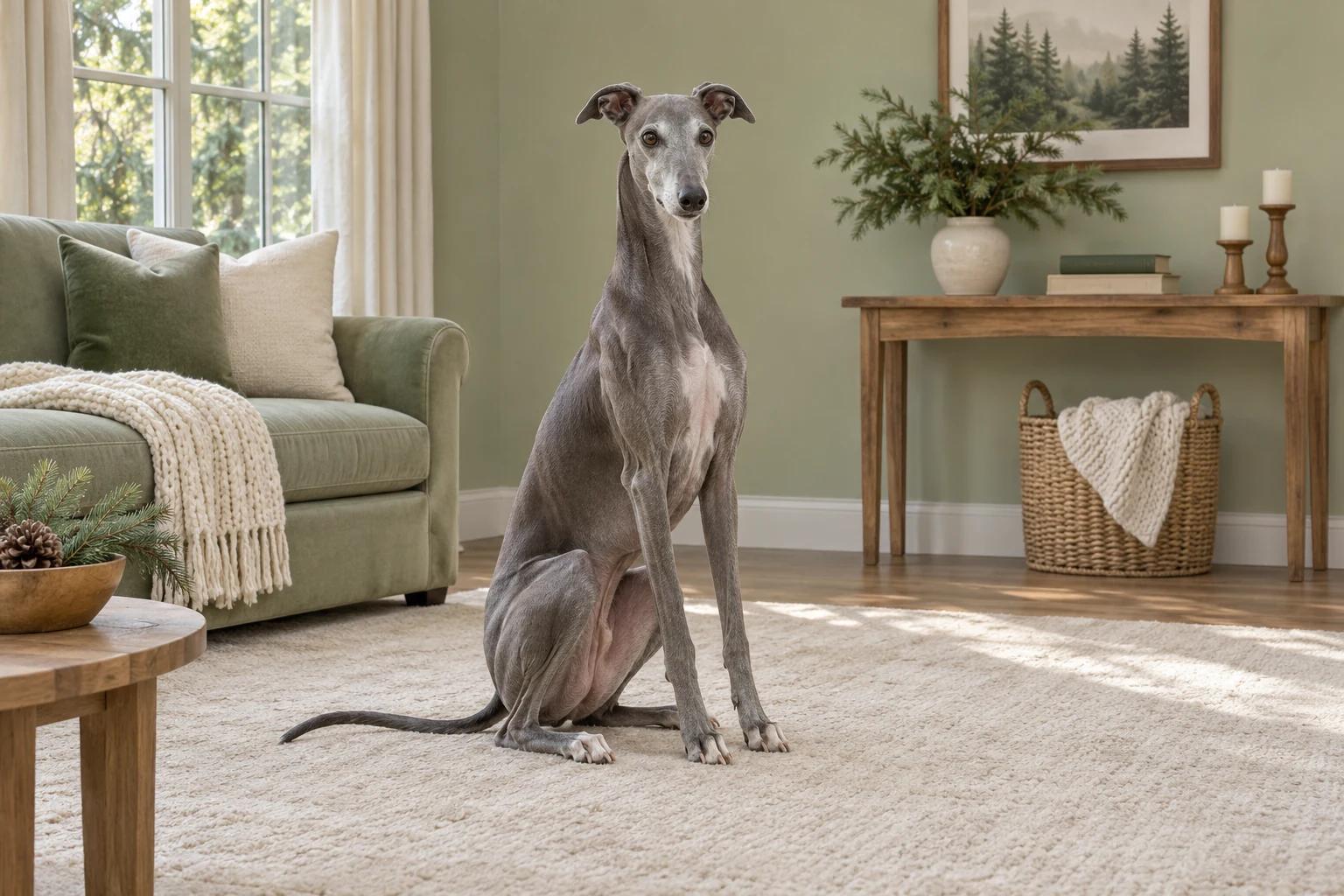
Greyhound vs Whippet comparisons often begin with a photograph: two lean dogs with long legs and short coats. The resemblance is real, but the choice should not end with deciding how much dog you want. Size changes practical arrangements, while age, experience, and individual behavior influence the routine you will share. Start with the space and time you have, then meet dogs with those details in mind.
Greyhound vs Whippet: The size difference is substantial
The clearest difference between Greyhound and Whippet ownership is physical scale. The Greyhound profile lists males at 28–30 inches and females at 27–28 inches, with weight references of 65–70 and 60–65 pounds respectively. The Whippet profile lists males at 19–22 inches and females at 18–21 inches, with an overall weight range of 20–40 pounds.
Those ranges are reference points, not measurements of every dog you might meet. Still, they explain why a bed, vehicle arrangement, or narrow waiting area that works for a Whippet may not suit a Greyhound. Compare actual usable space rather than judging either dog from a curled-up photograph.
Try a simple floor plan. Mark where the bed would go and where people walk through the room. Allow for the dog stretching out, not just standing. Then consider your car, the place you attach the lead, and how someone else would manage the dog if you were unavailable.
Similar outlines do not create identical personalities
The AKC Greyhound introduction highlights an independent companion. Its Whippet introduction pairs a gentle disposition with a strong interest in pursuit. These are broad descriptions, not a reliable way to predict which individual will seek more contact or settle sooner in your home.
When weighing Whippet vs Greyhound companions, ask what closeness looks like for the dogs you are considering. Does the dog rest nearby, frequently invite interaction, or prefer a little space? How does it behave when an activity ends? A dog can be affectionate without following every movement you make.
Watch the less theatrical parts of a meeting. It is easy to remember a warm greeting and overlook the next half hour. If appropriate, spend time sitting and talking with the caregiver while the dog has the option to disengage. Ask whether what you observed is typical or unusual.
Compare the individual life stage, not only the breed
A young Whippet and an adult Greyhound may differ for reasons that have little to do with their breed labels. Likewise, a Greyhound puppy should not be selected on the assumption that every description of a resting adult applies immediately.
Ask about the dog's previous living arrangement. Which household routines are already familiar? Has it used your kind of entrance or traveled in a similar vehicle? What equipment does it know? These questions help identify the learning involved in the transition without assuming a background from appearance.
If the Greyhound has racing experience, ask for its own history rather than treating all former racers as identical. If the Whippet comes from a home, ask what that home was like rather than assuming all domestic experience transfers automatically. A quiet rural household and a busy shared building present different situations.
Write down what is known, what has been observed only briefly, and what remains uncertain. That creates a better conversation than filling gaps with a stereotype.
Plan outings before deciding which size feels easier
Both candidates need an activity plan. Do not turn the smaller Whippet into a low-effort choice merely because it fits more easily into your car, or treat the Greyhound's running outline as a demand for endurance exercise.
Describe the outings you can repeat on ordinary days. Include where you would walk, how you would reach suitable enclosed spaces, and who would cover a change in your work schedule. Ask the caregiver how the dog has handled comparable settings. Discuss physical suitability with a veterinarian when planning a new activity.
For either dog, use secure arrangements rather than relying on a quiet indoor manner to predict outdoor behavior. Check equipment fit with someone experienced and do not make an unfamiliar open area the first test of a recall cue.
Your choice may become clearer when you compare these logistics honestly. The best dog for an imagined weekend is not necessarily the best match for the weekdays you actually live.
Short coats leave other care questions to answer
Greyhounds and Whippets both have short, smooth coats in their profiles. That can simplify your initial comparison, but it does not settle the complete care commitment. Ask about brushing, nail handling, familiar resting arrangements, and how the dog responds to routine care.
A helpful demonstration includes the unglamorous details: where the tools are stored, how the dog is invited into position, and what happens if it needs a break. Consider whether you can reproduce that routine in your own space.
Do not buy every piece of equipment before you know the individual dog. A caregiver may already have a useful recommendation about dimensions or fit. Bring measurements and ask which items genuinely need to be ready on arrival and which can wait until you understand the dog's preferences.
Make a Greyhound or Whippet decision with three priorities
Choose three priorities that matter most to you. They might be manageable travel, a particular style of companionship, and support through the first months. Compare each candidate against those priorities using observations and specific answers, not a tally of attractive breed adjectives.
Keep one list for practical constraints and another for preferences. Limited vehicle space is a constraint you must solve. Preferring a certain coat color is a preference that should not outweigh a well-supported placement discussion.
Use the breed quiz to organize your broader expectations. If the Greyhound's athletic outline interests you, read the separate article on reach and propulsion. It explains movement without turning speed into an ownership requirement.
FAQ
Is a Whippet a miniature Greyhound?
A Whippet is a separate breed, not a size variety of Greyhound. The similar outline can be useful for an initial visual comparison, but size, individual history, and the care arrangement should be considered separately when choosing a companion.
Which fits a smaller home better?
A Whippet requires less physical space, but home suitability also depends on access, daily outings, rest, and the individual dog. Measure where the dog will sleep and travel, then discuss your actual routine with its caregiver rather than relying on floor area alone.
Should I choose whichever dog seems calmer at the visit?
One calm meeting with a Greyhound or Whippet is useful information, not a complete temperament assessment. Ask whether the behavior is typical, compare ordinary routines, and consider the dog's age and experience. A placement decision benefits from more than a single greeting or quiet afternoon.
Sources behind this article
Article source checked: November 16, 2026. Source checked 2026-11-16
Keep reading

Affenpinscher vs Brussels Griffon: Everyday Differences
Read article →