Great Dane exercise needs: a workable daily plan
Build a Great Dane activity routine around the individual dog, reliable walks, learning, rest and practical backup plans.
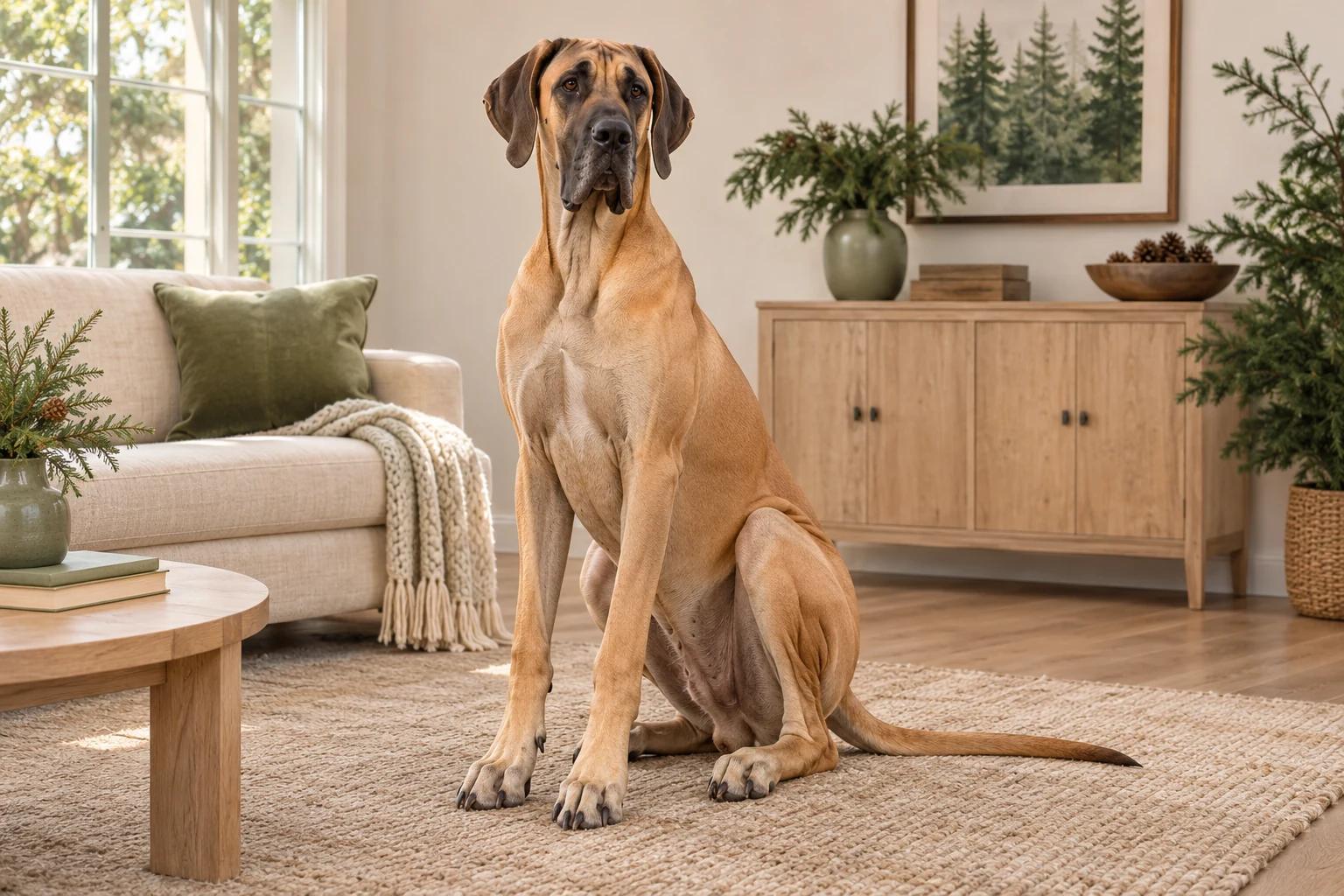
Great Dane exercise needs call for a reliable everyday plan rather than a heroic weekend effort. Walks, suitable play, learning and rest all need a place in the schedule. The breed's size does not make it a permanent sofa ornament, but it also does not tell you which distance or sport is appropriate for your individual dog.
Start with the dog's age, current routine and veterinary guidance. Then work out who will provide the activity, where it will happen and what you will do when the usual plan is unavailable.
Great Dane exercise needs: build a plan, not a quota
VCA's breed overview points to regular walks and light play. Use that as broad context, not a prescription for a particular number of minutes. Ask your veterinarian about suitable activity for the dog in front of you, especially when planning for a growing puppy, an older dog or a dog whose circumstances have changed.
The Great Dane profile also includes mental engagement as part of ownership. Your plan should therefore identify more than a walking distance. Include time to interact, practice useful skills and settle afterward.
A useful schedule names the person responsible for each part. “Someone takes the dog out” is not a plan when everyone assumes someone else is doing it. Write down the weekday arrangement first, then add weekend options.
How much exercise does a Great Dane need?
There is no single clock setting that answers this for every Dane. Describe your proposed routine to your veterinarian rather than asking only for a daily total. A slow outing with frequent pauses, a brisk uninterrupted walk and repeated energetic play are different activities even if their durations match.
Bring concrete information: the surfaces, hills, likely weather, pace and available breaks. Mention any activities you hope to introduce. Ask what would make the plan unsuitable and when to review it as the dog grows or its situation changes.
Avoid a generic age-based mileage chart. A birthday is not individual clearance for running, jumping or endurance work. Nor should a dog be pushed to finish a route simply because an online schedule says it is the correct length.
If you notice a new difficulty or change in willingness to move, consult your veterinarian rather than automatically adding exercise to correct supposed laziness or restlessness.
Design a Great Dane daily walk you can repeat
Begin with a route that offers choices. A loop with no convenient exit is less flexible than an outing where you can shorten the trip. Note where you can step aside, turn back or avoid an unexpectedly busy section.
Think about the handler as well as the dog. The AKC highlights the commitment associated with a Dane's strength and scale. Whoever takes the lead needs to be comfortable with this individual and the surroundings. A last-minute substitute who has never walked the dog is not an ideal contingency plan.
Prepare what you need before leaving so the start does not become chaotic. Check equipment fit and condition, take the supplies your outing requires, and know the route. If walking manners are difficult, seek reward-based training help rather than hoping a longer walk will solve the problem.
For a shared household, agree how people communicate a changed route or an early return. A brief note prevents the next caregiver from assuming an outing happened exactly as planned.
Separate movement from mental engagement
Great Dane activity level is not usefully captured by how tired you can make the dog. Keep a separate column for learning or quiet interaction so those activities do not disappear behind a step count.
For example, pair an appropriate outing with a short rehearsal of a useful cue, such as moving to a designated resting place while a person handles a household task. Ask your trainer to help choose activities that suit your dog's current abilities.
Keep the learning goal small. If you are practicing a turn with you, you do not also need a difficult stay, a novel surface and a busy group of spectators. Record one clear outcome rather than judging the whole day as successful or unsuccessful.
Quiet interaction is not a substitute for all movement, just as movement is not a substitute for every other need. The point of separate columns is to make omissions visible before they become routine.
Plan the disrupted day in advance
Weather, work and transport problems can make a normal outing impractical. Decide whom you can call and which alternative arrangements you can use. Discuss weather-related activity questions with your veterinarian rather than inventing temperature thresholds from a generic breed description.
If you use a walker, explain the actual dog's routines and handling skills. Ask whether the service can accommodate a giant dog, how walks are organized, and what happens when conditions change. Do not assume a service advertised for all breeds has assessed your individual arrangement.
Indoor alternatives should be selected for the real space and dog, not copied from a video showing a different home. Avoid turning a cramped room into an improvised running course. Ask a trainer about manageable low-key activities when outdoor options are limited.
Our home-space planning guide addresses physical logistics separately. Here, the key question is whether your daily schedule remains workable when the preferred outing cannot happen.
Review the week without chasing a number
At the end of a week, compare the planned routine with what actually occurred. Which outing repeatedly gets missed? Which caregiver needs more support? Which route creates avoidable handling difficulties? These are practical problems you can solve without declaring the whole breed too demanding.
Keep observations factual. Write “turned back at the busy junction” rather than “bad walk,” and “new reluctance on the usual route” rather than guessing why. The first description helps you plan training; the second may be important to discuss with your veterinarian.
Do not measure success by exhaustion. A sustainable schedule is one that fits the individual dog's needs and can be carried out consistently by the household. If you are still choosing a breed, use the breed quiz to compare your genuine weekday availability with your preferences, not an idealized holiday version of your life.
FAQ
Is a garden enough exercise for a Great Dane?
A garden alone does not provide an organized routine of outings, interaction and learning. Plan who will spend time with the dog and what activities are appropriate, rather than assuming access to outdoor space fills every part of the day.
Can a Great Dane become my running partner?
Discuss the specific dog and proposed activity with your veterinarian before making that plan. Do not use age alone or a generic breed exercise chart as clearance for running, and do not assume that willingness to follow you establishes suitability.
Should I compensate for a missed walk with a much longer one?
Do not automatically turn the next outing into a catch-up challenge. Use the alternative plan you have discussed for your dog, and seek veterinary guidance about activity changes rather than treating exercise as a debt that must be repaid at once.
Sources behind this article
Article source checked: November 15, 2026. Source checked 2026-11-15
Keep reading

Afghan Hound Exercise Needs: Build a Workable Active Day
Read article →