Golden Retriever Training: Carry, Return, and Settle
Build Golden Retriever training around clear handovers, polite greetings, and useful practice without turning every lesson into fetch.
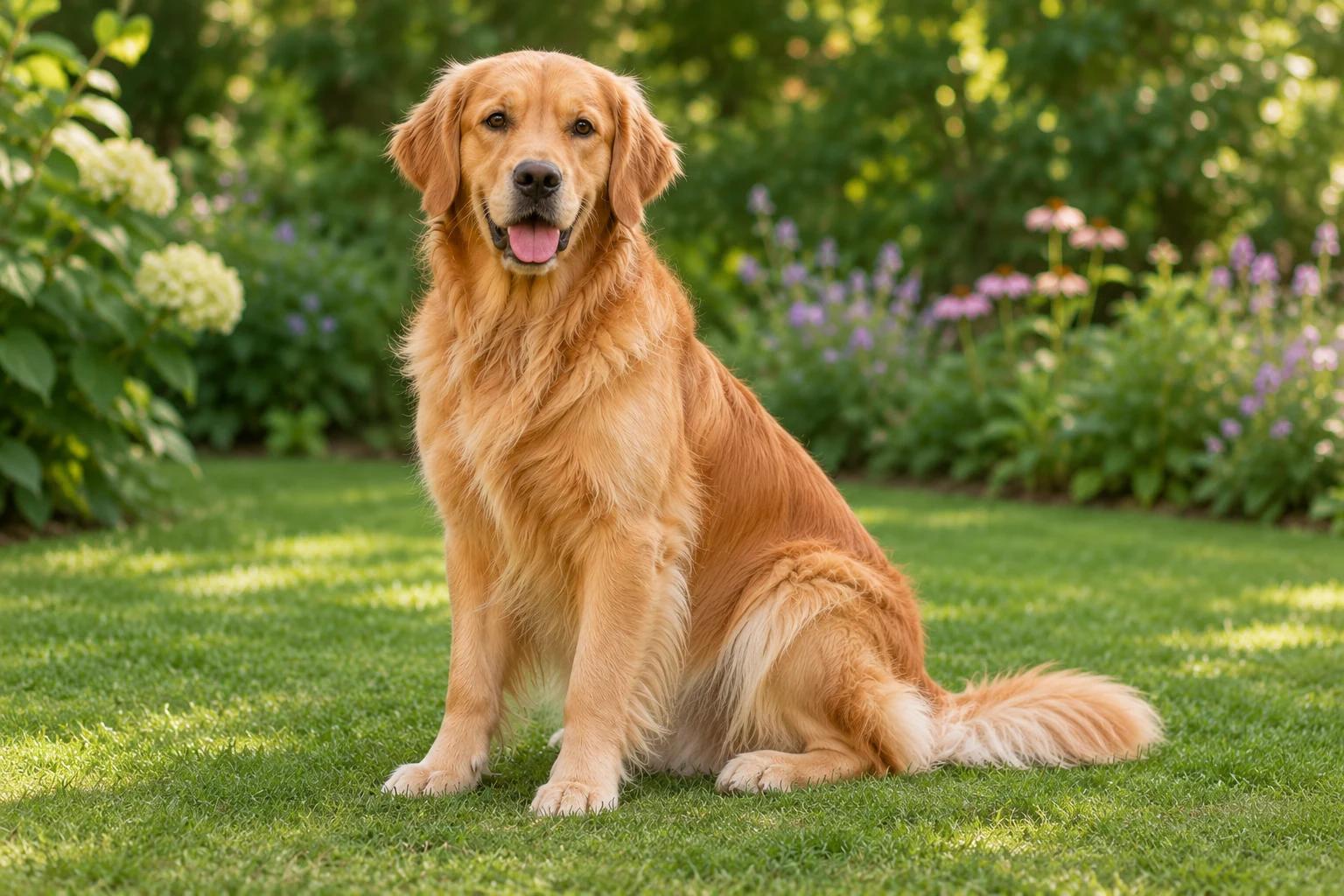
Golden Retriever training becomes more useful when enthusiasm has a clear destination. Instead of asking only whether your dog can sit, ask whether they can bring a toy toward you, release it willingly, greet someone without launching forward, and finish a game without demanding another throw. Those small transitions are where a lively lesson becomes everyday cooperation.
VCA describes the Golden as a people-oriented retriever responsive to reward-based teaching. That is a useful starting point, not a finished education. The Golden Retriever profile gives broader context; this guide concentrates on teaching specific skills rather than arranging the whole working day.
Golden Retriever training starts with a clear finish
Choose one small outcome before getting out the toys. “Play nicely” is difficult to measure. “Bring the toy within my reach” gives you something visible to reward. You may eventually want a tidy delivery into your hand, but that is not the only worthwhile version of retrieving.
Draw a simple map of a game: invitation, pickup, return, handover, pause. Circle the part that currently breaks down. A dog who eagerly picks up a toy but races past you does not need a more exciting throw. You need to make the return and handover understandable at a much easier distance.
Keep the early setup modest. Use an uncluttered room with secure footing and a suitable toy. Put away laundry and other tempting objects before starting. That way you are teaching with equipment you can offer again, not trying to recover something precious during a hurried confrontation.
Make giving back part of the reward
The AKC's drop-it guidance recommends teaching a trade with a relatively unexciting toy and a worthwhile reward. Mark and reward the release, then offer the appropriate toy again. Add the verbal cue once the release is becoming predictable. Avoid chasing the dog or prying open the mouth; seek professional help first if objects are guarded. Read the AKC explanation.
Your training notes can separate three questions: Did the dog return? Did the dog release? Did the dog remain nearby afterward? These are different achievements. If the release is easy but the return is not, work closer together rather than rehearsing long throws and hoping the handover improves.
For example, you might start with the toy already beside you. Reward a willing release there, then later invite a return from a step away. A short, successful exchange can be the entire lesson. There is no requirement to stretch it into a workout or keep throwing until the dog loses interest.
Never use treasured or dangerous household items as training props. If your dog has swallowed something concerning, contact your veterinarian rather than testing a cue. Practice is preparation, not an emergency guarantee.
Teach greetings without making people the obstacle
Golden Retriever obedience should include what happens before a friendly interaction. Decide whether you want four feet on the floor, a brief sit, or a pause beside you. Pick one initial criterion so different household members are not rewarding contradictory versions of the same greeting.
Recruit a familiar adult for an easy rehearsal. Agree beforehand that the person will wait while you arrange the dog and approach only when the setup is manageable. Your job is to notice the desired moment, not hold a long conversation while the dog improvises.
Record the actual conditions. “Managed greeting with one familiar person in the hallway” is more useful than “knows greetings.” A busy doorway, someone carrying bags, and a visitor speaking excitedly are separate challenges. Change one feature at a time and retain space to step away.
If the dog cannot participate without repeated lunging, simplify the scene. A barrier can separate arrival logistics from the later introduction. Visitors do not need to become unpaid trainers, and you do not need to prove progress during every delivery.
Socialization includes watching without joining
Golden Retriever socialization is not a contest to collect the most greetings. Include opportunities to notice ordinary surroundings without interacting with everyone. A calm viewing point may be a more useful classroom than the center of a busy gathering.
For a puppy, discuss suitable outings and disease-exposure precautions with your veterinarian. Then choose experiences with an easy exit. You might observe a quiet street from a comfortable distance or let the dog hear household sounds at a manageable level. Do not insist on closer contact when the dog wants space.
Write down what the dog actually did: looked and returned attention, stayed interested in the surroundings, or needed to leave. Those observations help you choose the next version. They are better teaching information than labeling a whole outing good or bad.
Build an ending that is not a punishment
If every pause means someone abruptly takes the toy and disappears, the end of play can become confusing. Choose a consistent finish cue and put equipment away calmly. Follow the game with an ordinary quiet activity rather than another round of excitement.
Consider where the dog will settle. A mat beside your chair gives you an identifiable place to reward quiet behavior. Initially, you might reward simply approaching or remaining on that spot briefly. Do not combine a new mat lesson with your longest meeting and expect it to work unaided.
When asking how to train a Golden Retriever, think in contrasts: moving and pausing, carrying and releasing, greeting and observing. Teaching both sides makes the cues meaningful. The goal is not a dog who performs constantly, but one who can understand what comes next.
For broader household arrangements, read giving a Golden Retriever a place in your day. The breed quiz can help identify which everyday demands you want to explore before choosing a dog.
FAQ
Are Golden Retrievers automatically easy to train?
A Golden Retriever may enjoy learning with people, but that does not supply household manners. Clear rewards, suitable practice conditions, and consistent cues still matter. Judge progress by the specific skill and setting rather than the breed's reputation.
Should all Golden Retriever training use a ball?
No. A ball may be useful for some lessons, but you can also use suitable food rewards, another toy, or access to an appropriate activity. Choose what helps the dog understand the task without making the session harder to manage.
What if my Golden brings toys back but will not release them?
Treat return and release as separate skills. Practice a low-pressure trade with an appropriate toy rather than throwing farther or chasing. If the dog freezes, guards, or threatens over objects, stop the exercise and seek qualified professional help.
Sources behind this article
Article source checked: November 15, 2026. Source checked 2026-11-15
Keep reading

Affenpinscher Training: Build Useful Everyday Habits
Read article →