Glen of imaal terrier training: clear, useful lessons
Teach useful Glen of Imaal Terrier skills with manageable recalls, exchanges, handling practice, and everyday social learning.
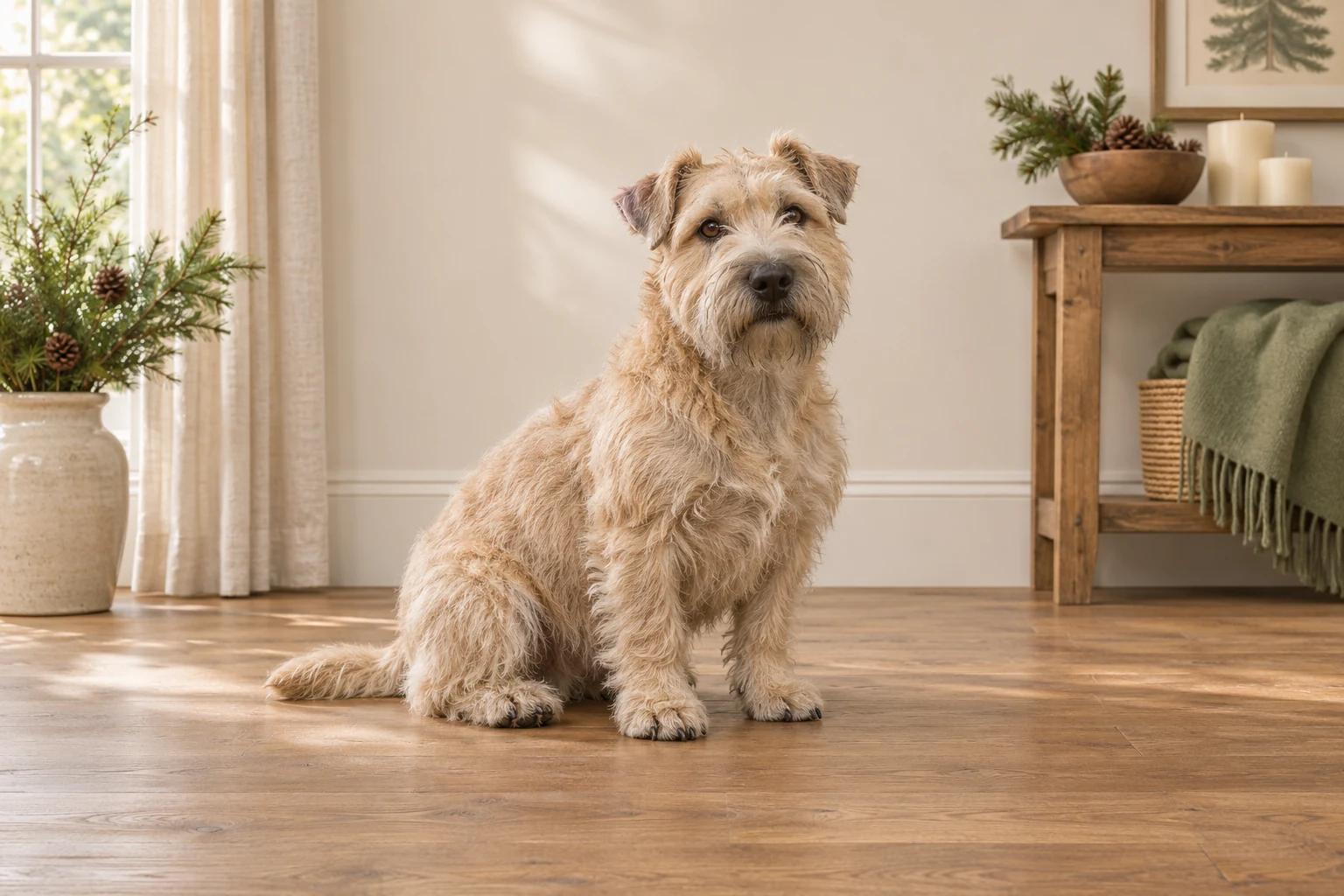
Glen of imaal terrier training works best when the lesson is clearer than the competing attraction. A smell in the verge, an object under a chair, or the chance to investigate the garden can be more compelling than a vague instruction. Your job is to make useful responses understandable and worthwhile, then practice them in settings the dog can manage.
The UKC standard describes intelligence and quick learning. That does not mean a Glen arrives knowing your household rules, or that a response learned indoors will immediately transfer to an interesting walk.
Glen of imaal terrier training begins with observation
Before choosing a list of cues, watch a few ordinary routines. Where does your dog naturally pause? Which objects attract attention? What happens when you pick up the leash? These observations tell you where a lesson could fit and where the environment is currently doing most of the teaching.
Write one small goal for each troublesome situation. Instead of “stop being stubborn in the garden,” try “turn toward me when I call from nearby in a quiet part of the garden.” You can practice that outcome, recognize it, and reward it.
Use the Glen of Imaal Terrier profile for the wider breed context. The AKC introduction pairs a comparatively less excitable manner with terrier spirit. Neither description should become an excuse to skip teaching or to label every unsuccessful attempt as defiance.
Make returning to you worth practicing
Start with easy returns over a short distance in a secure area. Use a consistent cue, acknowledge the turn toward you, and reward close enough that the dog actually completes the return. Choose a moment when the dog is not already absorbed in something much harder to leave.
One useful household exercise is a brief return between familiar people in an uncluttered room. Each person should know whose turn it is and avoid calling over the other. Keep the distance modest and the game orderly rather than encouraging frantic races across slippery floors.
Later, practice in another secure setting before adding more distractions. A recall is not proven because it worked once beside the sofa. Outdoors, appropriate equipment and boundaries remain important while the skill develops. Do not use wildlife or an unfamiliar dog as the first serious test.
Sometimes release the dog back to an acceptable activity after the reward. This helps you avoid making every successful return the immediate end of all interest. Keep control of when that release is suitable rather than promising access to whatever attracted the dog.
Teach exchanges with ordinary, permitted objects
A Glen investigating something under furniture can create an awkward scene if the only response is a chase. Prepare a trade routine with an appropriate toy before there is a real conflict. Offer the exchange calmly, reward releasing the object, and avoid turning your approach into a contest over possession.
Manage the room as well as the lesson. Put laundry, packaging, and other tempting items out of reach. Training should not depend on repeatedly allowing access to something you do not want the dog to have.
If the dog stiffens, growls, or guards objects, stop experimenting and seek qualified help. Do not reach in to prove ownership. Dangerous items or suspected swallowing call for prompt veterinary guidance, not an improvised training demonstration.
For Glen of Imaal Terrier obedience, preventing a rehearsed problem and teaching a useful alternative are complementary tasks. You do not have to choose one and abandon the other.
Work at a comfortable height
A short-legged dog changes the mechanics of your reward delivery. If you repeatedly bend over from above or hold food too high, your body position may become part of the problem. Find a stable posture and deliver rewards where the requested behavior belongs.
For a floor station, place the reward at the station rather than drawing the dog away. For walking beside you, ask a trainer to help with delivery that does not require constant jumping or crowding your feet. The goal is clear information, not an athletic maneuver to reach your hand.
Practice handling separately from grooming chores. Briefly approaching with a brush and rewarding a comfortable response can be a distinct lesson; it need not end in a full coat session. If touch seems uncomfortable or resistance changes suddenly, speak with your veterinarian.
Social learning without a crowded itinerary
Glen of imaal terrier socialization should develop familiarity with everyday life, not collect as many greetings as possible. Plan experiences with enough space to observe and a straightforward way to leave. A quiet view of a passing bicycle may be a better starting point than standing beside a busy cycle lane.
Tell helpers what you want them to do. A visitor can sit and ignore the dog while you reward comfortable behavior nearby. Another handler can keep a dog at a distance rather than steering directly into a greeting. Clear human instructions prevent accidental escalation of the exercise.
For a puppy, coordinate outings with veterinary advice about health precautions. For an adult, ask what experiences are already familiar rather than assuming every introduction starts from zero.
Keep the notebook short enough to use
After a session, write the cue, place, distraction, and result. “Returned in kitchen, door closed” is enough. The next lesson can change one feature, such as opening an internal door, without simultaneously increasing distance and introducing visitors.
If progress stalls, check whether the task became harder without you noticing. A new noise, different surface, or exciting smell can change the lesson. Return to an easier version and ask a reward-based trainer for help if you cannot identify a workable next step.
Our Glen puppy coat article covers a different part of development. Appearance should not determine training expectations. If you are still considering the breed, the breed quiz can help organize the everyday commitments you want to compare.
FAQ
How to train a Glen of Imaal Terrier to come back?
Begin with short, easy returns in a secure setting, reward completion, and increase difficulty gradually. Practice before the dog is deeply distracted. Keep using appropriate boundaries and equipment rather than treating early success as proof of reliable off-leash recall.
Are Glens too independent for obedience?
Independence is not a reason to abandon teaching. Make the requested response clear and rewarding, and choose manageable practice settings. Judge progress on specific skills rather than comparing the dog's attitude with another breed.
Should I repeat a cue until my Glen responds?
Repeated words can obscure what you are trying to teach. If a response is not happening, simplify the task and examine the distraction or your own signals. A trainer can help identify why a particular exercise is unclear.
What is a useful first-week training goal?
Choose a practical skill connected to your home, such as coming a short distance, waiting at a station, or accepting equipment calmly. Keep the goal small enough to practice successfully while the dog is learning its new routine.
Sources behind this article
Article source checked: November 15, 2026. Source checked 2026-11-15
Keep reading

Affenpinscher Training: Build Useful Everyday Habits
Read article →