German wirehaired pointer training: skills between outings
Teach your German Wirehaired Pointer useful transitions, settling, care handling, and clear activity cues alongside its outdoor work.
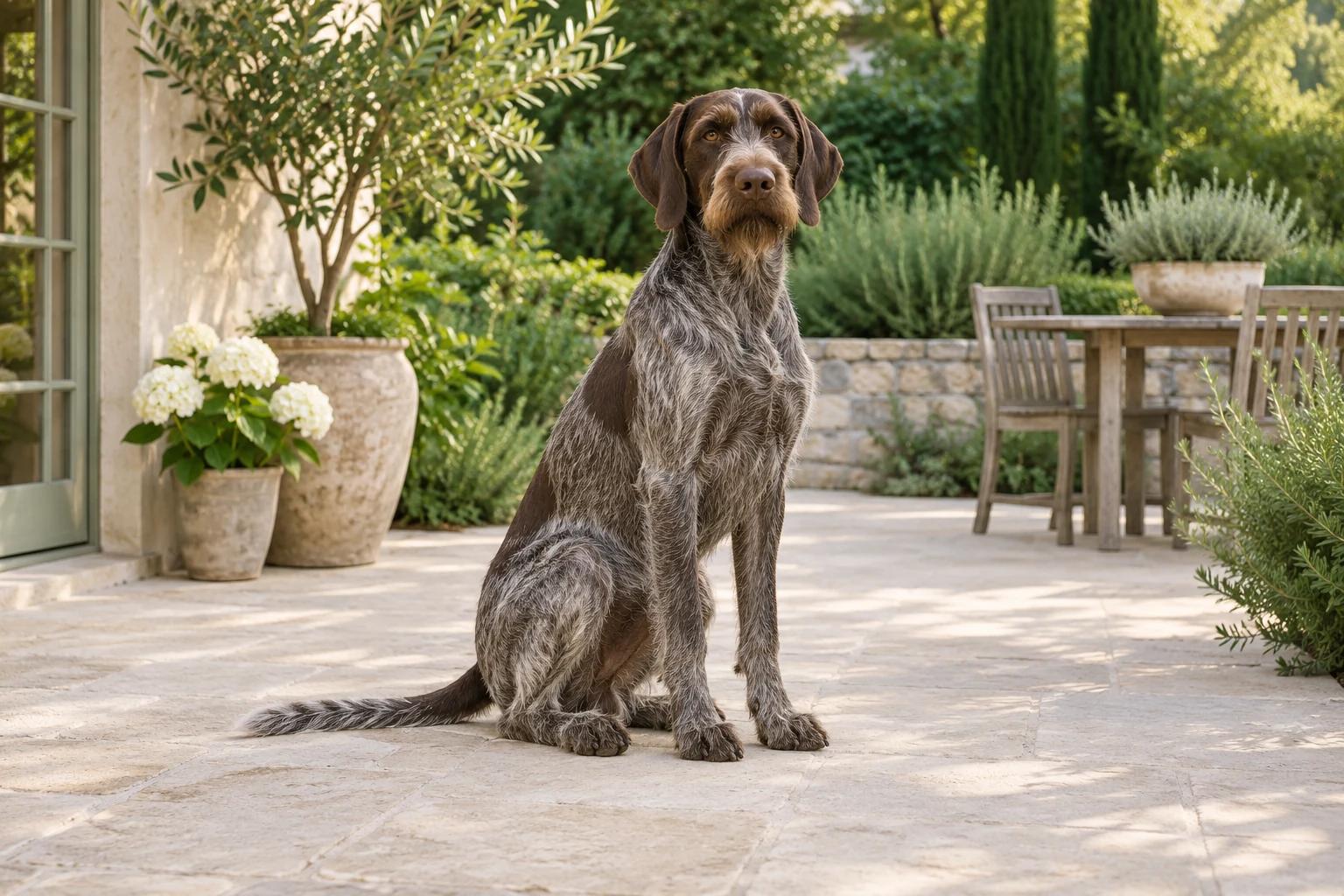
Explore the
German Wirehaired Pointer
Background, care, and everyday considerations.
View breed profile →German wirehaired pointer training should include the quiet parts of an active life: waiting while equipment is organized, accepting a coat check, and settling when the shared activity ends. Those skills are easy to overlook when the exciting goals involve retrieving, field work, or exploring outdoors together.
The German Wirehaired Pointer Club of America describes a capable, energetic dog with an independent streak and a need for meaningful engagement. That is a reason to teach clearly, not a reason to treat every disagreement as a contest of wills.
German wirehaired pointer training: teach the transitions
Make a list of moments when your household changes activities. Perhaps the dog comes in from the garden while you remove boots, waits beside the car while equipment is packed, or needs to stand for a check after an outing. Each transition contains a trainable action.
For German Wirehaired Pointer obedience, choose an observable goal. “Be sensible after a walk” is too vague. “Stand on the entry mat while I remove the walking equipment” gives you a location, an action, and an endpoint. Ask your trainer how to introduce that task in an easy setting before trying it with a muddy, excited dog.
Separate the action from its duration
Arriving at a station, remaining there, and accepting handling are not one skill. If the dog can step onto the mat but leaves when you reach for its coat, work out which part needs teaching. Repeating the arrival cue will not explain the handling component.
Change one feature of the exercise at a time. You might practice while holding a towel without using it, or practice a brief touch without bringing out the whole care kit. These are examples to discuss with your trainer, not a demand to progress through a fixed schedule regardless of the dog's response.
Settling is not the same as being held still
VCA's guidance on teaching settle and calm treats relaxed behavior as a skill developed with positive reinforcement. It distinguishes physical stillness from genuine relaxation and advises professional assessment when progress is not occurring.
That distinction matters when your Wirehair can hold a position but continues watching every movement. Do not mark a session successful solely because the feet stayed in one place. Ask your instructor to help you read the whole response and choose an easier environment when necessary.
Consider the setup from the dog's perspective. A mat beside the open equipment cupboard may predict another outing rather than rest. A busy doorway may be a poor place to begin a calm waiting lesson. Choose a location where the task is understandable before expecting it to work at a training ground or outdoor café.
Give handling its own lesson
The beard and textured coat make hands-on care part of daily life. Training for that care should not begin only when something needs removing. Plan comfortable contact with a trainer or groomer while there is no urgent job to finish.
VCA recommends building handling gradually and not forcing a dog to remain still through tension or resistance. Keep this separate from an emergency or a painful problem, which requires appropriate professional help. A training plan should not become a justification for delaying veterinary attention.
Write down what the dog accepts now. Perhaps it stands for a towel on the body but moves away when the towel approaches the face. That observation gives you a precise starting point. “Needs grooming practice” is less helpful because it does not identify what should change in the next lesson.
Make retrieving a conversation, not an endless throw
When considering how to train a German Wirehaired Pointer, identify what you want from retrieving. A household game, a sport exercise, and hunting work may have different criteria. Discuss your actual goal with an instructor rather than mixing advice from several activities and expecting the dog to understand the differences.
A companion game can still have a clear beginning and end. Decide where the toy will be stored, how the dog is invited to participate, and what behavior you want when the game finishes. Use appropriate equipment and a setting that does not require chasing wildlife or competing with other dogs for objects.
If the dog takes possession and does not return, do not convert the lesson into pursuit or confrontation. Stop and ask your trainer to help rebuild the relevant component in a simpler setup. The outcome you want is shared understanding, not proof that you can win an object back.
Socialization should include the places between activities
German wirehaired pointer socialization is not only about meeting people and dogs. Think about waiting areas, car parks, unfamiliar surfaces, distant activity, and the quiet pause while another person has a turn. These contexts may matter as much as the main event.
For a puppy, ask your veterinarian which outings suit its health and vaccination status. For any dog, choose settings where you can create space and leave without difficulty. The aim is useful experience, not a compulsory greeting with every person who admires the beard.
A training class should let you work at an appropriate distance and adjust when the dog is overwhelmed. Ask beforehand how the instructor handles dogs that need more room. A crowded line of close greetings is not the only way to organize learning around other dogs.
Keep household cues consistent with your activities
If more than one person trains the dog, keep a short shared vocabulary. Specify the action, the release, and the current practice setting. This matters especially when one adult teaches companion skills and another participates in field or sport training.
Review video or notes with your instructor when a skill breaks down. Did the cue change? Did the setting become harder? Was the dog being asked to work through discomfort? A useful review leads to a concrete adjustment, not a new label such as stubborn or dominant.
The German Wirehaired Pointer profile covers wider care needs. If the breed name is part of your research, the existing Wirehair and Griffon identification article addresses that separate question. The breed quiz can help you consider whether ongoing shared learning fits your preferences.
FAQ
What should I teach besides basic commands?
Teach the transitions your household uses, such as waiting during equipment changes and cooperating with coat checks. Break each situation into actions the dog can learn separately before combining them.
Will exercise automatically teach my Wirehair to settle?
No. Meeting activity needs and teaching relaxed behavior are related but distinct responsibilities. A dog can finish an outing without knowing what is expected while its person sits down to work.
Does independence require harsher training?
No. An independent response is a reason to examine motivation, clarity, setting, and previous learning. Work with a qualified reward-based instructor rather than escalating pressure to settle a supposed contest.
When should I pause handling practice?
Pause when the dog becomes tense, avoids contact, or shows discomfort. Ask a qualified professional how to proceed, and consult a veterinarian for pain or new changes rather than treating those signs as a training failure.
Sources behind this article
Article source checked: November 15, 2026. Source checked 2026-11-15
Keep reading

Affenpinscher Training: Build Useful Everyday Habits
Read article →