German shorthaired pointer training: useful foundations
Build practical GSP training foundations for recall, everyday cues, distractions, and introductions without relying on exercise alone.
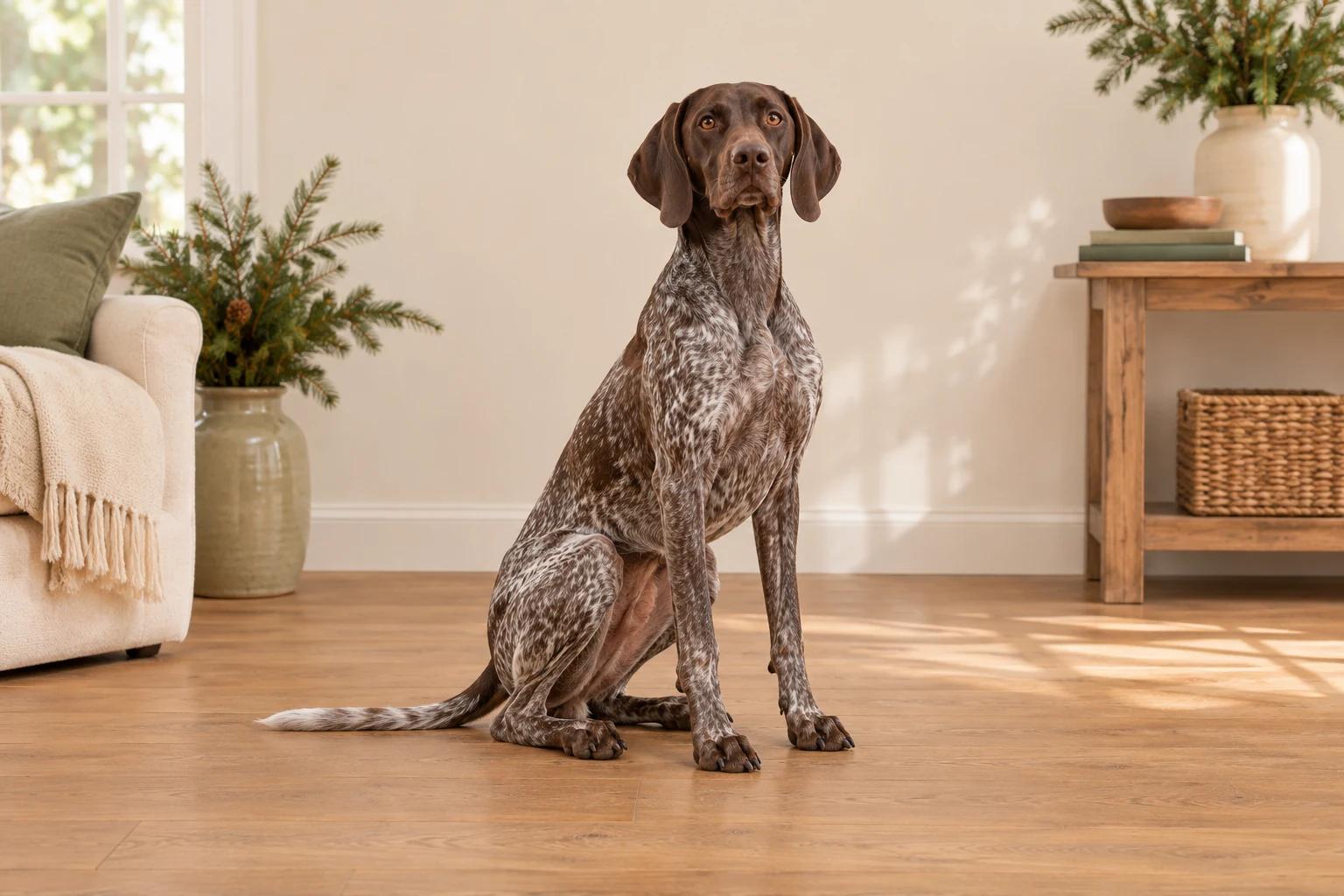
Explore the
German Shorthaired Pointer
Background, care, and everyday considerations.
View breed profile →German shorthaired pointer training works best when the lesson has a clear job: return to the person, wait while a gate opens, or walk past a distraction without pulling toward it. Start with those ordinary skills rather than trying to turn an enthusiastic gundog into a dog that never notices the outdoors.
The AKC breed introduction describes a versatile hunting dog that benefits from positive training. The practical challenge is translating enthusiasm into communication you can both use. A cue learned in the kitchen is a beginning, not evidence that it will work beside moving birds.
German shorthaired pointer training: build a usable vocabulary
Choose a small set of signals and write down what each means. A name can mean look toward me; a recall can mean come close enough to be secured; a release can mean the waiting task is over. Avoid using one word for several different jobs. If “down” sometimes means lie down and sometimes means stop jumping, the human instructions need tidying before the dog is blamed.
For german shorthaired pointer obedience, prioritize the actions that remove friction from your own life. Someone who travels to training grounds needs calm loading and unloading. An owner walking through a busy lobby needs a turn-away cue. A household with frequent visitors needs a way to move the dog away from the opening door. These are separate lessons, even if all three involve waiting.
Make the starting line easy to recognize
Keep the first version of each exercise simple enough that you can describe it in one sentence. “Turn toward me when I say your name in this quiet room” is clearer than “pay attention.” Decide where you will stand, where the reward will arrive, and what ends the repetition before starting.
Watch your own hands. A pocket rustling, a leash tightening, or a toy appearing may become a more obvious signal than the word you intended to teach. A short video can show whether you are repeating the cue or changing your body position without noticing. Review your handling, not just the dog's performance.
Recall is a complete arrival, not a fly-by
VCA's recall guidance recommends rewarding returns, adding distractions gradually, and teaching comfortable collar contact. It also emphasizes that no recall is perfect. Keep appropriate physical security where roads, wildlife, or other hazards make a missed response consequential.
For a GSP, think through the whole arrival. Can the dog return, pause near you, and stay while the leash is attached? Practicing only the exciting approach leaves the last part unfinished. Include that quiet endpoint in the plan you discuss with your trainer.
A useful record has three columns: setting, distraction, and result. “Garden, no visible birds, returned and waited” tells you more than “good recall.” “Park edge, birds nearby, needed an easier setup” identifies a teaching problem without assigning a motive. Move the next lesson to a situation where the dog can respond rather than repeating a cue over escalating distraction.
Separate field interest from permission to chase
A pointing dog's interest in scent and movement is not an instruction to offer uncontrolled access to every animal. Secure boundaries, suitable leash handling, and thoughtfully chosen training locations matter alongside taught skills. Do not use livestock or wildlife as improvised training equipment.
When considering how to train a german shorthaired pointer, choose an instructor who can help connect companion manners with your intended activities. If hunting is part of the plan, ask how field foundations will fit with household cues. If it is not, discuss structured scent work or another appropriate activity without assuming that every hunting exercise transfers unchanged into a companion home.
Be specific about your limits. You might want a dog that can accompany you on permitted trails while remaining attached, not competition-level field performance. That is a legitimate training brief. A trainer should be able to explain the next achievable step without requiring you to adopt an entirely different lifestyle.
Socialization without a greeting quota
German shorthaired pointer socialization should prepare the dog for situations it will actually encounter. Make a list of relevant places and experiences: the car, an outdoor waiting area, a groomer's entrance, people carrying equipment, and dogs passing at a distance. The goal is useful familiarity, not collecting as many close encounters as possible.
Ask your veterinarian about appropriate outings for a puppy's vaccination status, then plan with your trainer. One quiet observation from a comfortable distance may be more informative than a crowded event. Record whether the dog could engage with you and leave easily. Do not turn a difficult meeting into a test that the dog must endure to finish the checklist.
For an adult arriving from another home, ask what is already familiar. A dog may have extensive field experience but little practice with lifts or city traffic. Start with the missing context rather than treating age as proof that every basic experience has been covered.
Make progress visible to everyone handling the dog
Use one shared note for cues, rewards, and current limits. “Practicing returns in enclosed spaces only” is an actionable instruction for a caregiver. “Recall almost trained” is not. Include the route or location currently being used and situations the trainer has advised you to avoid.
Review a single skill at a time. If loose-leash practice is improving but greetings remain chaotic, keep those results separate. You do not need a verdict on whether the whole dog is trained. You need to know which task is ready for a slightly harder setting and which still needs a quieter starting point.
See the German Shorthaired Pointer profile for broader breed context. The existing weekday exercise plan covers activity logistics rather than the cue-building work here. If you are still choosing a breed, use the breed quiz to examine your everyday preferences.
FAQ
Is a German Shorthaired Pointer easy to train?
The breed is generally responsive, but a willing learner still needs clear teaching and practice around distractions. Judge progress by a specific skill in a specific setting, not by whether the dog looks attentive indoors.
Which skill should I teach first?
Start with a practical communication skill such as responding to a name or returning a short distance in a secure, quiet place. Choose the next lesson around the situations your household actually faces.
Does exercise replace obedience training?
No. Activity and learned behavior are different tasks. A dog can have had an active outing without understanding how to wait at a gate or return when called. Teach those actions directly.
When should I seek professional help?
Seek a qualified reward-based trainer when you cannot create successful practice or handling feels difficult. New distress, discomfort, or sudden behavior changes also warrant a veterinary discussion rather than simply increasing training demands.
Sources behind this article
Article source checked: November 15, 2026. Source checked 2026-11-15
Keep reading

Affenpinscher Training: Build Useful Everyday Habits
Read article →