Finnish Lapphund training: attention, voice, and manners
Build Finnish Lapphund training around attention, barking triggers, socialization, cooperative handling, and useful everyday manners.
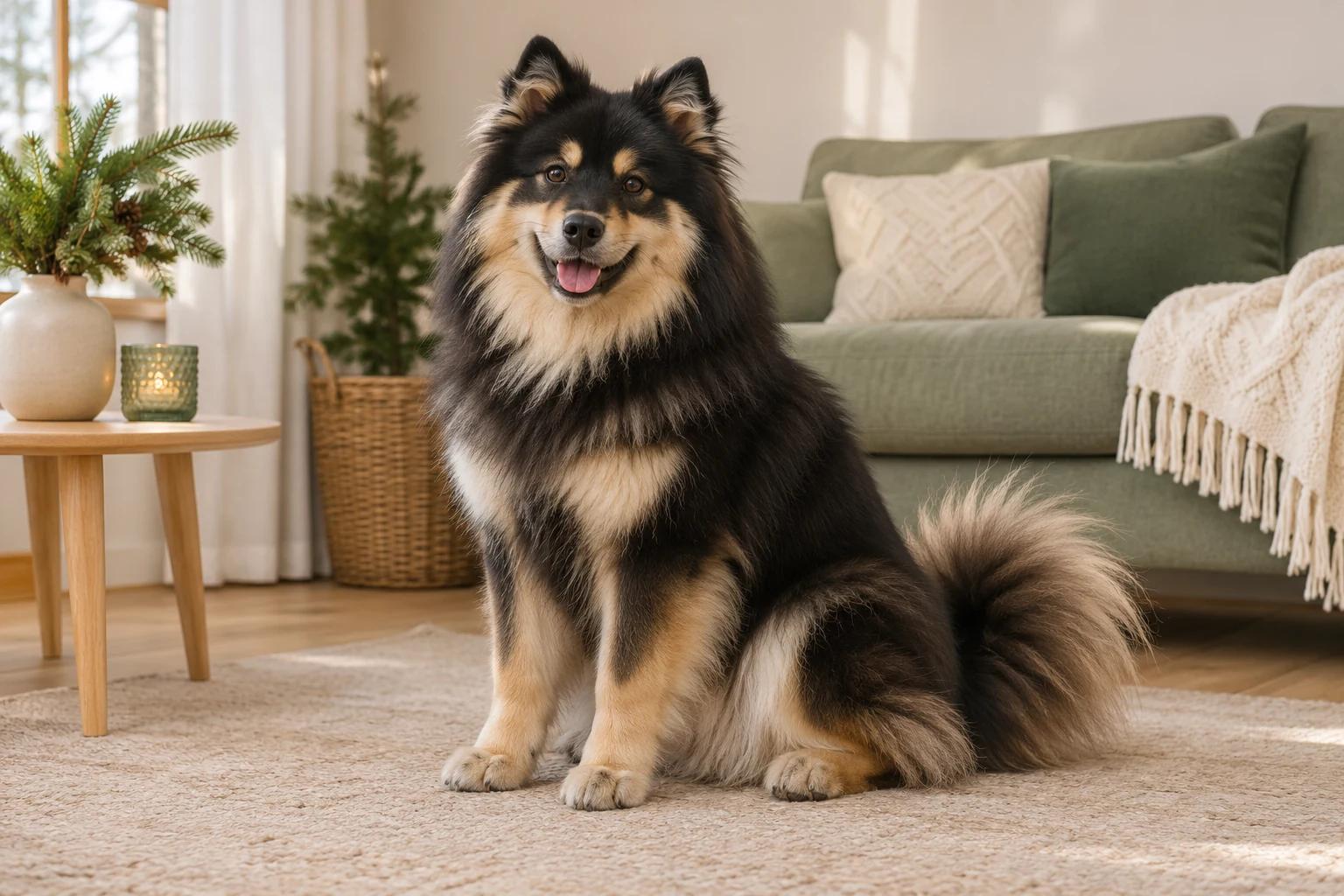
Finnish Lapphund training works best as a set of everyday conversations: turn toward me, wait here, come away from that sound, and relax while nothing interesting happens. The breed's appealing expression can make it tempting to postpone these lessons. Yet a plan for attention and excitement is more useful than hoping an intelligent dog will infer your household rules.
The Finnish Lapphund profile highlights responsiveness to learning alongside a strong vocal tendency. Plan for both. Learning quickly does not mean learning only the behaviors you intended to teach.
Finnish Lapphund training: choose useful priorities
The Finnish Lapphund Club of America's owner guide describes a quick learner that can also be independent, and notes barking during excitement. That combination suggests starting with useful transitions rather than collecting an impressive list of tricks.
For example, a dog that can turn away from the front window and join you elsewhere has a skill you may use daily. A dog that waits while you arrange the lead makes every outing easier to begin. Select three such tasks for your own home and write down what success would look like.
Avoid vague goals such as “be obedient.” Instead, choose “stand beside me while I clip the lead” or “come onto this mat while I answer the door.” The detail helps you teach a specific action and notice progress. It also makes it easier for everyone in the household to reward the same thing.
How to train a Finnish Lapphund without constant correction
The American Veterinary Society of Animal Behavior recommends reward-based methods for dog training. In practical terms, arrange chances for your dog to perform an achievable action, then make the result worthwhile. Do not turn every session into a search for mistakes.
Begin an attention game in a quiet room. When the dog voluntarily turns toward you, acknowledge it and offer a reward the dog values. Once that simple exchange is familiar, try it near a closed doorway or in another room. Moving location is already a change; you do not need to add a visitor and an exciting toy at the same time.
Keep rewards ready before practice starts. If you must cross the room and open a cupboard after each response, you make the interaction harder to follow. Choose a secure place to store supplies outside the dog's reach, and agree how training food fits the feeding plan with your veterinarian when necessary.
End a session while you still know what you are teaching. A short, clear exchange is easier to repeat than a long sequence that drifts from recall to jumping to frustration. These examples are starting points, not a replacement for an individual training plan when a dog is struggling.
Barking needs a situation-specific plan
A vocal Finnish Lapphund does not need one universal instruction shouted over every sound. First identify the setting: a person outside, an exciting game, preparation for a walk, or difficulty being alone. Keep a brief record of what happens immediately before the barking and what the dog does afterward.
For window-related excitement, consider whether the resting place gives an uninterrupted view of every passerby. Moving the bed or using a visual barrier may make practice more manageable. Teach the dog to join you away from the window when the scene is quiet, rather than introducing the task for the first time during a delivery.
For noisy play, build pauses into a game you can control. Put the toy out of sight at the end and move to a different, quieter activity. Avoid assuming that more intense play must be the answer to every noisy moment. If barking is accompanied by distress, fear, or a sudden behavioral change, seek help from a veterinarian and a qualified reward-based behavior professional.
Socialization is wider than meeting other dogs
Finnish Lapphund socialization should include the places, sounds, people, and handling that will be part of the dog's actual life. A lift, a grooming brush, a person carrying an umbrella, and waiting beside a parked car may matter more to your routine than a crowded dog park.
Choose a setting where you can adjust distance and leave easily. The goal is not to reach a quota of greetings. Watch whether your dog can observe and then re-engage with you. If the experience becomes overwhelming, make the next attempt simpler rather than staying until the dog supposedly gets used to it.
For puppies, discuss appropriate outings and classes with your veterinarian so exposure plans fit local disease considerations. For an adult dog, ask what experiences are already familiar. An adult can have extensive experience with countryside walks and little with busy corridors; age alone does not tell you what has been learned.
Obedience that transfers outside the kitchen
Finnish Lapphund obedience becomes useful when a familiar response works in more than one carefully staged setting. Practice a recall over a short distance in a secure space, then gradually vary the position from which you call. Keep the dog safely contained or on suitable equipment while reliability is still developing.
Use a simple notebook with columns for task, place, and distraction. If a response works indoors but not near moving people, return to an easier version outdoors. Do not treat the difference as proof of defiance. You have identified the part of the lesson that needs more work.
Coat handling deserves a place in the training plan too. Practice standing on a mat and permitting brief, comfortable contact before expecting a complete grooming session. A thick-coated companion will encounter this routine repeatedly, so it is worth teaching separately from the day the coat needs substantial work.
Choose support that fits the dog you have
When evaluating a class, ask how the instructor handles barking, crowded entrances, and dogs that need more space. Ask to observe before enrolling. A useful class teaches you how to adjust a task, not merely how to complete the same exercise as everyone else.
Bring your real priorities to the instructor: quieter transitions, cooperative grooming, or attentive walking. Use the breed match quiz if you are still deciding whether this daily involvement fits your life. For background distinct from training, the Finnish Lapphund naming history follows the breed's formal records.
FAQ
Are Finnish Lapphunds automatically obedient?
No. The breed is described as quick to learn, but that does not supply household manners. Teach specific actions, practice them in different settings, and make sure everyone uses compatible cues and expectations.
Can training guarantee a silent Finnish Lapphund?
No. Barking is an important consideration for this breed. Identify triggers, manage the environment, and teach useful alternatives, while seeking professional help for distress or persistent difficulties. Housing decisions should not depend on a promise of silence.
What should I teach before joining a sport class?
Start with attention, coming when called in a secure area, waiting briefly, and comfortable handling. Discuss the chosen activity with an instructor who can adapt it to your dog's age, experience, and physical readiness; ask your veterinarian about exercise suitability.
Sources behind this article
- Finnish Lapphund Club of America: living with a Lapphund ↗
- American Veterinary Society of Animal Behavior: position statements ↗
Article source checked: November 15, 2026. Source checked 2026-11-15
Keep reading

Affenpinscher Training: Build Useful Everyday Habits
Read article →