European Burmese cat size: adult weight, proportions and growth
Understand European Burmese adult weight, body proportions and kitten-size limits, with current female and male ranges and practical fit guidance.
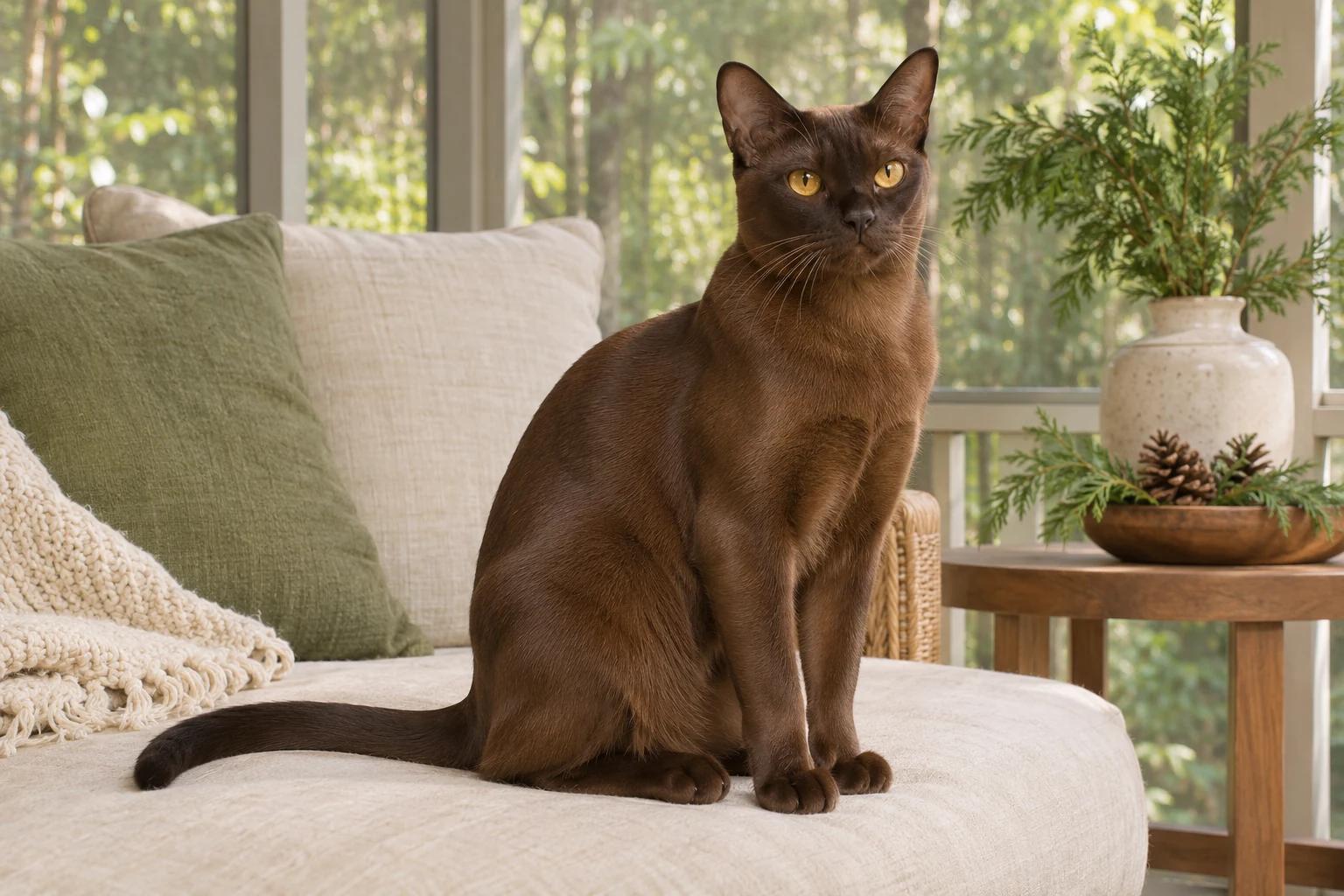
European Burmese cat size starts with the current adult reference: females weigh 7–10 pounds and males 10–14 pounds. That answer is useful, but it does not tell you the cat's length, height or proportions. To picture the breed properly, keep three questions separate: what does it weigh, how is its body put together, and is the animal you are considering already an adult?
European Burmese cat size: use the sex-qualified range
The European Burmese profile gives an overall adult range of 7–14 pounds. Within it, the female range is 7–10 pounds and the male range is 10–14 pounds. The two sex-qualified ranges meet at ten pounds; they are not two separate boxes that can identify a cat's sex or ancestry from a scale reading.
For someone asking how big do European Burmese cats get, use the range that matches the animal rather than treating fourteen pounds as the expected destination for every kitten. Equally, seven pounds is not the intended weight of every female. The profile supplies reference examples, not a promise that an individual will finish at the midpoint or either end.
European Burmese cat weight is also different from the amount of room the body occupies. Two weights can match without giving you an identical outline. A number in pounds cannot be converted into a reliable shoulder height by arithmetic. Keep actual dimensions separate from mass when comparing adults or discussing a kitten's likely future build.
A medium body with real substance
The CFA standard describes a medium-length, medium-sized body with strong musculature, a rounded chest in profile and a straight back. Its legs are relatively slender but proportional, with slightly longer hind legs and small oval feet. The tail is medium in length and tapers toward a rounded tip.
These details explain why “medium” is not the same as delicate. The body and limbs contribute different things to the outline: a substantial torso can sit above comparatively fine legs. Looking only at a paw or the apparent narrowness of a lower leg leaves out most of the cat.
The head has wide cheekbones narrowing toward a short, blunt wedge, with a strong lower jaw and chin. That shape belongs in the overall picture too. It is not necessary to turn the description into a show assessment to understand it: look at the relationship of head, torso and legs rather than treating every body part as though it should have the same width.
Neck, chest and the outline of the coat
The LOOF Burmese Anglais leaflet describes a medium neck with developed musculature and an elegant body that still has rounded areas, especially a broad, strong chest. Its short coat lies against the body rather than creating the outline of a longhaired cat.
That combination is useful when deciding what you are looking at. An elegant outline need not mean a narrow chest, and a strong chest need not make every part of the animal broad. Look at the transitions from neck to shoulders and through the torso, not only at the widest point.
LOOF also describes the sepia pattern: the body is lighter than the extremities, with moderate contrast. Colour and structure are separate features. A darker area at an extremity is not an extra piece of anatomy, and a colour description does not tell you the dimensions of that part. When comparing cats, describe the physical contour separately from the colour that draws your eye to it.
This is a way to read the breed's appearance, not a claim that coat colour predicts adult weight.
Kitten weight does not reveal an exact age
A study by DiGangi and colleagues examined weight-based age estimates using records from 246 young domestic shorthair kittens and a separate group of 1,310 kittens aged six to twenty weeks. Weight predicted age less reliably in the older group; the authors concluded that other factors should be considered beyond ten weeks.
This was not a European Burmese growth study, and it does not provide a maturity deadline or an adult-weight formula for the breed. Its relevance is narrower: a kitten's weight is not a complete substitute for knowing its age.
If someone presents a weight as proof of an exact birthday, keep the distinction clear. A recorded birth date and an age estimate are different kinds of information. Likewise, knowing today's weight does not automatically tell you the cat's eventual adult size.
The study's clinical age-estimation methods are not a home assessment exercise. Ask a veterinarian about an individual kitten's development rather than turning the paper into a monthly target.
Translate size into physical fit
Cats Protection's carrier guidance says the cat needs enough space to lie comfortably and change position, while remaining snug enough not to fall about. Its discussion of backpack carriers also emphasizes standing and turning space. These are general feline fit considerations, not a European Burmese carrier size specification.
For a European Burmese, the practical question is what the individual can do inside the usable space. A weight label alone does not answer whether the cat can turn or lie comfortably. The opening and interior are different parts of the same assessment: getting through a doorway is not evidence that the space beyond it fits.
When considering European Burmese cat height, use the actual animal's standing posture and the available interior rather than substituting a guessed breed number. Do not force a cat into a confined position to demonstrate that it technically fits. The relevant dimensions are the ones that allow ordinary posture and repositioning.
Keep the size question in perspective
Our cat breed quiz helps compare your preferences beyond a weight figure. For a different household question, see separate meals for a European Burmese. Size describes the individual you are planning for; it should not become a substitute for understanding that cat.
Frequently asked questions
What are the current female and male adult weights?
Females are listed at 7–10 pounds and males at 10–14 pounds.
Does a kitten's weight establish its exact age?
No. Weight alone becomes a less reliable age estimate as kittens grow.
Does fitting through a carrier door prove the carrier fits?
No. The cat also needs usable room to rest and reposition inside.
Sources behind this article
- CFA European Burmese ↗
- LOOF Burmese Anglais breed leaflet ↗
- DiGangi et al.: Weight and kitten age ↗
- Cats Protection: Choosing a carrier ↗
Article source checked: November 16, 2026. Source checked 2026-11-16
Keep reading
European Burmese cat personality: participation without pressure
Read article →