What Wolf-Chow means in the Eurasier’s history
The Eurasier’s early name referred to Chow Chow and Wolfspitz ancestry. The FCI account then records a Samoyed cross and the change to Eurasier.
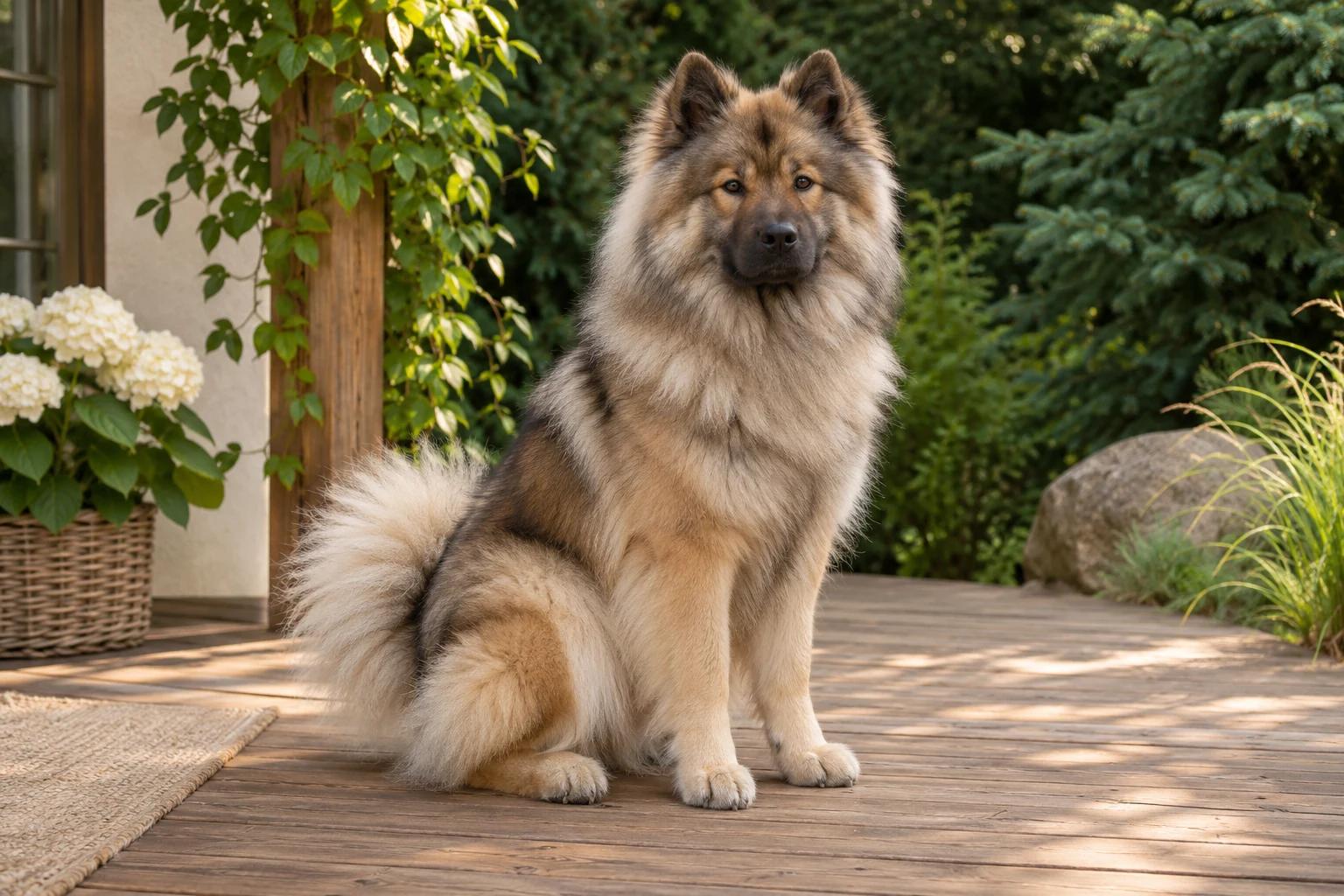
Read the complete breed name behind Wolf
The Eurasier’s FCI history describes a 1960 cross between a Chow Chow and a Wolfspitz, initially called Wolf-Chow. In that account, Wolf refers to Wolfspitz, the named dog breed. It is not a statement that a wild wolf was one of the parents.
A shortened historical name can be misleading when detached from the sentence that explains it. Reading the parent breeds before interpreting the nickname avoids turning word association into an ancestry claim.
The name records one stage of development
The same history identifies Julius Wipfel as the founder. It says the Eurasier name followed a later Samoyed cross, after which the breed was recognized by the FCI. The account thus describes development in stages rather than one cross that permanently defined every subsequent dog.
It does not provide a modern individual’s ancestry percentages. Nor does it justify treating a new cross of those named breeds as automatically equivalent to an established Eurasier. A historical outline and a particular dog’s documented pedigree answer different questions.
Keep the companion purpose in view
The FCI lists the Eurasier’s purpose as companionship and emphasizes close domestic contact with its family alongside consistent, understanding training. That stated purpose is more relevant to a household discussion than imagining a temperament from the word Wolf.
Ask a keeper about the dog’s actual household routines and experience. The name’s history clarifies the breed’s development; it cannot tell you precisely how one dog will respond to family life.
Sources behind this article
Article source checked: October 20, 2026. Source checked 2026-10-20
Keep reading
Eurasier Temperament: A Companion in Daily Life
Read article →