Eurasier Temperament: A Companion in Daily Life
Explore Eurasier temperament through family company, unfamiliar people, everyday activity and practical questions about the individual dog.
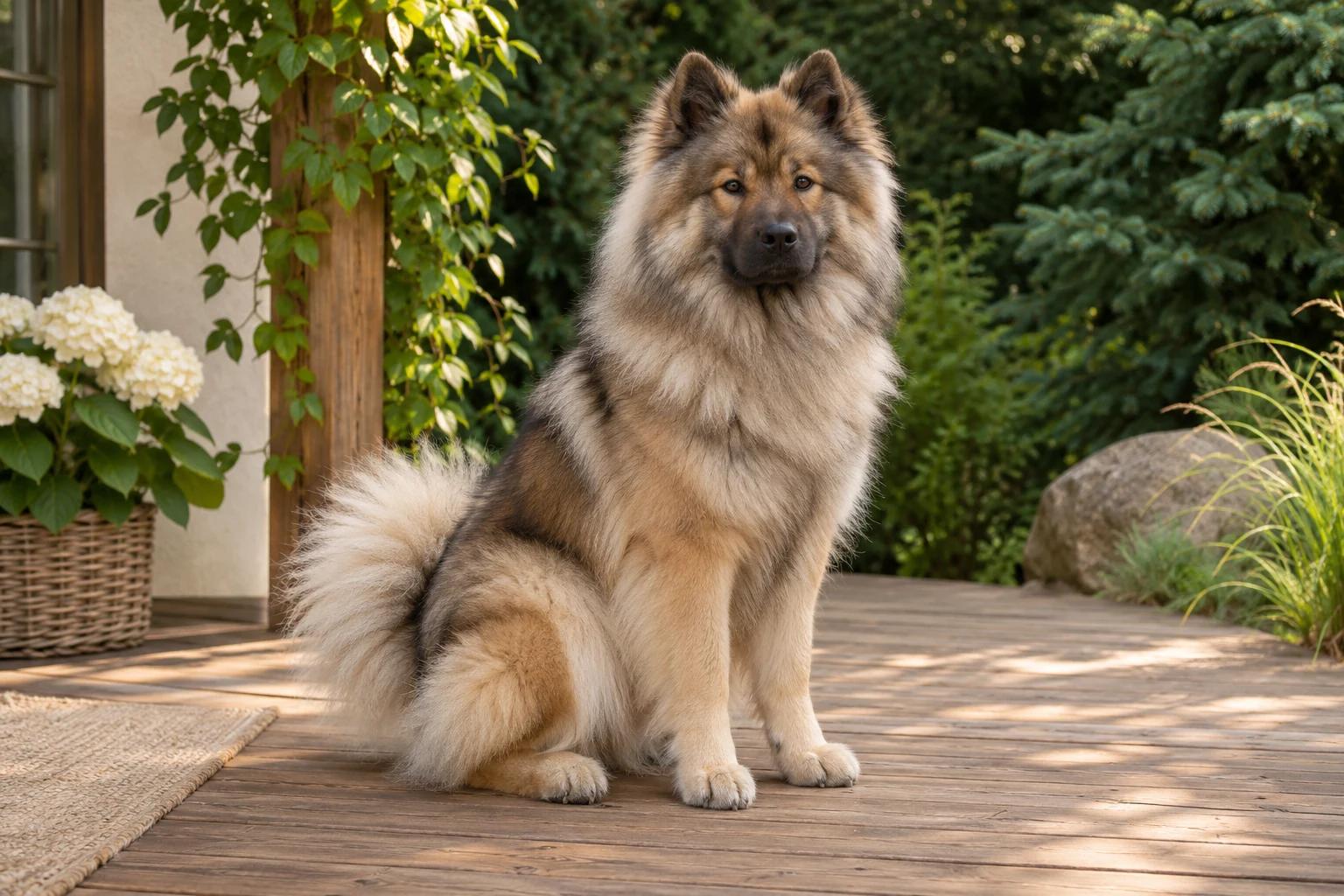
Eurasier temperament is best explored through an ordinary weekday, not a photograph of a fluffy dog sitting quietly. What happens while you work, when a friend arrives, during an outing and when the household winds down? A breed described as calm still needs a place in that schedule. The important distinction is between a companion who can share your everyday life and an expectation that a dog will require little attention because it looks composed.
The Eurasier profile offers the wider reference. Use it alongside specific examples from a breeder or current caregiver, especially examples that resemble the home you can actually provide.
Eurasier temperament and the meaning of company
The AKC describes a calm, family-oriented dog that can be reserved with strangers. The FCI standard emphasizes close domestic contact and consistent, understanding training. Together, these descriptions point toward participation in household life rather than keeping a companion apart from its people.
That does not mean every Eurasier wants continuous touching. In planning terms, make room for the dog to be near you without requiring interaction every moment. A resting place beside the room where you spend your evening may be more relevant than an elaborate outdoor setup that leaves the dog away from the household.
Eurasier personality should also be discussed across the whole family. Ask whom the dog walks with, who handles grooming and whether it spends comfortable time with different familiar people. If only one person currently performs every task, establish what a transition to shared care would involve before assuming anyone can take over immediately.
The workday question deserves an honest answer
Start with your actual departure and return times. Include commuting, errands and the occasions when work runs late. A statement that someone works from home is incomplete if that person is unavailable in meetings for most of the day. Write down when interaction, outings and practical care can happen.
Then ask the caregiver about the dog's existing experience of time apart. How was it introduced? What does the dog do, and how is that known? Has it been comfortable with another caregiver? Specific observations are more useful than assurances that a breed is independent or, at the other extreme, cannot ever be alone.
Do not turn the breed's family attachment into a prediction of a separation problem. Equally, do not use a calm description as proof that a long absence will be easy. Plan gradual familiarization and a realistic backup arrangement. Persistent distress warrants discussion with a veterinarian and qualified behavior professional, not a longer test of endurance.
A visitor does not have to become a new best friend
Imagine a friend joining you for coffee. You may want a dog that rushes to greet them, but that is a preference to examine rather than a behavior to demand. For a reserved Eurasier, an introduction can work when the visitor sits down and the dog is free to observe from a comfortable place.
Brief your guest before arrival. Ask them not to lean over the dog, follow it around or keep offering a hand if it moves away. Arrange seating so the dog is not trapped between furniture and the visitor's feet. These choices make the social situation simpler without requiring you to label the dog unfriendly.
When meeting a prospective dog yourself, ask what its usual response looks like after the first few minutes. Can it resume an activity? Does it choose to approach later? A single greeting is only one piece of Eurasier behavior, and your presence may be unusual compared with its normal day.
Make room for thought as well as movement
Include learning and manageable daily routines alongside suitable physical activity. For planning, think about the content of an outing as well as its length. A route with opportunities to investigate and a brief learning game offers a different experience from marching the same pavement while the handler checks a phone.
At home, you could teach the dog to find a familiar toy in an easy location or practice moving between a resting mat and a handler. Start with something the dog understands, then change one feature. These are optional ways of sharing attention, not tests every Eurasier must pass.
Keep rest in the schedule too. If every pause becomes an invitation to perform, there is little opportunity to practice doing nothing while life continues nearby. Notice whether your routine gives the dog both purposeful interaction and undisturbed downtime. Adjust activities to age and condition with veterinary guidance where needed.
Living space is about routes and choices
At a listed adult size of 19–24 inches and 40–66 pounds, a Eurasier needs more space than its puppy bed may suggest. However, floor area alone is a poor description of the home. Look at where the dog can rest, how it reaches outdoors, and whether passing people must constantly step around it.
In a shared building, consider the lift, corridor and entrance as part of your living space. Can you wait at a distance if another dog is approaching? Is there somewhere to pause before stepping onto a busy street? These small arrangements can influence daily convenience more than the number of rooms upstairs.
If another animal already lives with you, discuss that individual's needs explicitly. Ask about prior experience and plan separate resting and feeding arrangements. Neither a calm breed description nor one peaceful meeting answers every question about sharing a home.
Ask for stories, not just adjectives
Useful Eurasier characteristics become clearer through concrete examples. Ask the caregiver to describe a recent unfamiliar outing, a grooming session and a day when the normal routine changed. What was straightforward, and what needed adjustment? A candid account of limitations is more informative than an uninterrupted list of appealing traits.
Also ask what the dog already understands: its name, walking equipment, household cues and sleeping routine. Continuity can make your initial plan more practical. You can decide what to change later rather than replacing everything at once because a generic puppy checklist says so.
The breed quiz can help you compare these everyday commitments with your preferences. For a separate explanation of a sometimes confusing name, see what Wolf-Chow means in Eurasier history. Historical background is interesting, but the weekday routine remains the better test of your present-day fit.
FAQ
Are Eurasiers affectionate?
Eurasiers are described as closely connected to their families, but affection does not always mean constant physical contact. Ask how the individual dog seeks company, rests near people and participates in daily activities.
Does a calm Eurasier need much engagement?
A calm description does not remove a Eurasier's need for outings, learning and shared time. Plan a repeatable mix of activity and rest rather than expecting the dog to remain quietly in the background all day.
Will a Eurasier greet everyone enthusiastically?
A Eurasier may be reserved with unfamiliar people. Give the dog space to observe and do not require direct contact. Comfortable, low-pressure coexistence can be a successful introduction even without an enthusiastic greeting.
Sources behind this article
Article source checked: November 15, 2026. Source checked 2026-11-15
Keep reading

Airedale Terrier Temperament: What Everyday Life Can Feel Like
Read article →