English Springer Spaniel training that fits real walks
Build English Springer Spaniel training around check-ins, useful walking skills, calm greetings and manageable outdoor distractions.
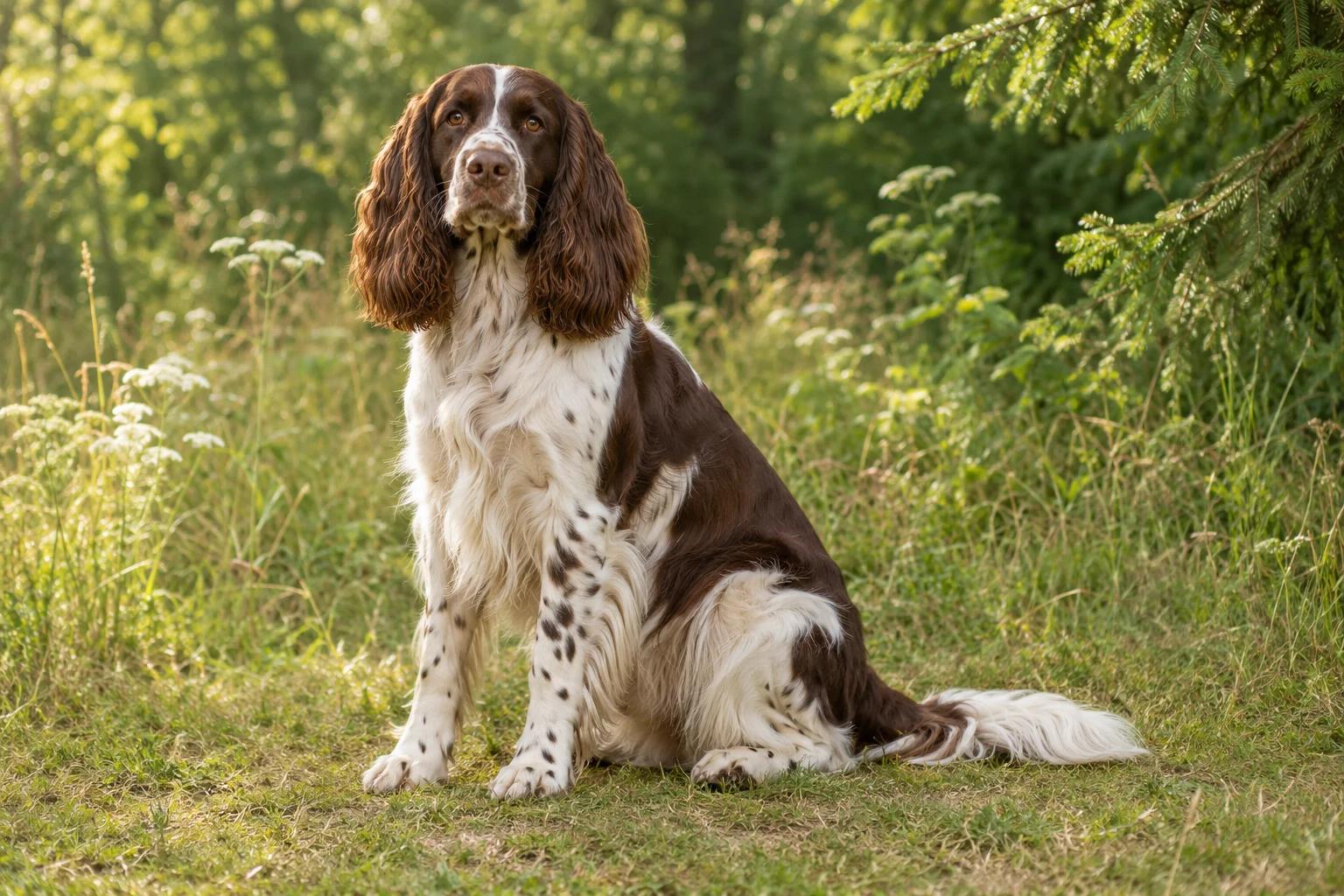
Explore the
English Springer Spaniel
Background, care, and everyday considerations.
View breed profile →English Springer Spaniel training becomes more useful when it follows the route your dog actually takes through the day. Coming away from a hedge, waiting while a lead is attached and returning to you after a greeting matter more than a long list of tricks performed only in the kitchen. Start with those everyday moments and give each one a clear, achievable lesson.
The AKC describes an energetic, intelligent bird dog. That background helps explain why an outdoor classroom can feel very different from your hallway. A Springer may know a cue without being ready to answer it beside moving birds. Your task is to build that bridge, not to prove who is in charge.
English Springer Spaniel training: choose three useful outcomes
Write three sentences describing the changes you want. For example: “My dog can turn toward me when I say their name”; “we can reach the park without constant pulling”; and “visitors can enter while my dog stays behind a gate.” These are clearer than “be obedient,” and each gives you somewhere sensible to begin.
The English Springer Spaniel Field Trial Association recommends positive methods and brief, varied training rather than repetitive drilling. Treat that as a foundation, not a rigid timetable. Stop while you can still reward success. A session that ends with one good response can be more informative than another round in which both of you lose patience.
Keep a small note of the location, distraction and response. If a skill works in three quiet rooms but not by the front door, the record identifies the next teaching location. It does not prove the dog has forgotten everything.
Make the doorway your first outdoor lesson
If you are wondering how to train an English Springer Spaniel for better walks, examine what happens before the walk starts. Do you clip the lead while the dog spins? Does opening the door immediately produce a rush outside? Divide that sequence into smaller parts.
Bring the lead out without opening the door. Reward a moment when the dog is available to you, then attach it. Practice touching the handle while the door remains shut. Later, open it slightly while maintaining secure control. Use a gate or another barrier if the doorway opens directly toward traffic; training is not a replacement for containment.
Do not demand a long stationary performance at the most exciting point of the morning. Ask for a small pause you can realistically reward. Once outside, offer an opportunity to investigate rather than requiring continuous formal heelwork. The goal is a workable departure, not a miniature obedience trial on the doorstep.
Separate walking together from searching the verge
A Springer walk can include different jobs. Choose a short stretch where you practice moving with a loose lead, followed by a place where the dog can investigate within the available space. Distinguishing those moments makes your expectations less confusing.
Start the together-walking section before you reach the most interesting hedge. Reward the position you want while it is happening. If the dog is already pulling hard, create distance from the attraction and choose an easier starting point rather than repeatedly announcing a cue that changes nothing.
For a wooded route, mark two quiet landmarks in your mind: perhaps the car park exit and a broad junction. Use them for a brief check-in. Let the rest of the outing contain appropriate exploration. You are teaching that responding to you belongs inside an enjoyable walk, not that your voice always ends the interesting part.
Keep equipment suited to the location. A long line can provide room in an appropriate open area, but it is awkward around cyclists, narrow paths and tangled vegetation. Secure handling comes before a more ambitious exercise.
Give recall a history worth answering
Begin recall where returning is easy, with the dog nearby and little competition. Say the cue once, reward the arrival and sometimes allow the dog to resume the previous activity. Practice at ordinary moments, not exclusively when you are leaving the park.
Next, change one thing: a little more space, a different quiet location or a mild distraction. If you change everything at once, you cannot tell what made the task difficult. Avoid testing an unfinished recall against wildlife. Use secure boundaries or an appropriate line while the skill develops.
An English Springer Spaniel obedience class should help you apply these foundations outside a classroom. Ask the instructor how they handle a dog that cannot concentrate and whether they can create more distance or simpler exercises. A class that rewards only the fastest progress may not give you the practical coaching you need.
Plan social experiences that include doing nothing
English Springer Spaniel socialization does not mean collecting as many greetings as possible. An outing can be useful when your dog watches a person pass, hears a trolley at a comfortable distance or rests while you talk to a friend. Choose experiences that allow observation without forced contact.
For an enthusiastic greeter, arrange a visit with one prepared adult rather than starting at a crowded gathering. Explain the plan before opening the door. A gate gives you room to reward a calmer moment and lets the visitor settle without becoming the training equipment.
Include coat handling in this education. Briefly touching an ear or presenting a brush can become part of an easy reward-based exchange. Do not save all handling practice for the day the feathering is tangled after a muddy walk.
Review progress against your actual routine
At the end of a week, ask which transition became easier: leaving home, passing the playing field or returning to the car. Keep the successful setup and adjust one problem location. If behavior changes suddenly, or the dog seems distressed or uncomfortable, seek appropriate veterinary or qualified behavior support rather than increasing pressure.
Use the English Springer Spaniel profile for the wider ownership picture. Our field and bench discussion explains why a breeding label cannot replace questions about the individual. The breed quiz can help you examine whether this hands-on daily routine suits your life.
Sources checked November 15, 2026: ESSFTA training FAQ and AKC breed overview. The walk-planning examples above are original applications, not a fixed training protocol.
FAQ
Are English Springer Spaniels easy to train?
English Springer Spaniels can be responsive learners, but an interesting outdoor environment raises the difficulty. Teach useful skills in easier settings first and build toward the situations in which you need them.
Should a Springer walk at heel the whole time?
A practical companion walk need not be continuous formal heelwork. You can teach short sections of walking together while also providing suitable opportunities to sniff and explore under control.
What should I teach a Springer puppy first?
Start with everyday foundations such as responding to their name, comfortable handling, predictable toilet opportunities and short, successful interactions with you. Choose suitable social experiences with your veterinarian's guidance rather than following a universal age-based deadline.
Sources behind this article
- English Springer Spaniel Field Trial Association: Frequently Asked Questions ↗
- AKC: English Springer Spaniel ↗
Article source checked: November 15, 2026. Source checked 2026-11-15
Keep reading

Affenpinscher Training: Build Useful Everyday Habits
Read article →