Reading the Drent’s search, point and check-back sequence
The Drentsche Patrijshond’s standard describes a moving search, a held point and a possible look back toward the hunter. Each action belongs to a different moment.
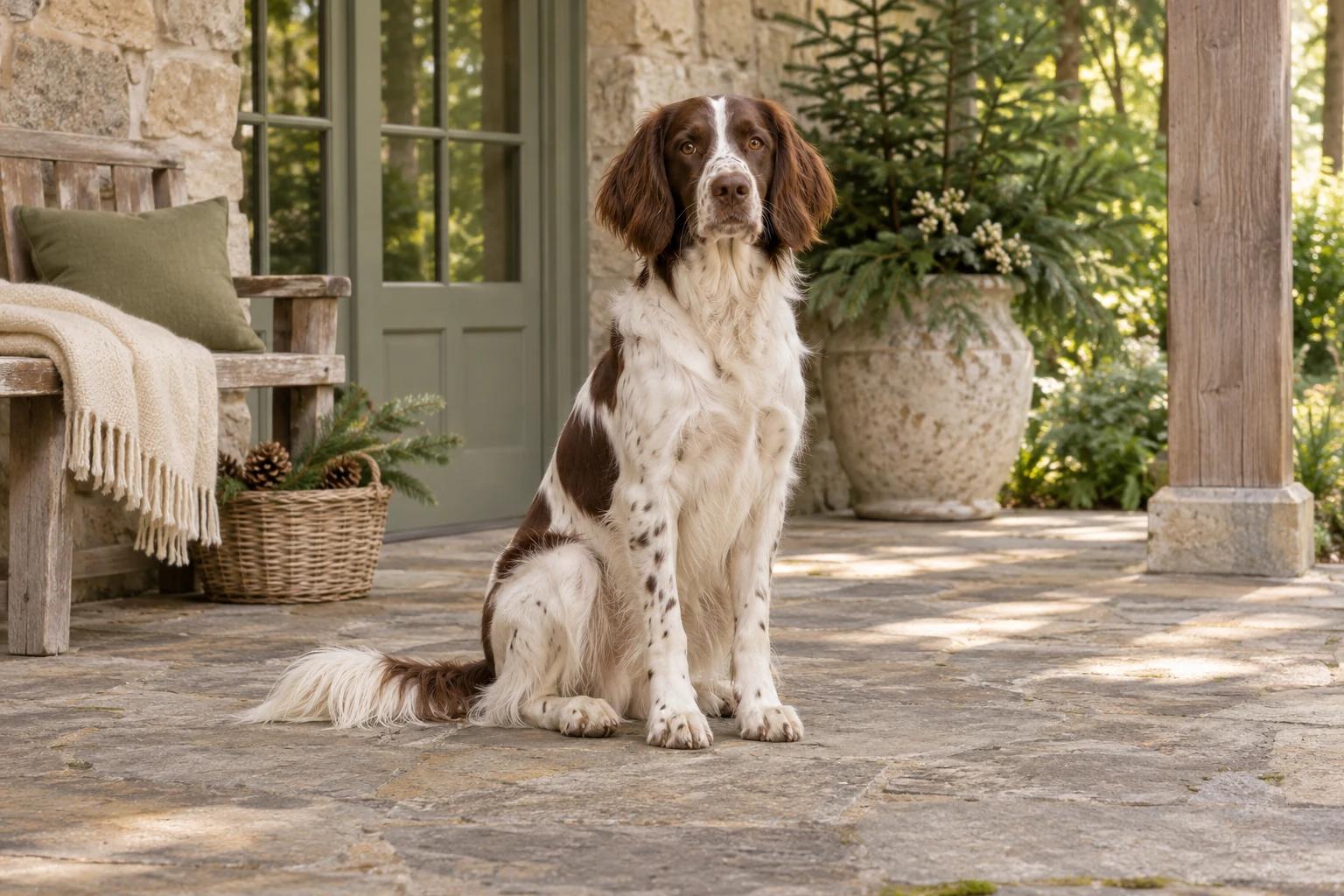
Movement while searching
The Drentsche Patrijshond’s FCI description includes a circular tail movement during searching, particularly when the dog picks up scent. It places that movement within work, alongside a search that keeps the dog within the hunter’s range.
This is more specific than a general claim that the breed wags enthusiastically. The described signal has a setting and a purpose. A short video of a tail moving in a circle, without the surrounding search, cannot establish that the dog has found game.
A point changes the sequence
The account then describes the dog pointing and waiting for the hunter to approach. If that wait becomes prolonged, it may look back. Read together, these details show a sequence: searching, indicating the find, then maintaining contact with the person involved.
The Drent is classified as a pointing dog of spaniel type. The word spaniel in that classification should not erase the pointing behavior described immediately around it. Searching, holding a point and retrieving are separate parts of the working account, not different names for the same action.
Watch the transition, not just the pose
When learning about the breed with an experienced handler, ask to see what happens before and after a point. How does the dog move into it? What does the handler do next? Does the dog wait, resume searching or receive another cue? Those observations make a still photograph easier to interpret.
The standard describes intended breed work, not a certificate that an untrained puppy can complete the sequence. It also does not give every tail movement a fixed meaning. Keep the activity and the individual dog’s experience in view when interpreting what you see.
Sources behind this article
Article source checked: October 20, 2026. Source checked 2026-10-20
Keep reading
Drentsche Patrijshond temperament at home
Read article →