Dogo Argentino training: practical priorities
Focus Dogo Argentino training on attention, controlled movement, neutral outings and everyday cooperation, with realistic support.
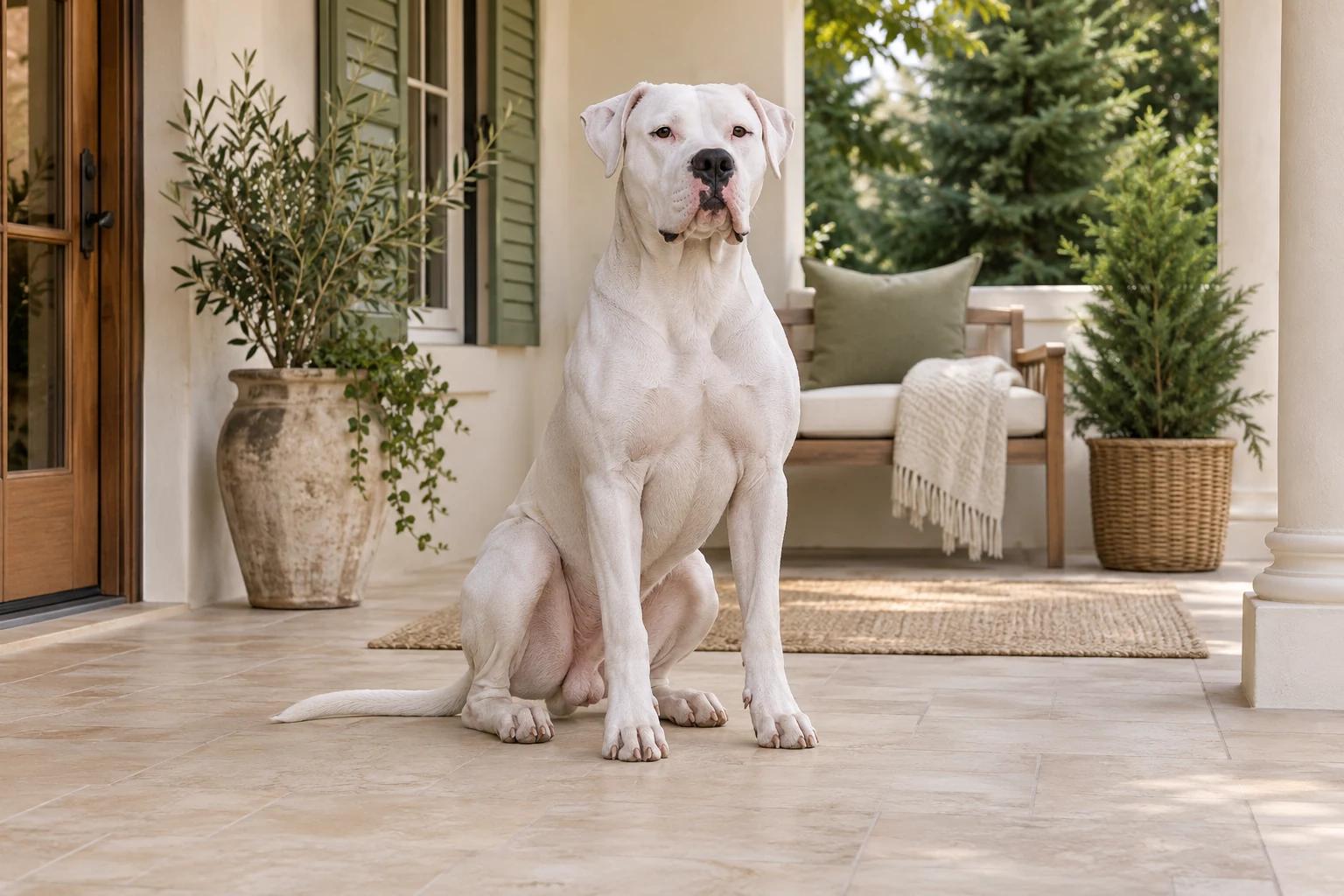
Dogo Argentino training should make ordinary handling predictable before it aims for impressive performance. For this athletic, powerful breed, walking past a distraction, moving through a gate and leaving an object alone are substantial achievements. They deserve more attention than a collection of tricks practiced only in the living room.
The Dogo Argentino profile describes high activity needs and strong responsiveness to training. Use those tendencies as reasons to invest time in teaching. They do not mean a puppy arrives with self-control or that an adult will understand your rules immediately.
Dogo Argentino training begins with the environment
The American Kennel Club identifies the Dogo as a big-game pack-hunting breed with athletic strength and quick responsiveness. A household training plan should acknowledge that working background without attempting to recreate it in the neighborhood.
Choose practice locations where you can control access and distance. An empty enclosed area offers different possibilities from a busy park entrance. If you must begin in a shared space, find quieter times and retain an easy route away. Good planning is part of the lesson, not evidence that the dog has failed.
Keep equipment ready before opening the door. Check fit, closures and the route from resting place to exit. With a strong dog, fumbling for rewards while balancing shopping bags creates an avoidable challenge. Decide which adult handles the dog and which handles everything else during early outings.
How to train a Dogo Argentino for attention
Start by noticing when the dog voluntarily checks in with you. Reward those moments in an easy setting, so looking toward you becomes worthwhile rather than something requested only when trouble appears. Keep the exercise uncomplicated enough that both handler and dog can recognize success.
A useful first goal might be turning toward you in the garden when nothing exciting is happening. The next goal is not doing the same beside running wildlife. Move through modest changes in setting and discuss progression with a reward-based trainer who understands powerful dogs.
Keep a short record organized by location. “Responded beside the parked car before the walk” identifies a repeatable starting point. “Good today” does not tell tomorrow's handler what worked. Include the reward and any distraction so the household can build on the same information.
Teach leaving things before you need it urgently
AKC's leave-it guide uses controlled practice and a separate reward for disengaging from an item. The important distinction is that leaving something does not always mean waiting until you eventually get it. Progress starts with manageable objects and settings, not dangerous temptations.
For a Dogo household, make this a prevention project as well as a cue. Secure rubbish, clear the preparation area before cooking and keep walking routes away from obvious litter when possible. A learned response adds another layer; it does not make an unsafe arrangement acceptable.
Never use medication, bones, wildlife or another animal as a test. Ask a trainer to help if the dog becomes frustrated around the setup or guards objects. Do not reach into its mouth to prove that it accepts handling. An urgent ingestion concern belongs with a veterinarian.
Give Dogo Argentino obedience a daily job
Select skills according to what your household needs to accomplish. A brief wait helps you attach equipment without a moving target. Following a hand target can help reposition the dog without pushing. Walking beside you for a short stretch can make a narrow entrance manageable.
Define the finished behavior before practicing. If “wait” means pause until a release cue, everyone should use it that way. If you only need the dog to stop briefly while you open a cupboard, choose a routine that does not accidentally demand a lengthy stay. Clear expectations reduce avoidable disagreements.
Do not reserve rewards for formal lessons. A dog that waits calmly while you retrieve the leash has made a useful choice. Recognize it. At the same time, avoid turning every household movement into an obedience test. Rest and relaxed company belong in the routine too.
Dogo Argentino socialization is not a greeting quota
The FCI standard describes the breed's hunting purpose and agile build. Neither pack history nor a temperament ideal establishes compatibility with unfamiliar pets. Plan introductions around the individual dog and get guidance before combining households with other animals.
For everyday exposure, choose situations the dog can observe without being surrounded. Watching someone move a bin at a comfortable distance can be more useful than being patted by ten strangers. Ask people not to approach if you are working on neutral observation.
For puppies, agree on appropriate outing locations with your veterinarian during the vaccination period. For an adult whose history is incomplete, start with what you can verify. A quiet first week tells you little about every future circumstance, so keep management in place while you learn more.
Build a plan for the difficult walk
Before trouble occurs, agree on what to do when another dog appears around a corner. You might use an established turn, step into a wider space or wait behind a visual barrier at a comfortable distance. The exact choice depends on the setting and your dog's skills.
Rehearse your own movements without the dog if necessary. Can you hold the leash securely while opening the gate? Is your phone already put away? Which side of the car gives you more room? These small preparations are especially valuable when the dog's physical strength leaves little margin for improvisation.
If your Dogo repeatedly lunges, freezes or cannot disengage, stop escalating the challenge. Seek veterinary and qualified behavior support. Describe the sequence of events and distances involved, not just a label such as dominant or stubborn. Professional help should make the arrangement more manageable, not teach you to overpower the dog.
Choose progress you can maintain
Review the plan by asking what has become easier for the household. Can you leave home without rushing? Can the dog wait while equipment is adjusted? Can a visitor enter without becoming part of the lesson? Progress should improve ordinary life rather than exist only on a training video.
For a separate discussion of records, see reading a Dogo's BAER result. Training observations are not a replacement for veterinary assessment. If you are considering the breed rather than already living with one, the breed quiz can help you examine whether your time and handling arrangements fit this commitment.
FAQ
Is the Dogo Argentino trainable?
The Dogo Argentino is described as responsive and athletic. Practical training still requires repetition, suitable rewards and controlled settings. Readiness for a harder situation should be judged from the individual dog's behavior.
Should a Dogo go to a dog park for socialization?
A dog park is not a necessary socialization exercise. Uncontrolled greetings provide little choice over distance or partners. Prefer planned exposure suited to the individual dog and seek advice about compatible interactions.
What is the first training priority?
Establish manageable daily routines for equipment, exits, resting and walking. Attention and a comfortable change of direction are valuable foundations before adding complicated exercises or demanding environments.
Sources behind this article
- American Kennel Club: Dogo Argentino ↗
- FCI: Dogo Argentino standard 292 ↗
- American Kennel Club: Learning the Leave It Command ↗
Article source checked: November 15, 2026. Source checked 2026-11-15
Keep reading

Affenpinscher Training: Build Useful Everyday Habits
Read article →