Wachtelhund Temperament: Assessing the Everyday Fit
Understand Wachtelhund temperament through working interests, home routines, introductions, and practical questions for a breeder or caregiver.
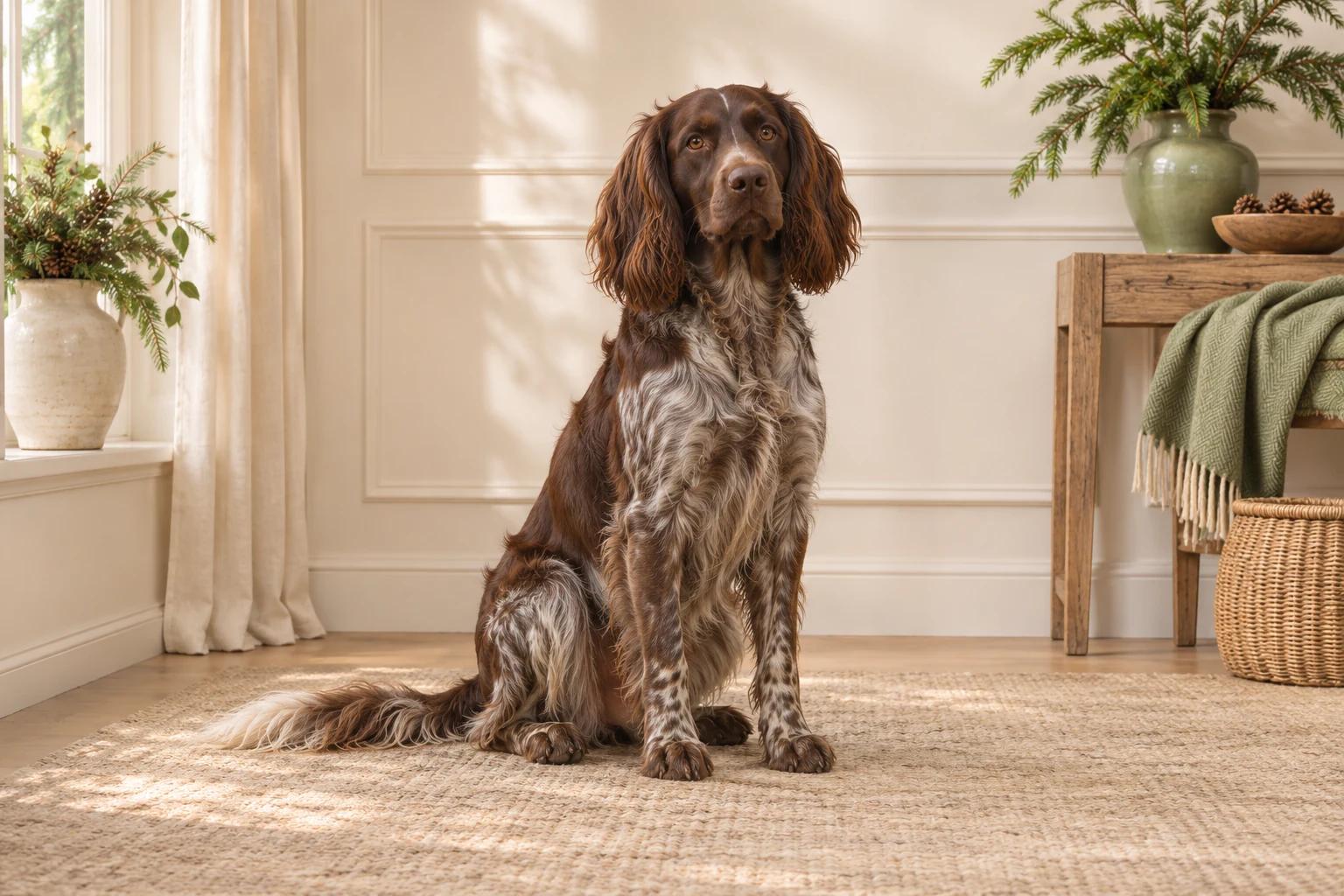
Wachtelhund temperament deserves a more careful assessment than “friendly spaniel.” The Deutscher Wachtelhund has a specific working identity, and a pleasant manner at home does not erase its outdoor interests. If you are considering one, ask how the dog's background, existing routine, and opportunities for purposeful activity fit the life you can actually offer.
The Deutscher Wachtelhund profile supplies the broad reference. A good decision goes further: it connects general tendencies with evidence about the individual dog and the household it will join.
Wachtelhund temperament: companionship and purpose
The FCI standard describes a lively, friendly hunting dog with an interest in finding, retrieving, and water work. The American Kennel Club overview also places the breed firmly in a working hunting context. These accounts are a reason to investigate fit seriously rather than selecting by coat and expression alone.
A dog can be affectionate indoors and highly absorbed by scent outdoors. Those are not contradictory personalities. Ask the breeder or caregiver how the dog spends nonworking days, what activities it already knows, and how it responds when the usual routine changes. You want the full week, not only the most impressive day in the field.
If you are not a hunter, make that clear at the beginning of the conversation. Describe what you can offer rather than hoping that a generic promise of long walks will settle every concern. A knowledgeable breeder can discuss whether a particular dog and your proposed activities are a realistic match.
What the home visit can reveal
To explore Wachtelhund personality, ask to observe ordinary transitions. Watch what happens after a visitor arrives, when equipment is put away, or when the household sits down. The useful question is not whether the dog is perfectly still. It is how it adjusts, what support helps, and whether those arrangements would work in your home.
Look for information about handling as well as greetings. Can the caregiver check the coat after an outing? How is the dog moved between rooms or secured when a door opens? A calm demonstration can reveal established habits that you may be able to continue.
Ask about the exceptions too. A description such as “usually relaxed” becomes more meaningful when the caregiver explains what makes a day difficult. Keep the conversation practical and nonjudgmental. Honest detail is more valuable than an account in which the dog never struggles with anything.
Outdoor focus changes the ownership plan
Among the Wachtelhund characteristics that matter is purposeful interest in the environment. Before bringing one home, examine where you can offer outings securely and how you will manage access around wildlife. A large garden is not equivalent to a reliable boundary or a structured activity.
Discuss the routes you actually use. A quiet enclosed training area presents different demands from woodland crossed by wildlife or a path beside livestock. Ask what experience the dog has in comparable places. Avoid treating a successful response in one environment as permission to assume the same response everywhere.
Plan for the beginning and end of outings too. A secure transfer from house to car, a controlled exit at the destination, and a place to check and dry the dog afterward are part of daily ownership. These details can determine whether an activity is sustainable on a dark, wet weekday rather than only enjoyable on a free weekend.
Voice means different things in different settings
The AKC discusses vocal behavior associated with following a game trail. That task-specific description does not tell you how often a Wachtelhund will bark at home. Atlas places household vocal tendency in the middle of its reference scale, so investigate the individual's actual triggers instead of assuming either silence or constant noise.
Ask about the front door, neighboring dogs, outdoor movement, and departures. If you live with shared walls, explain the layout and the sounds the dog will hear. A caregiver's example of settling after a delivery is more useful than an abstract label such as “not noisy.”
Think about where the dog will rest when nobody is actively engaging with it. A bed beside a window overlooking a busy path may create a different experience from a quieter room. Environmental choices and familiar routines belong in the discussion alongside temperament.
Other animals require specific answers
Wachtelhund behavior around resident pets cannot be read from a friendly description. Ask about the exact species and situations involved. Sharing a home with a familiar dog is different from meeting an unfamiliar dog in a narrow doorway, and neither establishes compatibility with a cat or smaller animal.
Arrange separate feeding and resting areas before introductions. If the dog's history is unclear or your household includes vulnerable animals, seek qualified guidance and be prepared for a match not to be suitable. Do not make the resident pet responsible for teaching boundaries.
Children also need an adult-led plan. Supervise interactions, explain when the dog should be left alone, and provide a retreat that is not part of play. A breed's family-affection profile does not replace attention to how the individual dog is coping.
Build a week that includes recovery
A working background is not a reason to keep a dog stimulated continuously. Ask how the current routine balances outings, learning, companionship, and rest. Then consider which parts you can preserve and which would change in your home.
Write down the practical resources behind your plan: suitable locations, transport, an experienced trainer if needed, and help when your schedule changes. This is more revealing than a declaration that you are an active person. A reliable arrangement should survive ordinary bad weather and busy periods.
If the dog has persistent difficulty resting or a sudden behavioral change, consult a veterinarian rather than assuming it simply needs more exercise. For longer-standing training or adjustment problems, a qualified reward-based professional can help assess the environment and expectations.
Make the decision on the individual, not the image
Use the breed match quiz to examine lifestyle constraints, then take the unresolved questions to a knowledgeable breeder or rescue. Ask for records, observed behavior, and a realistic discussion of support after placement. A willingness to discuss limits is more useful than a universal claim that the breed suits everyone.
The separate article on Wachtelhund color strains and hunting range addresses a historical misconception. For temperament, concentrate on current experience and the ordinary relationship you are preparing to build. The aim is not to make every Wachtelhund fit your life, but to recognize when a particular partnership is plausible.
FAQ
Is the Wachtelhund simply a companion spaniel?
The breed has a specific hunting background that should be central to a placement discussion. It can form close household relationships, but companionship alone does not answer questions about suitable activities, management, and individual experience.
Does working independently mean ignoring people?
No. Independent work and cooperation can coexist, but neither should be assumed without training and evidence. Ask how the dog maintains useful contact in the settings relevant to your plans.
Is a Wachtelhund necessarily noisy at home?
No. Vocal trail work does not establish a household barking pattern. Ask about actual home triggers, settling, and time alone, particularly if neighbors or building rules make sound a major concern.
What should a nonhunting owner ask first?
Explain the proposed routine honestly and ask whether it suits the particular dog. Discuss purposeful activities, secure outdoor access, training support, and rest rather than relying on appearance or a general promise of exercise.
Sources behind this article
Article source checked: November 15, 2026. Source checked 2026-11-15
Keep reading
Deutscher Wachtelhund Size: Space and Handling
Read article →