Deutscher Wachtelhund Size: Space and Handling
Understand Deutscher Wachtelhund size, adult height and weight, practical handling, vehicle space, and equipment planning beyond breed labels.
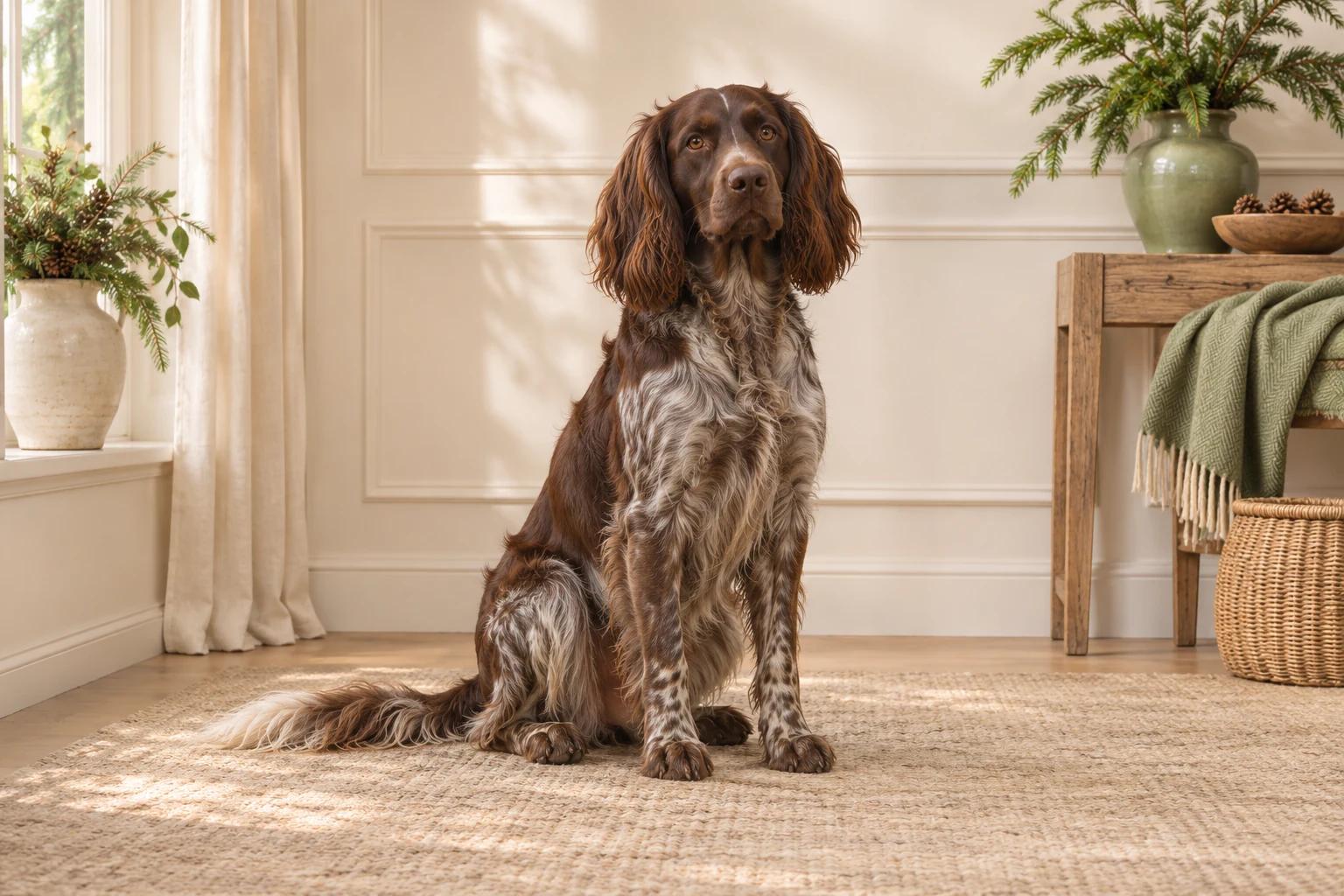
Deutscher Wachtelhund size sits in a practical middle ground: My Breed Atlas lists adults at 18–21 inches tall and 40–55 pounds. That is a useful starting point for planning space and handling, but “medium-sized” alone leaves many ownership questions unanswered. A dog can fit inside the car yet still need a better arrangement for entering, resting, and getting out securely.
The Deutscher Wachtelhund profile combines dimensions with temperament and care. Here, the focus is turning those size figures into sensible questions about the home, equipment, transport, and the people who will look after the dog.
Deutscher Wachtelhund size: read the whole outline
Deutscher Wachtelhund height is measured at the shoulder region. It is not the highest point of the head when the dog looks up. Deutscher Wachtelhund weight tells you how much mass you may need to manage, but does not provide a harness measurement or the length of a comfortable sleeping area.
The FCI standard describes a muscular dog with strong bone and a body longer than its height. That outline matters for practical planning: an item sized only by height can miss the space occupied by the rest of the dog.
Use the Atlas range to begin research, then measure the actual dog before buying fitted equipment. If you are considering a puppy, distinguish what must fit now from what can wait until measurements are more stable. Avoid treating a retailer's “medium” category as a common standard across different products.
Can everyone in the household manage the dog?
Before asking how big do Deutscher Wachtelhunds get, consider what you need to do with an adult of that size. Can the regular handler manage equipment, open a gate, and guide the dog through a narrow space without becoming unbalanced? What happens if the usual caregiver is unavailable?
This is not simply a question of lifting 40–55 pounds. Much of ordinary handling should depend on a thoughtful setup and learned cooperation rather than carrying the dog. Practice the arrangements you will use: a clear entrance, a place to wait while equipment is attached, and enough room to turn around.
Still, discuss contingency plans. Ask your veterinarian how to prepare for a situation in which the dog cannot move normally, especially if your home has awkward access. Do not improvise lifting techniques from a size chart. Planning help and access in advance is more useful than assuming someone will always be able to pick the dog up.
Plan the vehicle from arrival to departure
Measure the available space with the dog's intended travel setup in mind. A crate or restraint must be suitable for the animal and the vehicle, and used according to its instructions. Check usable interior dimensions and attachment requirements rather than relying only on a listed load capacity.
Next, consider access. Is there room to attach the lead before the dog leaves the vehicle? Can you park where the exit is not directly beside traffic? Does luggage reduce the dog's space on the trips you actually take? These questions can expose a problem that a simple measurement misses.
Allow room for practical supplies as well: towels, water equipment, and whatever you normally carry for outings. The AKC breed overview places the Wachtelhund in a working outdoor context. For an owner, that makes the whole travel routine relevant, not merely whether the dog fits in an empty car on collection day.
Reserve space for the wet, resting dog
A dog with a wavy double coat occupies your home differently after an outdoor outing than it does in a carefully posed photograph. Put a washable surface where you can pause, remove equipment, and check the dog without blocking the entire entrance. Keep the route to the resting area clear.
When choosing a bed, observe how the dog rests in several positions. Some product photographs show a dog curled into a space it would not choose for a long rest. Compare the usable sleeping area with the dog's actual dimensions and preferred positions.
Do not place the only bed where people must repeatedly step over the dog. A medium-sized dog lying across a narrow passage can create inconvenience for everyone. A slightly different furniture arrangement may provide a quieter retreat without requiring a larger house.
Measure equipment against the body, not the coat
For harnesses and other fitted items, use the measurement points specified by the manufacturer. The coat can make visual estimates misleading, so rely on careful measurements and a fit check rather than appearance alone. Ask for fitting help if you cannot confidently judge the adjustment.
Watch the dog move in the equipment. Look at sitting, turning, and ordinary walking, not only a still pose. Check whether the item shifts, restricts movement, or creates rubbing, and follow the maker's guidance before using it for the intended activity.
Review fit after growth or a meaningful change in condition. Keeping a note of measurements and the exact product makes replacements easier. If the dog suddenly resists an item it previously accepted, inspect both the equipment and the dog, and discuss possible discomfort with a veterinarian.
Puppies need room to change
An adult range is not a personalized growth forecast. Ask about the parents and mature relatives, but do not expect those observations to determine a puppy's exact final measurements. One unusually large paw or one small littermate is not a dependable sizing formula.
Buy essential equipment for the puppy's present fit, with appropriate adjustment where available. Save nonessential fitted purchases until you have a clearer need. This approach can be more practical than buying several adult items based on a guess and discovering that none fits well.
Use routine veterinary visits to discuss growth and body condition. Do not change feeding simply to make the dog reach the top or bottom of the published range. The right care plan depends on the individual, not the aesthetic appeal of a particular number.
Size helps with logistics, not every lifestyle decision
Being able to accommodate a medium-sized dog physically is only one part of choosing a Wachtelhund. Working interests, time, training, company, and suitable outdoor access need their own assessment. A large house cannot answer those questions, and a smaller house is not automatically disqualifying if the overall arrangements are suitable.
Use the breed match quiz to separate lifestyle fit from equipment fit. Ask a breeder or caregiver to describe an ordinary week and compare it with yours. Make the less convenient details visible before deciding, including bad weather, travel, and backup care.
For a separate topic, read why coat color cannot predict Wachtelhund hunting range. A careful decision uses measurements for physical planning and observed experience for behavior. Neither a size label nor a photograph can replace that distinction.
FAQ
What adult range does My Breed Atlas list?
My Breed Atlas lists Deutscher Wachtelhunds at 18–21 inches and 40–55 pounds. Use those figures as reference ranges, then measure the individual dog for equipment and discuss its condition with your veterinarian.
Does medium-sized mean easy to lift?
No. Handling depends on the person's ability, the dog's cooperation, and the situation. Arrange routine access without relying on lifting, and ask your veterinarian how to prepare for situations requiring assistance.
Is weight enough to choose a travel crate?
No. Check usable dimensions, the dog's ability to rest and change position, and the manufacturer's requirements for the product and vehicle. A weight rating alone cannot establish a comfortable or appropriate fit.
Can I predict a puppy's adult size precisely?
No. Information about parents and relatives provides context but not an exact forecast. Plan adjustable essentials, reassess fit as the puppy grows, and use veterinary guidance for growth or condition concerns.
Sources behind this article
Article source checked: November 15, 2026. Source checked 2026-11-15
Keep reading
Wachtelhund Temperament: Assessing the Everyday Fit
Read article →