Danish Swedish Farmdog Temperament: Everyday Fit
Explore Danish Swedish Farmdog temperament, social expectations, activity, settling, and the questions that reveal a practical household fit.
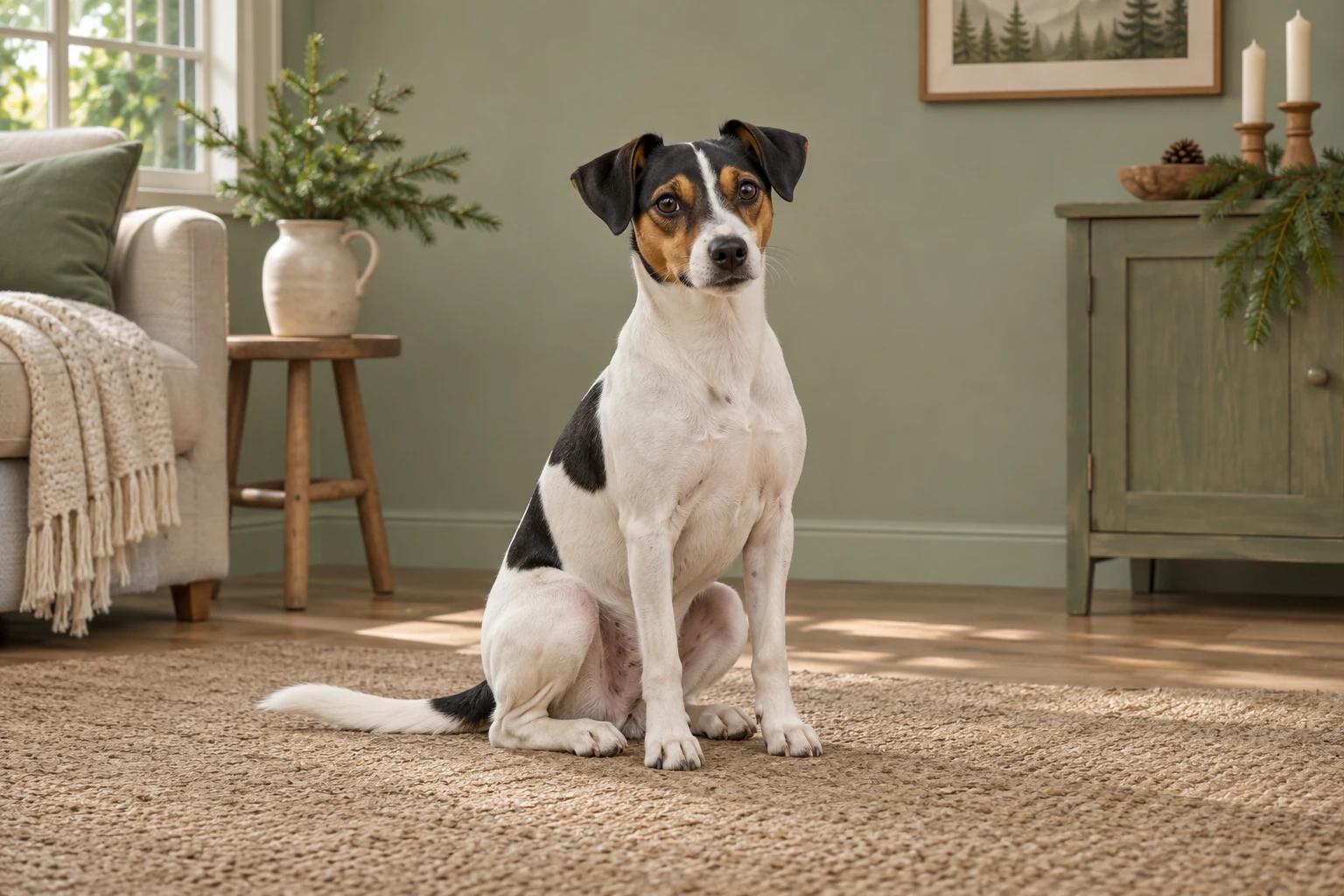
Danish Swedish Farmdog temperament is best understood through participation: this is a small dog to include in daily life, not simply accommodate in a small corner of it. An active, attentive companion may be appealing if you enjoy shared outings and learning. It can be a poor match if “small” is shorthand for needing little of your time.
The Danish-Swedish Farmdog profile gives the reference overview. To assess a match, turn those broad tendencies into specific questions about your schedule, the dog's experience, and what happens after the exciting part of the day ends.
Danish Swedish Farmdog temperament beyond the first greeting
The FCI standard describes an alert, attentive, lively dog. The Danish-Swedish Farmdog Club of America emphasizes a people-oriented companion that enjoys work and challenges. These descriptions support an expectation of involvement, but not a guarantee that every Farmdog will greet every person or dog comfortably.
A first meeting can be misleading. A dog may be thrilled by visitors and then sleep well, or seem quiet because the setting is unfamiliar. Ask to hear about an ordinary morning and evening. Where does the dog rest? What happens when someone starts cooking or picks up a lead? Those details say more about domestic life than a few minutes of charm.
For a puppy, ask how the breeder supports both exploration and recovery from it. You want to understand the puppy's experiences, not receive a promise of a finished adult personality. For an adult, request examples of situations the dog manages easily and situations that need more support.
Sociability still needs household manners
Danish Swedish Farmdog personality can make shared activities enjoyable, but enthusiasm needs boundaries that everyone understands. Decide whether your dog will greet visitors at the entrance or wait elsewhere until bags and coats are put down. Agree on whether jumping receives attention. A lively greeting is easier to manage when the household has one plan instead of several competing reactions.
Consider social outings in the same practical way. A dog-friendly cafe is not automatically a comfortable destination for a dog that has never rested around moving chairs and passing food. Begin with environments that suit the dog's current experience, and keep an easy exit available.
Do not treat friendliness as an obligation to interact. A Farmdog should be able to move away from attention, and you can politely decline greetings when it needs a break. Sociability and constant availability are different things. This distinction becomes especially useful when relatives or visitors expect a small dog to welcome handling at any moment.
An active dog needs more than a busy house
Atlas places the breed's activity and mental-engagement tendencies toward the higher end of its reference scale. A household full of movement does not necessarily meet those needs. Watching people rush to work is not the same as an outing or an activity the dog can take part in.
Map the actual opportunities in your week. Perhaps the morning supports a purposeful walk, lunchtime allows a short learning session, and evening brings a quieter exploratory route. The details can vary, but there should be reliable provision rather than one ambitious weekend compensating for several empty days.
The club reports participation in activities such as obedience, agility, and scent work. Use that breadth to explore what you and your dog enjoy, not to create a compulsory competition calendar. An introductory class can help you learn together without committing to equipment or performance goals before you know the dog's preferences and suitability.
Settling is something to observe, not assume
One of the most useful Danish Swedish Farmdog characteristics to investigate is the transition from activity to rest. Ask what a dog does when a game finishes. Does it choose a resting place, continue soliciting play, or become distracted by everything around it? This is a practical question about the individual, not a test it must pass immediately.
Create a resting space outside the main flow of traffic. If every pause is interrupted by someone calling the dog over, it may be difficult to establish a quiet part of the day. Give family members permission to enjoy a sleeping dog without waking it for affection.
Avoid trying to solve every restless evening by adding harder exercise. Review the whole day: opportunities to rest, the level of stimulation, predictable routines, and any recent changes. Persistent difficulty settling, especially when new, deserves discussion with a veterinarian or qualified behavior professional rather than an assumption about breed energy.
Movement, boundaries, and the garden
The club notes interest in pursuing small moving creatures. For owners, the useful application is planning access: inspect gates, supervise initial garden time, and use appropriate equipment outside secure areas. Do not wait for a chase to discover a gap under a fence.
If you keep smaller animals, explain their housing and daily access to the breeder or rescue. Ask about the particular dog's history, and arrange separation where needed. A positive general description of social behavior does not answer a question about a specific cat, rabbit, or visiting animal.
On outings, give yourself room to change direction or increase distance. Notice where attention becomes difficult, such as beside a hedge or a busy play area. Those observations can guide later training without turning the entire walk into repeated unsuccessful calls.
Test your plan against a normal workday
Danish Swedish Farmdog behavior is shaped by individual history and the environment you provide. Before choosing one, write a plain account of your busiest regular day. Include commuting, care duties, and the hours when nobody is available. Then identify who will provide outings, company, and supervision during the transition home.
If you have children, plan adult oversight and a dog-only resting area. If you have another dog, arrange a considered introduction and separate resources. Neither a sociability rating nor an appealing breed description replaces those preparations.
The breed match quiz can help organize your priorities. Read why the Farmdog's job list is broader than ratting for separate background on its identity. For your decision, concentrate on whether you want a small dog that participates actively in the household and whether you can support that participation consistently.
FAQ
Is the Danish-Swedish Farmdog a quiet companion?
It may enjoy quiet company, but the breed's active, attentive profile should not be mistaken for a low-involvement lifestyle. Ask about the individual dog's resting routine, vocal triggers, and response to an ordinary workday.
Does a Farmdog need to live on a farm?
The name does not determine the right address. A suitable home needs secure access, activity, learning, company, and rest. Assess those arrangements directly rather than assuming rural space automatically supplies them.
Will a friendly Farmdog get along with every pet?
No breed description can establish compatibility with every animal. Discuss the actual dog's experience and your resident pets, then use a thoughtful introduction plan and separation where necessary.
How do I know whether the temperament suits me?
Observe everyday behavior and ask detailed questions about transitions, visitors, time alone, and outdoor interests. Compare the answers with your real schedule, including the days when you have the least spare time.
Sources behind this article
Article source checked: November 15, 2026. Source checked 2026-11-15
Keep reading
Danish Swedish Farmdog Size: Planning for an Adult
Read article →