Why the Danish-Swedish Farmdog’s job list is broader than ratting
The FCI describes a farm watchdog, ratter and companion, classified as a pinscher type. Those separate labels explain different parts of the breed’s background.
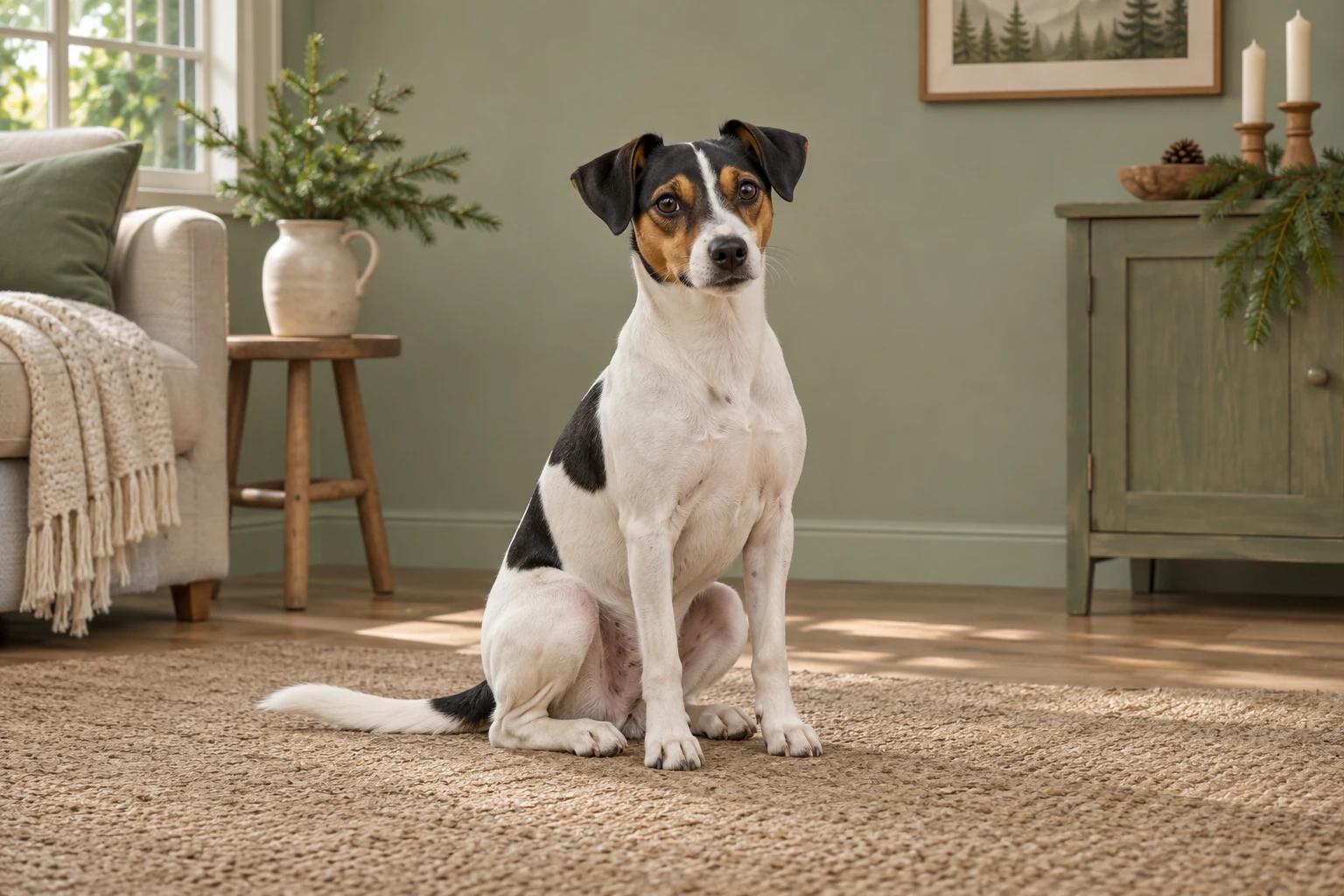
One farm, several roles
The Danish-Swedish Farmdog’s FCI standard lists farm and companion work and describes its historical use as a watchdog, ratter and companion. Reading only the rodent-catching part loses the breadth of that account. A farm dog could be valued for more than one activity around the same household.
These roles also answer different questions. Ratting describes work against vermin. Watchdog describes an alerting role. Companion describes the dog’s relationship to people. They should not be collapsed into a promise that every individual will perform all three well.
A classification is not a job description
The same standard places the breed in the pinscher section of FCI Group 2. That is a classification within a particular registry system. A history of catching rats does not, by itself, put a dog in the terrier section. Naming the registry avoids confusing a working role with an official grouping.
The standard describes a compact dog with substance and notes that it matures late. Its intended outline is neither especially low-legged nor extremely refined. Those details give a more useful visual reference than assuming that every small, short-coated farm dog should have the same proportions.
Read the two-country name as a historical clue
Denmark and Sweden recognized the breed under its shared name in 1987, according to the FCI history. That milestone follows a longer presence on farms in both countries; it is not a claim that the dogs first appeared in that year.
When researching a particular Farmdog, separate these three subjects: historical tasks, registry classification and the individual’s experience. Asking which activities the dog has actually learned will tell you something its group label cannot.
Sources behind this article
Article source checked: October 20, 2026. Source checked 2026-10-20
Keep reading
Danish Swedish Farmdog Temperament: Everyday Fit
Read article →