Danish Swedish Farmdog Size: Planning for an Adult
Understand Danish Swedish Farmdog size, adult height and weight, measuring for equipment, and why a small frame does not mean small needs.
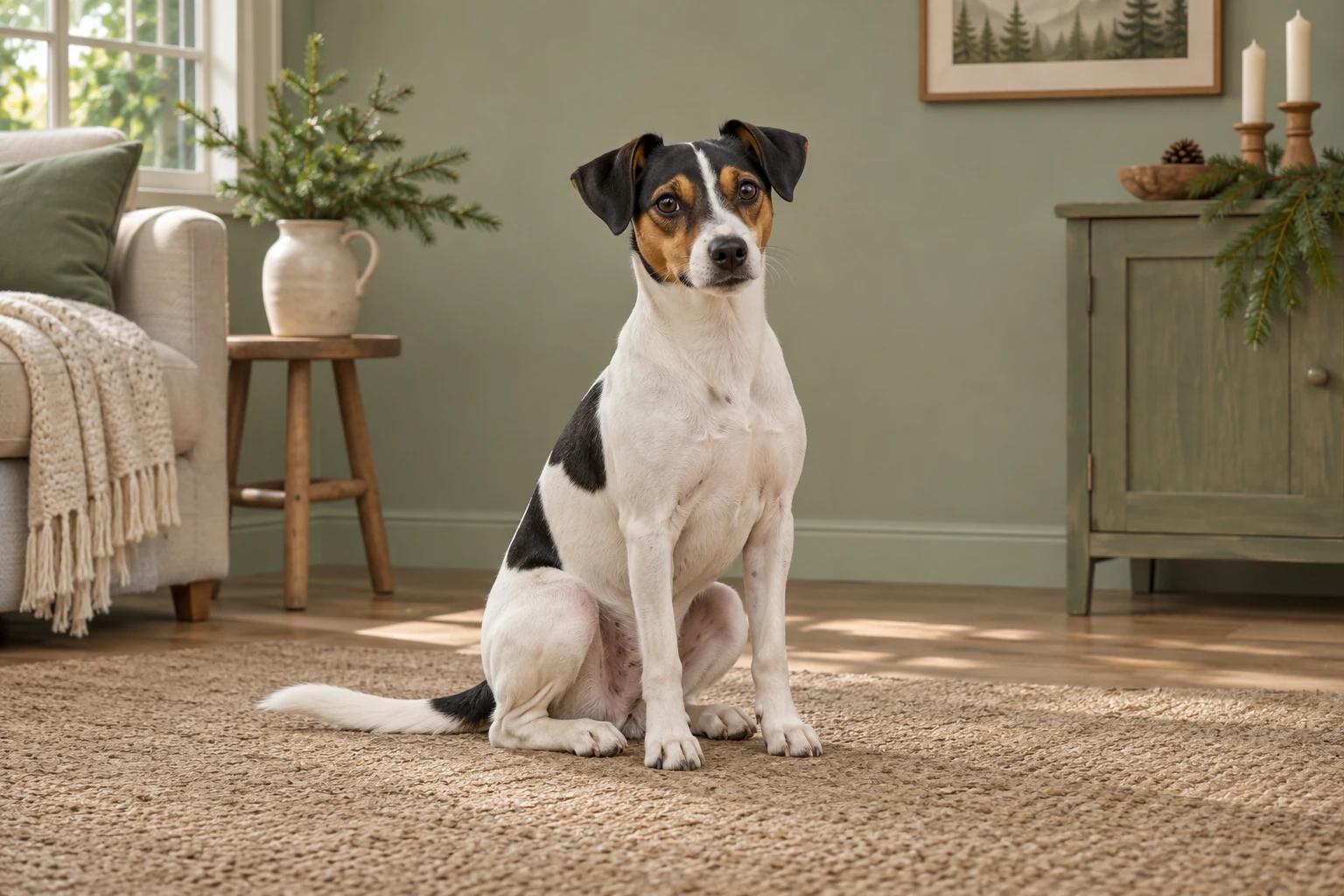
Danish Swedish Farmdog size is small enough to invite assumptions, so start with the actual reference: My Breed Atlas lists adults at 12.5–14.5 inches tall and 13–22 pounds. Those figures are useful for early planning, but they are not a guaranteed outcome for a puppy or a substitute for measuring an individual dog.
The Danish-Swedish Farmdog profile puts size alongside activity, companionship, and care. This guide explains how to use the numbers when considering equipment, housing, transport, and the transition from a growing puppy to an adult.
Danish Swedish Farmdog size: height, weight, and shape
Danish Swedish Farmdog height refers to the shoulder region, not the top of an alert dog's ears. Danish Swedish Farmdog weight describes mass, but it does not tell you the dimensions of a chest, the length of a back, or whether a carrier is comfortable. Keep those questions separate when comparing dogs or products.
The FCI standard describes a compact, slightly rectangular dog with substance. The AKC official standard likewise describes a body a little longer than tall and notes slow physical development. In everyday terms, a Farmdog is not simply a tiny dog enlarged or a delicate frame hidden under a smooth coat.
For household planning, use the Atlas adult range as a starting point and then obtain the dog's measurements. A small size category can hide meaningful differences in body shape. Two dogs of the same weight may need different harness adjustments or sleeping space.
A puppy estimate is not an adult measurement
“How big do Danish Swedish Farmdogs get?” has a useful breed-level answer, but no exact answer for every young puppy. Ask the breeder about the parents and mature relatives, while recognizing that family information supplies context rather than a binding prediction.
Do not create a growth deadline from one photograph or one weigh-in. A young dog can change in proportions as well as overall size. The standards' discussion of slow development is another reason not to expect a puppy to resemble a fully mature adult simply because it is approaching adult height.
Keep a straightforward record of growth at routine veterinary visits. If you are worried about development or body condition, discuss the pattern with your veterinarian. Avoid trying to make a puppy match the middle of a breed range by changing food without individual guidance.
Measuring for a harness
For a harness, follow the maker's measurement instructions rather than choosing the label marked “small.” Record the requested dimensions while the dog is standing comfortably. A flexible tape and a second person may make the task easier, but stop if handling becomes a struggle and practice it separately.
Look at the adjustment range, not just the number on the package. A puppy close to the limit of a size may soon need a different fit, while an excessively large harness is not a practical way to buy for future growth. Ask the manufacturer or a knowledgeable fitter if you are unsure.
Check the fit again after changes in growth or condition. Watch the dog move, turn, and sit, and look for areas where straps shift or rub. Do not assume a harness that fitted well on collection day remains appropriate indefinitely. Keep the measurements with the product details so replacement shopping is less of a guessing exercise.
A carrier needs more than a weight allowance
A Farmdog's listed adult weight may fit within a carrier's stated limit while the interior dimensions do not suit the dog. Check both the load rating and the space required for comfortable standing, turning, and resting, following the product's intended use.
If travel is part of your decision, verify the actual operator's current requirements before booking. A generic claim that a breed is “travel size” is not permission to use a particular cabin, train space, or accommodation. Ask about the combined carrier-and-dog requirements and any measurement rules relevant to your journey.
Introduce transport equipment before the departure day. Place it in a familiar setting and allow time for comfortable experience with it. The dog's physical fit and its ability to cope with travel are separate questions; neither is answered by being within a weight range.
Beds, gates, and the layout of a small home
Measure the resting space the dog actually uses, including room to change position. A photograph of a curled-up Farmdog can make a very small bed look adequate, but the dog should not have to remain curled in order to fit. Consider the bed's usable interior rather than only its outer dimensions.
Check household barriers from the dog's perspective. Gaps between bars, space under gates, and access around furniture can matter for a small dog. Verify that a product is appropriate for your intended use instead of assuming any pet gate will contain any pet.
Keep the resting area separate from high-traffic pinch points. A compact dog can easily fit beside a doorway, but that location may mean repeated interruptions. Size makes placement flexible; it does not remove the value of a quiet, predictable place to rest.
Weight is not a feeding target
The 13–22-pound Atlas reference is a description of adult breed size, not an instruction to move every dog into that interval. Body condition, life stage, and health history need individual assessment. Do not use the upper end as permission to add weight or the lower end as a goal to achieve through restriction.
Bring useful observations to veterinary appointments: changes in appetite, activity, body shape, and any consistent weight records. A number becomes more informative when it is part of a trend and can be interpreted alongside an examination.
This distinction also matters when reading advertisements. “Smaller” does not establish better suitability, health, or quality. If a seller emphasizes unusual size, ask for clear information about the dog and its background rather than treating the description as an advantage in itself.
Small dimensions do not shrink the daily commitment
A Farmdog may require less physical space than a much larger breed, but Atlas still records an active dog with substantial interest in learning and people. Do not use the height range to predict a quiet schedule or the weight range to predict easy handling in every situation.
Before deciding, test your plan for outings, supervision, and time alone. A convenient carrier is helpful only if the overall routine is workable. The breed quiz can help separate these lifestyle questions from the appealing size.
For a distinct look at the breed's background, read why the Farmdog's jobs extend beyond ratting. Size tells you how to begin preparing the physical space. The individual dog's needs determine how that space will be used.
FAQ
What is the adult size listed by My Breed Atlas?
The Atlas profile lists Danish-Swedish Farmdogs at 12.5–14.5 inches and 13–22 pounds. Treat these as reference ranges, not a promise that every adult or growing puppy will fit precisely within them.
Can I buy all the adult equipment for a puppy?
Some adjustable items may remain useful, but fit must be checked during growth. Do not use oversized restraint equipment simply to avoid replacing it. Follow the manufacturer's instructions for the puppy's current measurements.
Does a Farmdog fit in every small-dog carrier?
No. Compare the actual dog's dimensions and the carrier's usable interior, as well as its weight rating. Travel providers may have separate requirements that you must check for the specific journey.
Should my Farmdog weigh exactly 22 pounds?
No. The upper end of a reference range is not an individual goal. Ask your veterinarian to assess body condition and appropriate care instead of trying to reach a particular breed-chart number.
Sources behind this article
- FCI: Danish-Swedish Farmdog standard 356 ↗
- American Kennel Club: Official Danish-Swedish Farmdog standard ↗
Article source checked: November 15, 2026. Source checked 2026-11-15
Keep reading
Danish Swedish Farmdog Temperament: Everyday Fit
Read article →