Curly Coated Retriever training for everyday teamwork
Build Curly Coated Retriever training around clear tasks, willing exchanges, manageable greetings and practical household transitions.
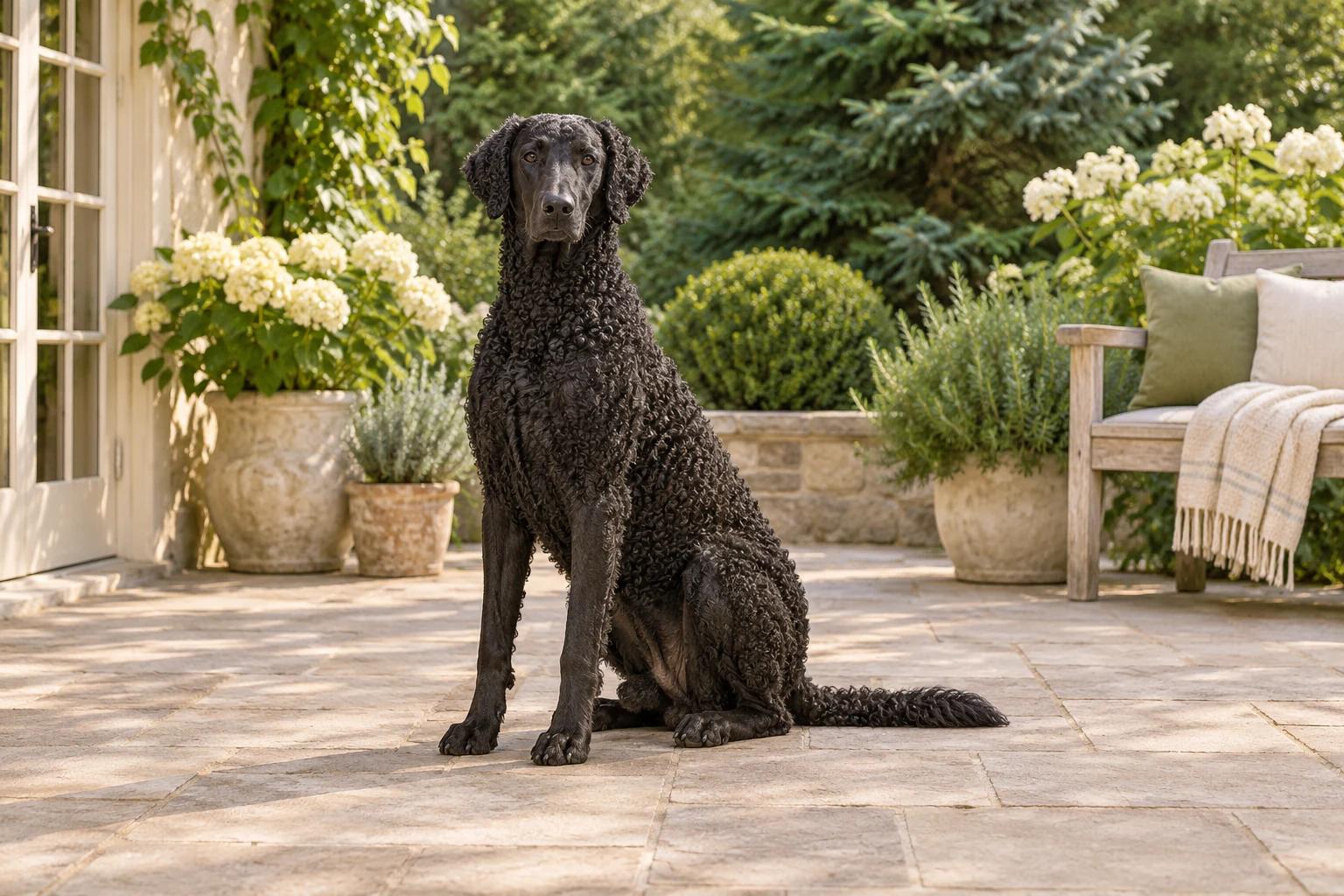
Curly Coated Retriever training should give an active, substantial dog a clear way to cooperate without turning every lesson into a test of persistence. Useful progress might be waiting while the car door opens, returning with a toy or stepping onto a resting mat after an outing. Those ordinary skills matter whether or not you ever enter a dog sport.
The Curly-Coated Retriever profile describes responsiveness to training alongside a need for activity and engagement. Plan lessons that explain one task at a time, with a reward the dog finds worthwhile, rather than relying on intelligence to fill in unclear instructions.
Curly Coated Retriever training: make the task worth understanding
The UKC standard describes an active, intelligent retriever responsive to training. VCA's breed guide also emphasizes independence and recommends calm, consistent engagement. Together, these are reasons to be clear and interesting, not to expect either mechanical compliance or inevitable stubbornness.
Choose a small finished action. “Stand beside me while I attach the lead” is more useful than “be sensible.” Begin when the room is quiet, reward the position and release the dog. Only then add a mild version of the exciting departure sequence.
If the dog stops responding, look at the lesson before changing your tone. Is the reward relevant? Have you repeated the task past the point of interest? Did you add the open door, another person and outdoor smells all at once? Change the setup so the next attempt answers one question rather than several.
Teach the beginning and the end of retrieving games
A household retrieving game includes more than chasing an object. Decide how you will invite the dog to begin, where you would like it to return and how an exchange will work. Use an appropriate toy and a space where you can manage the activity without competing with traffic or other hazards.
Start with a short, easy return rather than an impressive throw. Reward coming back into your space and offer a willing exchange instead of grabbing. If the dog takes the toy away, make the next repetition simpler; chasing the dog can turn the lesson into a different game.
Finish clearly while the activity remains manageable. Put the toy away and move to a familiar quieter routine. The dog should not have to infer whether every movement of your arm means another throw. If possession causes tension or concern, stop the contest and seek qualified guidance.
Use size as a reason to rehearse transitions
A Curly's adult footprint makes doorways and vehicle exits worth practicing before they become hurried. Set up a waiting position with the door closed. Reward a pause, move the handle, reward again if the dog remains comfortable, and build the sequence in steps.
Do not begin with the door fully open beside a busy road and hope an unfamiliar cue will hold. Maintain suitable physical management while the skill develops. Training increases your options; it does not make the environment predictable.
Apply the same approach inside. Teach moving out of a narrow passage before asking the dog to do it while you carry laundry. A familiar invitation to change position is easier for both of you than repeatedly squeezing around a standing dog and trying to direct its body with your knees.
Make returning useful without removing containment
If you are researching how to train a Curly Coated Retriever to return, start in a secure, easy setting. Call from a short distance, acknowledge the arrival and reward close enough that the dog learns where the return finishes. Sometimes release it back to an allowed activity so coming to you does not always end the fun.
Increase difficulty gradually. A familiar garden and an unfamiliar open area are not equivalent tests. A lead or suitable secure enclosure remains important where recall is not dependable or the surroundings create risk.
A short log can help: note the setting, distraction and response. “Returned from sniffing near the gate” gives you a more useful next step than “recall is good.” If the dog could not disengage, practice an easier version before trying that situation again.
Socialization does not require instant enthusiasm
Curly Coated Retriever socialization should include comfortable observation and ordinary shared spaces, not just greetings. The site profile does not promise that every stranger will receive an exuberant welcome. Allow time and space at introductions.
A visitor can sit down and leave the dog free to approach rather than leaning over it in the entrance. You can reward the dog for checking in with you or moving to a familiar resting place. Contact is optional; manageable participation is the goal.
On outings, choose a distance where your Curly can still respond. Watching a cyclist from well away is different from being surprised by one on a narrow path. If the situation is too much, create space or leave and arrange the next lesson more carefully.
Let obedience support care and rest
Curly Coated Retriever obedience can include standing for a brief look at the coat, offering a comfortable position for handling and settling while someone organizes equipment. These skills may be less impressive than a distant retrieve, but they are useful throughout ordinary life.
Practice a brief touch on an easy area, reward cooperation and pause. Ask a breed-experienced professional which positions suit routine care. If the dog suddenly resists familiar handling or seems painful, consult your veterinarian rather than treating it as a training dispute.
After activity, use a predictable end to the session: equipment put away, water available and a familiar place to rest. Observe whether your dog can change gears and seek help if that transition consistently becomes difficult. More repetitions are not always the answer to a dog struggling to settle.
The existing working-certificates article explains organized retrieving achievements. This household plan is separate from those tests. If you are considering the breed, use the breed match quiz to think about whether you enjoy regular teaching as well as active companionship.
FAQ
Is a Curly-Coated Retriever too independent to train?
Independence does not mean a dog cannot learn. Make tasks clear, use meaningful rewards and keep the setting manageable. Look at motivation and lesson design before labeling a missed response as stubbornness. Seek qualified help when progress stalls or behavior is concerning.
Should I start with formal retrieving tests?
Household skills can come first: returning, exchanging an object, waiting at an entrance and settling after activity. Formal tests have their own requirements and instruction. An enjoyable retrieving game is not proof that a dog is ready for every organized working task.
What helps a Curly greet unfamiliar people?
Provide space, a familiar handler and a route to move away. Let visitors settle rather than reaching over the dog at the door. Practice attention and a resting-place cue separately, then use them in manageable introductions without demanding immediate contact.
Sources behind this article
Article source checked: November 15, 2026. Source checked 2026-11-15
Keep reading

Affenpinscher Training: Build Useful Everyday Habits
Read article →