Coton de Tulear training for willing participation
Teach a Coton de Tulear useful everyday skills, from hand targets and waiting places to outings, social learning and cooperative care.
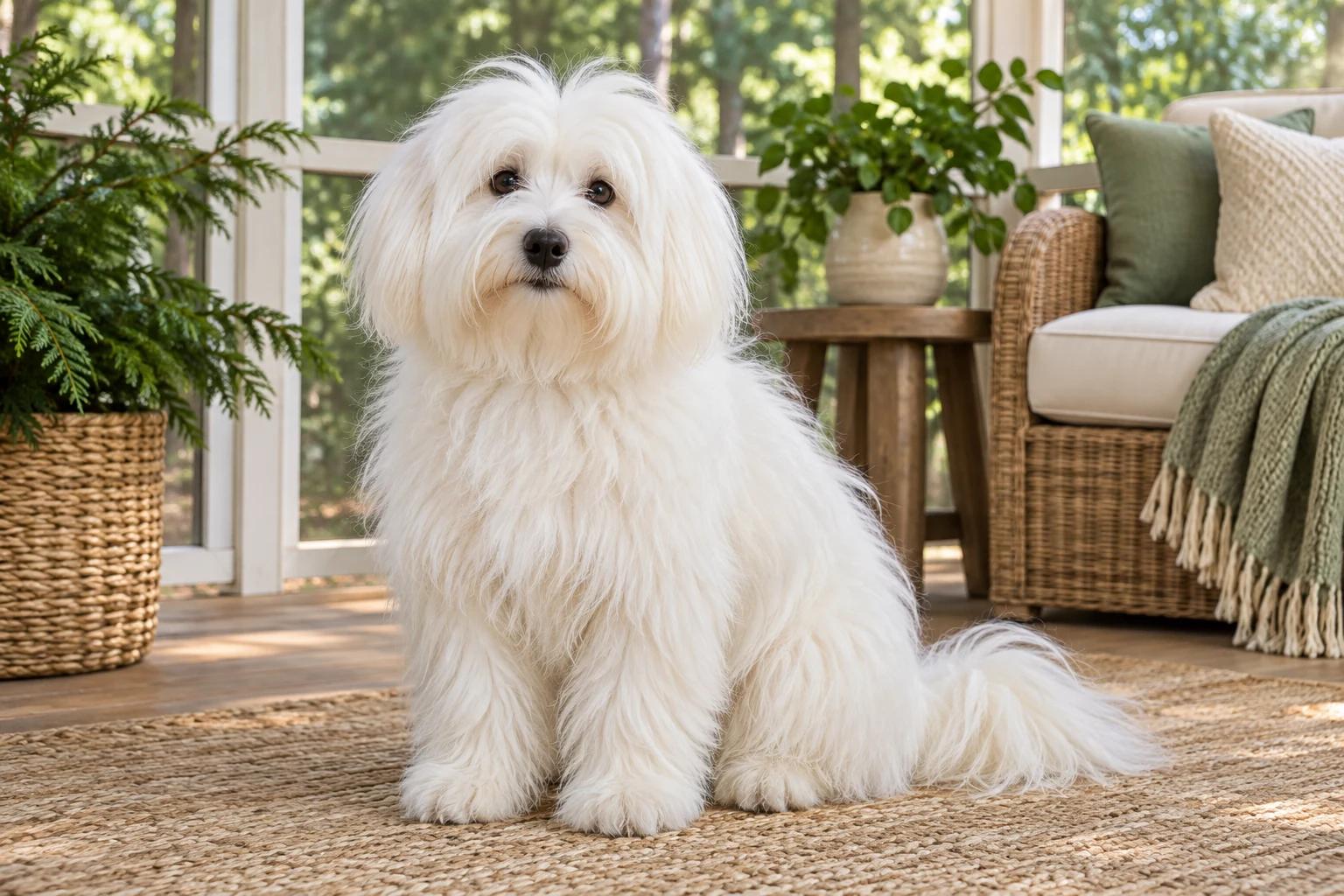
Coton de Tulear training should give a small companion more ways to take part, not merely teach it to stay out of trouble. A dog who can walk into position, approach equipment willingly and settle near you is easier to include in ordinary life than one who is always lifted or moved without warning.
The Coton de Tulear profile describes a relatively responsive learner with an interest in family interaction. Use that as a reason to make teaching part of the relationship. Small size can make it tempting to solve every awkward moment by picking the dog up, but useful skills still deserve practice.
Coton de Tulear training can start with one invitation
The AKC breed description presents the Coton as a playful companion interested in its person. A practical starting point is a simple hand target: an invitation to move toward your hand rather than being steered by a collar or reached over unexpectedly.
The AKC nose-targeting guide explains beginning with an open hand near the dog's nose, marking contact and rewarding it. Once the action is reliable, add a cue, then introduce small changes in distance and distraction. Keep the target at a comfortable height rather than encouraging a jump.
For your Coton, the first household application might be moving to your side while you attach the lead. Practice that position before the walk becomes exciting. The target is a communication tool, not a way to make the dog approach something it is clearly worried about.
Let the floor be a place for learning
If you are wondering how to train a Coton de Tulear, begin by looking at the lesson from its height. A reward held beside an adult's waist may encourage jumping; a person bending abruptly overhead may make the situation harder than intended.
Sit or kneel comfortably when that helps you deliver a reward clearly, keeping the dog on secure footing. Arrange a small open area where it can turn without weaving around chair legs. Put distracting toys away during the first lesson, then return them when the training session is finished.
Do not confuse physical access with learned understanding. Carrying the dog to its mat solves the location problem for that moment. Teaching it to move there gives you an action you can request later, including when your hands are occupied.
Teach a useful waiting place near the action
Choose a mat where your Coton can be nearby without standing underfoot. Reward stepping onto it, then small pauses. Add duration gradually, while keeping your own position and the room quiet enough that the dog can succeed.
Imagine preparing dinner or opening a package. The goal is not to exclude the dog from household life, but to offer a clear place to wait while you handle something else. Keep the mat away from hot surfaces, moving chair legs and the route people use most often.
Practice outside the busiest moment. Once the dog understands the location, rehearse a small version of the real activity, such as putting an empty bag on a counter. Add the next step only when the previous one remains manageable. A mat introduced during a lively gathering is a new instruction in a difficult setting, not an established skill.
Turn outings into manageable sequences
Coton de Tulear obedience can be organized around the trip from home to the pavement. Approach the harness, stand while it is fitted, wait while the door is opened and move through together. Teach the pieces separately before expecting a fluent departure.
On a quiet part of the walk, reward attention and a few steps with a loose lead. Allow permitted exploration too, with a clear signal that the job has changed. You do not need to demand continuous eye contact to have a cooperative outing.
A carrier, if you use one, can be another familiar destination rather than equipment that appears only for stressful travel. Let the dog investigate it while stationary at home, practice voluntary entry with an appropriate reward and keep early sessions easy. Follow the carrier's instructions for fit and secure use; training does not make unsuitable equipment appropriate.
Socialization includes choosing not to greet
Coton de Tulear socialization should prepare the dog for ordinary surroundings, not turn every person into a compulsory greeting partner. Watch a delivery trolley, pass a seated visitor or listen to household movement at a distance the dog can manage.
Even a sociable dog benefits when people wait for an invitation instead of reaching down at once. Ask a visitor to sit, allow space and let the dog decide whether to approach. You can reward a check-in with you without insisting that the dog touch the visitor.
If the setting becomes overwhelming, move away and make the next attempt simpler. Count successful experiences by what the dog could do, not by the number of strangers involved. A calm observation followed by returning attention to you is a useful result.
Make grooming participation a training priority
The Coton's long coat makes cooperative care more than a decorative trick. Teach standing briefly, allowing an easy touch and returning after a pause. Ask your groomer which positions make routine maintenance comfortable for this dog.
Do not save all handling practice for a day when the coat urgently needs work. A complete groom may ask for more patience than the dog has learned. Keep skill-building separate from difficult maintenance, and arrange professional help when needed.
Appearance is a different subject from cooperation. The existing Coton puppy markings article explains why photographs are not fixed forecasts; training is about what you and the dog can do together now. If you are planning ownership, include ongoing teaching and handling in the breed match quiz, not just the appeal of the coat.
FAQ
Is a hand target useful for a Coton de Tulear?
A hand target can give a Coton a clear invitation to move into position. Begin with easy, rewarded contact near nose height and add difficulty gradually. Do not use it to pull the dog into a situation it finds frightening or uncomfortable.
Should I carry my Coton instead of teaching lead manners?
Carrying may be appropriate in some situations, but it does not teach the dog how to walk with you. Practice manageable lead skills in quiet settings as well. Giving a small dog opportunities to learn creates more options for ordinary outings.
What training helps with grooming?
Practice comfortable positioning, brief touch and pauses before expecting a full care session. A groomer can identify useful positions for your dog's coat. Stop if handling appears painful and seek veterinary advice rather than treating discomfort as a failure of obedience.
Sources behind this article
Article source checked: November 15, 2026. Source checked 2026-11-15
Keep reading

Affenpinscher Training: Build Useful Everyday Habits
Read article →