Rough Collie temperament in everyday home life
Explore Rough Collie temperament through companionship, greetings, barking, settling and care handling, with useful questions about individual dogs.
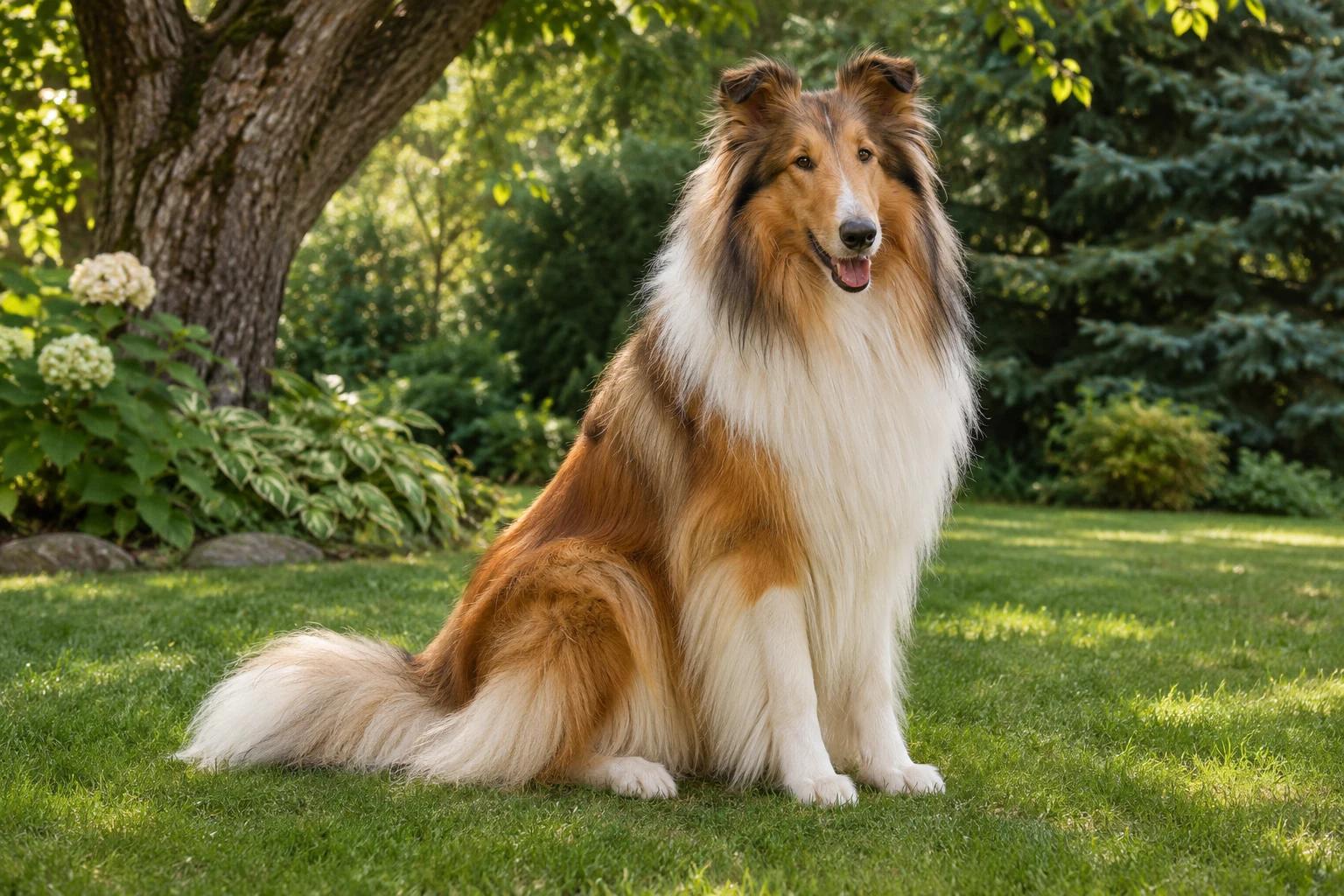
Rough Collie temperament is best understood through ordinary companionship: how the dog participates in the household, responds to change and moves between activity and rest. The familiar outline may suggest a ready-made storybook companion, but daily life still involves teaching, planning and learning what this particular dog finds easy or difficult.
The Collie profile describes a dog with an interest in family interaction, a relatively responsive learning tendency and a middle-range activity rating. Those are useful starting points for arranging a home. They are not a script that every Rough Collie follows from the day it arrives.
Rough Collie temperament beyond the familiar image
The American Kennel Club's Collie description identifies Rough and Smooth as Collie varieties. Here, “Rough” identifies the full-coated variety; it does not mean a rough manner. Nor is the Rough Collie a long-haired version of the Border Collie.
VCA's Collie guide describes a devoted companion and a quick learner, while noting that enthusiastic barking can become a difficulty. Taken together, those points suggest a dog whose involvement deserves direction. Wanting to participate and knowing how to participate are different things.
For example, your Collie may find the preparation for a walk more exciting than the quiet period afterward. Plan where the dog will be while shoes are tied and the door is opened. A repeatable sequence is more useful than hoping devotion will produce patience without practice.
Company can look quieter than constant interaction
A Rough Collie personality does not have to be measured by how enthusiastically the dog performs for visitors. Useful companionship can be a dog resting near your desk, joining a walk or checking in while you move around the kitchen. Make room for those undramatic forms of participation.
Set up a resting place near household activity without putting it in the main thoroughfare. A full-coated dog stretched across a narrow doorway may be close to everyone but repeatedly disturbed. Moving the bed slightly can preserve company while allowing people to pass without stepping over the dog.
When researching a prospective dog, ask what an ordinary evening looks like. Does the dog settle while the caregiver reads? What happens if the caregiver gets up? How much help is needed when the household changes rooms? Specific examples distinguish a demonstrated routine from a broad description such as “very attached.”
Leave room for different greeting styles
The site profile places openness to new people in the middle of its scale. A Collie may therefore need a little time or space at an introduction; there is no reason to turn every arrival into a test of friendliness.
Ask visitors to let the dog approach rather than surrounding it in the entrance. Provide a clear route to move away, and choose a spot for greetings where people are not blocking the dog's bed or water. If the dog prefers to watch at first, that can be part of a managed introduction rather than something the visitor must overcome.
The same practical thinking applies to other dogs. Ask about actual shared-living experience, walking preferences and the arrangements used around food or resting places. A breed's companion reputation cannot tell you whether two particular dogs will enjoy sharing a small room.
Look at barking in context
Noise deserves a place in your household planning, especially where windows overlook a path or neighbors share a wall. Rather than trying to predict a daily number of barks, find out what starts the behavior and whether the dog can disengage.
Keep a short record when a pattern emerges. A reaction to the delivery van, barking during play and calling when left alone are different situations. Describe what happens immediately before and afterward. That information helps a qualified reward-based trainer design a relevant plan instead of treating every vocal episode as the same problem.
An immediate management change might be moving a resting place away from a busy window or arranging deliveries so arrivals are less chaotic. Teach a simple alternative in a quiet setting before expecting it to work during the most exciting moment. If barking accompanies distress or a sudden behavior change, consult your veterinarian as well.
Activity should have a beginning and an end
Rough Collie characteristics include more than a capacity to accompany a walk. Think about the transitions surrounding activity: waiting while a gate opens, traveling on a loose lead and settling after the outing. These skills make shared time easier to organize without demanding nonstop exercise.
Choose a mixture you can sustain. An exploratory route, a small learning game and unhurried company offer different kinds of participation. The question is not whether you can produce an especially busy Saturday, but whether the dog will have a workable pattern when the weather is poor and your calendar is full.
Build pauses into that pattern. Put away the training materials, use a consistent ending signal and move into a quieter household task. If the dog struggles with the change, note when and how, then seek advice rather than endlessly extending the activity in the hope of wearing the problem away.
Care handling is part of the relationship
A full coat makes cooperative handling a regular practical concern. Rough Collie behavior during care may differ from behavior on walks or during play. Ask how the dog responds to standing, being touched on the legs and having tools approach, not just whether it “likes brushing.”
Practice comfortable positioning in brief steps and arrange professional instruction for the actual coat work. Sudden reluctance to be touched should not be dismissed as stubbornness; ask a veterinarian when pain or another physical problem may be involved.
The existing Rough or Smooth Collie coat comparison explains the physical coat distinction. For a temperament decision, the relevant question is whether you enjoy the close, patient work that ongoing care can require. Include that commitment when using the breed match quiz, alongside activity and household company.
FAQ
Is a Rough Collie automatically calm indoors?
No. A Rough Collie's behavior indoors reflects its experience, current needs and the household arrangement. Ask about an actual settling routine and plan how activity ends. A calm moment during a visit does not establish how a dog handles every workday.
Does Rough Collie mean the same thing as Border Collie?
No. Rough identifies the full-coated Collie variety in this context. The Border Collie is a separate breed. Similar names should not lead you to transfer activity expectations, dimensions or personality descriptions from one to the other.
What should I ask about a Rough Collie's personality?
Ask for examples of everyday behavior: greeting an unfamiliar person, settling after a walk, handling routine care and spending time apart from the caregiver. Those accounts help you understand the dog more clearly than an appealing adjective or familiar fictional character.
Sources behind this article
Article source checked: November 15, 2026. Source checked 2026-11-15
Keep reading

Airedale Terrier Temperament: What Everyday Life Can Feel Like
Read article →