Chiweenie Temperament: Understanding the Individual
Explore Chiweenie temperament through company, handling, noise and play, without treating parent-breed descriptions as personality predictions.
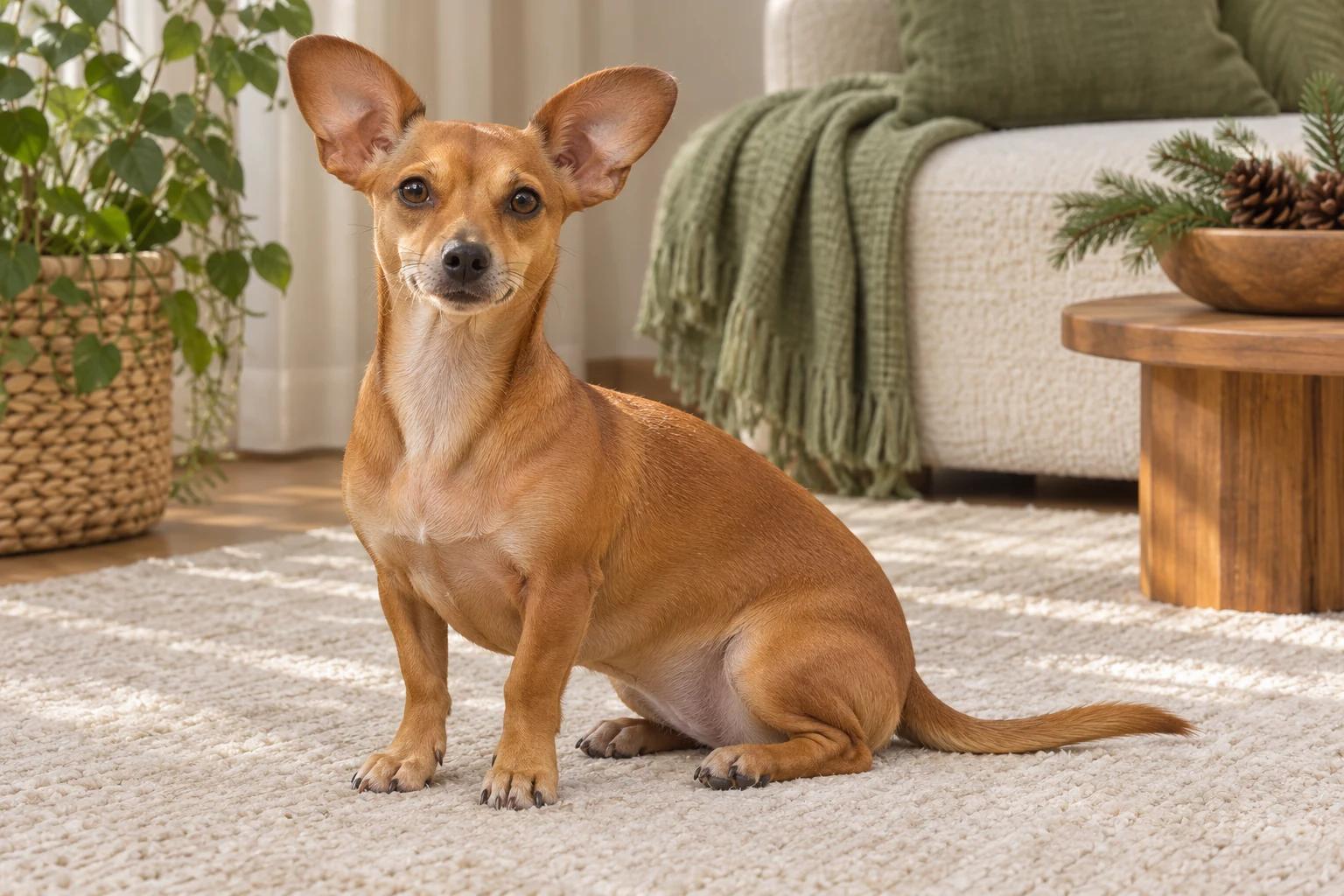
Chiweenie temperament is not a neat blend of two personality descriptions. The Chihuahua–Dachshund label tells you about reported ancestry, while the dog's choices in everyday situations tell you about the companion you will live with. Look especially at attention, handling, visitors and the transition from an exciting moment back to ordinary life.
A small body can make some behavior easy to interrupt by picking the dog up. That convenience should not replace understanding it. A useful picture of Chiweenie personality includes what the dog enjoys, what it avoids and which situations it has actually experienced, not just whether someone calls it affectionate or feisty.
Chiweenie temperament without the parent-breed shorthand
The AKC's introductions describe an alert Chihuahua and a bold, lively Dachshund. Those are parent-breed portraits, not a formula for predicting the cross. VCA's designer-dog overview notes that crossing breeds does not produce fully consistent results.
When someone says a Chiweenie has inherited “the best of both,” ask what that means in observable terms. Does the dog seek company, enjoy a game, investigate new places or settle while its caregiver works? Specific examples make the conversation useful without requiring you to accept an advertising phrase as evidence.
The Chiweenie profile introduces the cross and its care context. Use it to form questions, then make your assessment from the individual dog's history and the routine you can provide.
A lap is one kind of company, not the whole relationship
Imagine an evening in which your dog chooses to sit beside you, then moves away when you shift position. That can be a perfectly ordinary interaction. It need not mean affection has disappeared, and it is not an invitation to pull the dog back into place.
Ask a caregiver how the Chiweenie prefers to spend time with people. Does it invite touch, bring toys, follow household activity or rest nearby? Does that differ between familiar people? A dog can enjoy closeness without welcoming every kind of handling from everyone.
Make room for an alternative resting place that does not require constant physical contact. This is especially useful when a person is eating, using a laptop or getting up repeatedly. Decide what is allowed on furniture and keep the arrangement consistent, while giving the dog an appealing place to be when a lap is unavailable.
Take the small dog's objection seriously
A Chiweenie's protest may be easier to dismiss than a larger dog's. Laughing at a growl or calling it an attitude does not answer the underlying question. What was happening? Was someone reaching over the dog, interrupting rest, removing an item or crowding it against furniture?
The AKC's small-dog training discussion encourages owners to consider discomfort and give small dogs choices around handling where possible. For a household, that can begin with a simple agreement: nobody grabs the dog for a photograph or passes it between visitors as entertainment.
Provide space and seek qualified help when responses are concerning. If touch has suddenly become unwelcome or the dog appears uncomfortable, contact a veterinarian. Do not decide that pain is impossible because the dog has always been described as strong-willed. The separate guide to Chiweenie back pain and sudden weakness addresses that medical question rather than temperament.
Ask about noise in the setting where you will live
Before bringing a Chiweenie into a shared building, ask for examples of vocal behavior. What happens when a door closes outside, a person passes the window or the caregiver leaves the room? Find out which settings the dog knows. Experience in a detached house may not tell you much about an echoing corridor.
Map the practical route through your home. Where will the dog rest? Can it watch every passerby from that spot? Where can you prepare for walks without being crowded at the entrance? Small changes to the layout can make a routine easier to manage while you work on any difficult responses.
Do not make a promise of silence, and do not treat all barking as one personality trait. Keep a short description of the trigger and response. That gives a trainer something specific to assess and helps you avoid changing several things at once without knowing what mattered.
Play style matters more than the word playful
Ask what play looks like for the individual dog. A Chiweenie might enjoy a toy game with a person, investigating an object or moving through a familiar space. The useful question is how that activity starts and ends, not whether a listing awards a high playfulness score.
Try a simple invitation in a calm setting and allow the dog to decline. If the game becomes too hectic for the room, pause and change the arrangement rather than assuming excitement must be exhausted through more excitement. Keep objects suited to the dog and supervise their use.
For play with another dog, assess the actual interaction and provide separate space. Similar size alone does not establish compatibility. Neither does a brief greeting prove that two dogs can share toys, resting places and access to people throughout a day.
Read Chiweenie behavior over time
A first meeting is a snapshot. Ask the caregiver to describe an uneventful weekday and a disrupted one. Who is home? Where does the dog stay during absences? What happens when the normal walker changes? These questions reveal gaps in experience as well as established habits.
If you are considering an adult, ask for recent examples from more than one setting where available. If you are considering a puppy, do not treat a short visit as a finished adult personality assessment. Make a plan for teaching, support and adjustment rather than searching for a puppy whose label promises no work.
Useful Chiweenie characteristics are ones you can translate into a routine: a preferred resting arrangement, an enjoyable activity, a manageable introduction and a clear plan when people are unavailable. Use the breed-match quiz to examine your own preferences too. A fit depends on the life you can offer, not only the description you find appealing.
FAQ
Are all Chiweenies affectionate lap dogs?
No single companionship style applies to every Chiweenie. Ask how the individual seeks attention and responds to touch, and allow room for nearby rest without constant handling. Enjoying a familiar person's lap does not mean the dog welcomes being held by every visitor.
Does a Chiweenie personality come equally from both parents?
Do not interpret the crossbreed name as an equal personality mixture. Parent-breed descriptions provide background but do not predict an individual's responses. Learn about the actual dog through its history, everyday choices and behavior across familiar situations.
Is a Chiweenie suitable for a home with other dogs?
Suitability depends on the individual dogs and the arrangements available. Review each dog's history, organize thoughtful introductions and provide separate space. A small size or a friendly first greeting does not establish that the dogs will comfortably share a household.
Sources behind this article
Article source checked: November 15, 2026. Source checked 2026-11-15
Keep reading
Chiweenie Size: Measurements, Estimates and Everyday Fit
Read article →