Chiweenie Size: Measurements, Estimates and Everyday Fit
Understand reported Chiweenie size, what adult estimates can tell you, and how current measurements help with harnesses, beds and carriers.
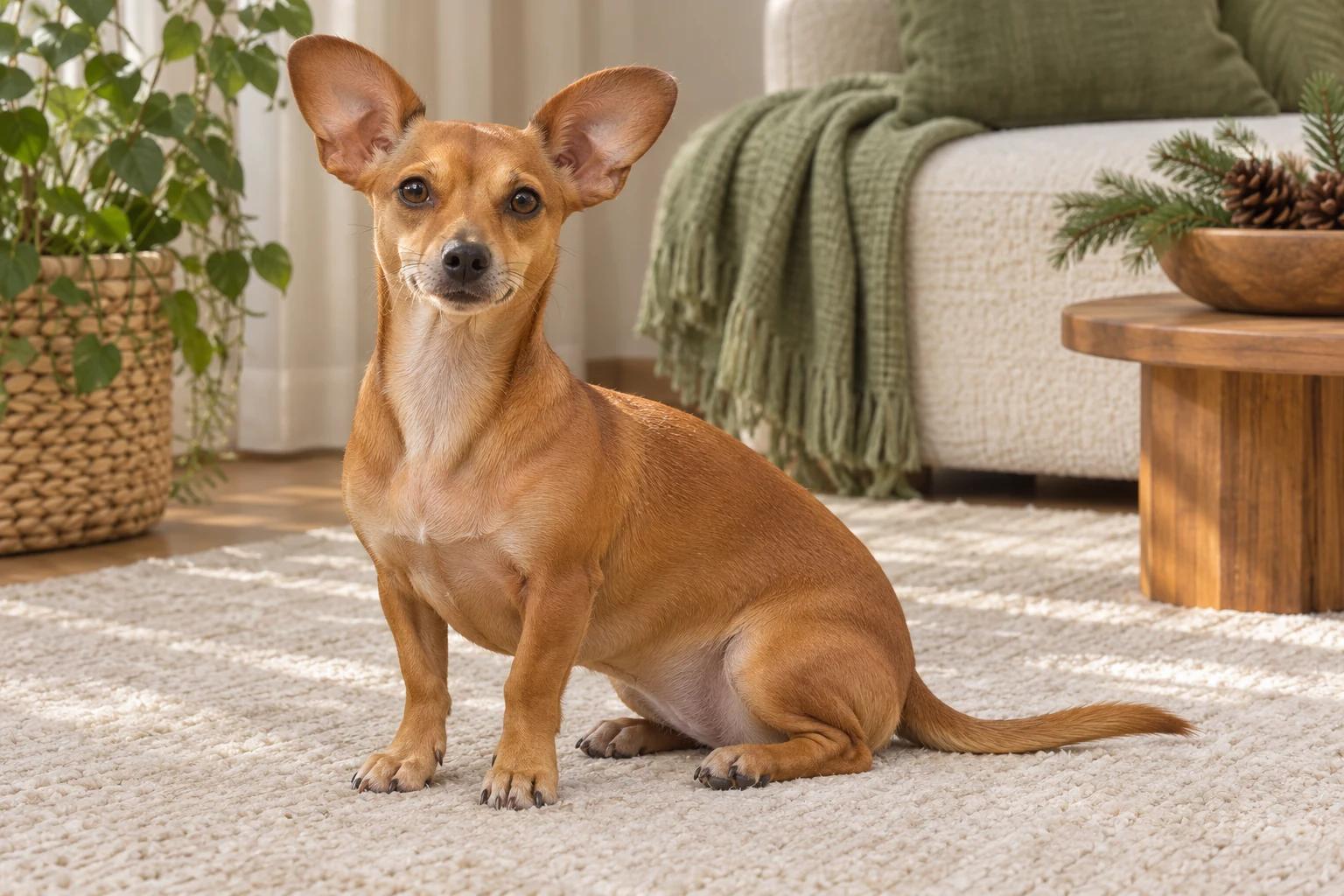
Chiweenie size is usually discussed as a small-dog question, but a useful answer needs more than one weight range. Height, body length, chest shape and current measurements all affect the equipment and space a dog needs. For a puppy, the adult outcome remains an estimate; for an adult, measuring the actual dog is more useful than trying to fit it into an online category.
The Chiweenie profile lists reported adult descriptions of 6–10 inches in height and 8–12 pounds in weight. These are published reference descriptions, not a breed standard, a measured growth study or a guarantee that every Chiweenie will remain within those limits.
Chiweenie size: a reference, not a promise
Chiweenie is a name for Chihuahua–Dachshund ancestry. The AKC Dachshund introduction notes that Dachshunds come in two sizes and have a long, low outline. That parent context makes it worth asking which dogs are actually in a puppy's family, but it does not validate a particular adult range for the cross.
VCA's explanation of designer dogs discusses the variability that can remain when breeds are crossed. Do not turn two parental measurements into an arithmetic prediction. A midpoint may look precise while providing no reliable answer about the dog you are considering.
If size is central to your plans, ask for the parents' actual adult measurements and the basis for any estimate being offered. Information about adult relatives can add context, but it should be presented as context, not a promise. A puppy photograph beside a household object is much less useful than a dated record with units.
Separate Chiweenie height from body length
Height is generally discussed at the shoulder, not the top of the ears. Body length answers a different question. A dog can stand low while still needing more floor space in a bed or carrier than you expected from its height alone.
For a practical home record, keep the measurements requested by the equipment you are choosing. A harness maker may need chest and neck circumference; a carrier maker may specify length and standing height. Follow each maker's illustrated measuring method instead of assuming every chart uses the same points.
Use a calm setting and do not force the dog into a position for the sake of a perfectly neat number. If measuring is difficult, ask a groomer, trainer or veterinary team for help with a suitable approach. Keep the date with the result, especially for a growing puppy.
A useful note might read “chest measurement taken for this harness model today,” rather than simply “small.” That gives you something to compare with a replacement product later without guessing which size label another company uses.
What Chiweenie weight can and cannot tell you
An actual weight is useful for records and for products with a specified load limit. It does not describe the dog's full shape. Two dogs of similar weight can need different harness adjustments or different carrier dimensions.
Nor is the reported 8–12-pound reference a target to feed toward. Ask a veterinarian about your dog's body condition, growth and individual nutritional needs. Do not restrict or increase food merely to make the dog match a crossbreed description. A change in weight also deserves context rather than being judged against a single online interval.
When a caregiver supplies a weight, ask when and how it was measured. “About ten pounds last year” and “weighed at the clinic last week” are different kinds of information. You do not need to challenge every estimate, but you should know which decisions can reasonably depend on it.
Choose equipment for the dog in front of you
For a harness, start with the relevant current dimensions and check the manufacturer's fit instructions. A package marked “toy” or “small” does not establish a fit for every Chiweenie. Check the adjustment range and whether the shape suits the individual rather than buying solely from a photo of a similar-looking dog.
For a bed, observe how the dog rests. A compact curl and a full stretch require different amounts of usable space. Measure the sleeping surface rather than relying on the outer dimensions of a heavily padded bed. The space available inside matters more than the size printed on the label.
For a carrier, distinguish the product's weight capacity from the room inside it. Meeting a load rating does not necessarily mean the dog has suitable space. Follow both the product's guidance and any separate transport-provider requirements. A retailer's “travel approved” phrase is not a substitute for checking the rules for a particular journey.
Buying adjustable equipment can be practical for a puppy, but adjustment has limits. Recheck the fit as the dog changes instead of assuming that a purchase made early will last until adulthood.
Plan the home without reducing everything to pounds
Small size can change the scale of household arrangements without removing the need to plan them. Look at gaps around gates, the route through a busy kitchen and where the dog will rest while chairs move. Check barriers against the actual dog's dimensions rather than assuming a product designed for dogs will contain every small individual.
Consider who will manage transport and daily care. If lifting is part of the plan, ask your veterinary team about appropriate handling for your dog. Do not make ease of carrying the only reason to choose a particular puppy; you also need a workable routine when carrying is inconvenient or unsuitable.
The breed-match quiz can help you think beyond the size label to everyday preferences and available time. For the separate medical topic, see Chiweenie back pain and sudden weakness. Body shape should not be used to diagnose a dog or promise protection from health problems.
FAQ
How big do Chiweenies get?
The My Breed Atlas profile reports a typical description of 6–10 inches and 8–12 pounds, but individual Chiweenies can differ. These figures are not a crossbreed standard or an adult-size guarantee. Use family information cautiously and measure an adult dog directly for practical decisions.
Can a puppy size chart predict my Chiweenie's adult weight?
A generic chart should not be treated as a reliable prediction for an individual Chiweenie. Keep dated growth records and discuss them with a veterinarian. Avoid promises based on one photograph, one early weight or the midpoint between the parents' sizes.
Is “mini Chiweenie” a dependable equipment size?
No. A descriptive label does not supply the chest, neck, length or height measurements needed for equipment. Measure your dog using the relevant manufacturer's instructions and check fit. Product size names and informal crossbreed labels are not interchangeable measuring systems.
Sources behind this article
Article source checked: November 15, 2026. Source checked 2026-11-15
Keep reading
Chiweenie Temperament: Understanding the Individual
Read article →