Chinese Shar Pei Training: Everyday Cooperation
Build Chinese Shar Pei training around clear cues, visitor routines, relaxed walks and practical handling without turning independence into conflict.
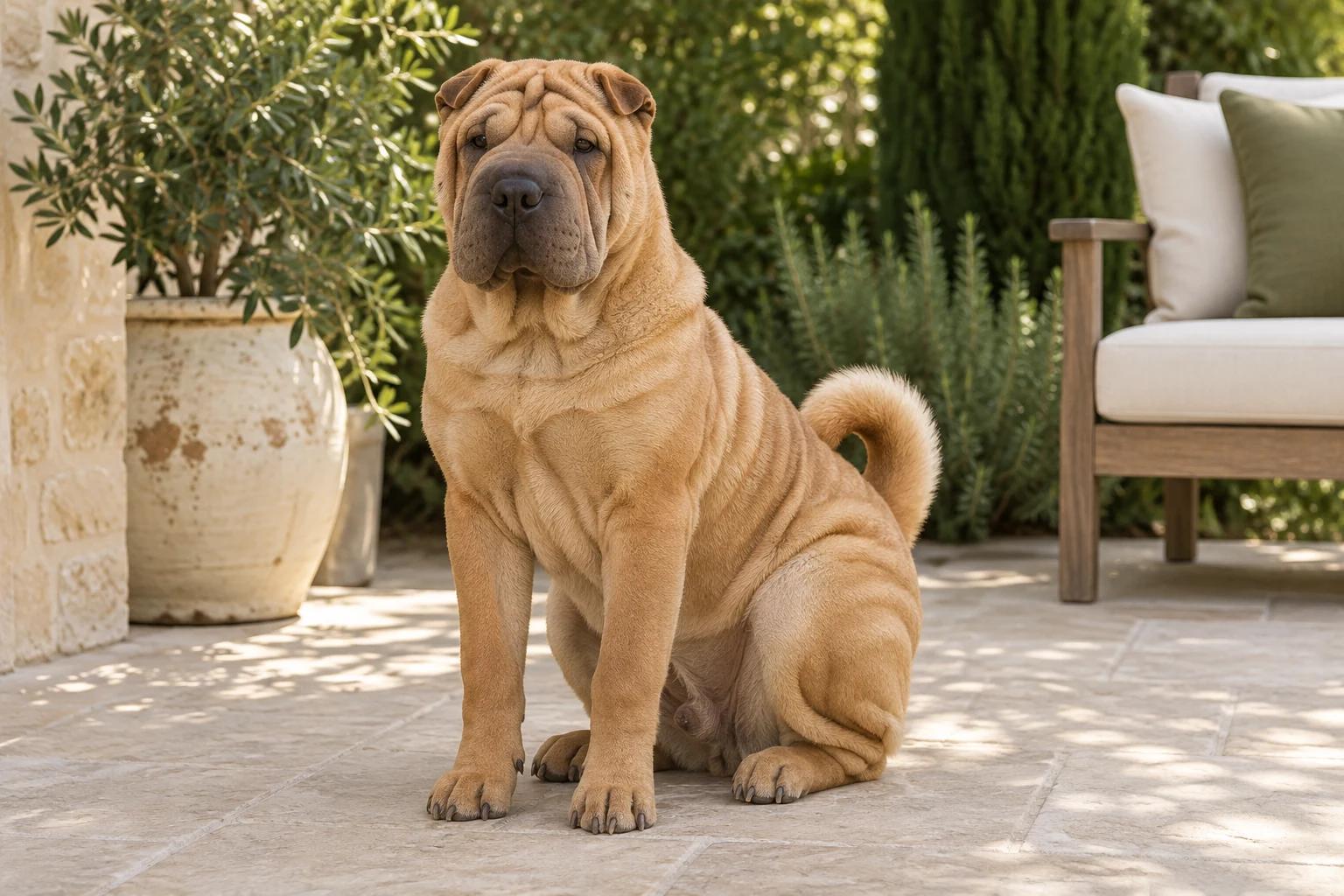
Chinese Shar Pei training works best as a set of useful agreements: come away from the entrance, walk with me past that distraction, and stand comfortably while equipment goes on. Those skills matter more than a long list of tricks. For a dog whose independence can be part of its appeal, teaching should make the requested action understandable and worth doing.
The Chinese Shar-Pei profile provides the breed overview. Here, the focus is communication during everyday transitions, not skin-fold treatment or an attempt to turn a reserved dog into a social butterfly.
Chinese Shar Pei training starts with a clear invitation
The UKC breed standard describes independence alongside devotion to familiar people. That combination is a reason to build cooperation, not to treat every hesitation as a challenge to your authority. Start where your dog already feels comfortable and where you can control interruptions.
Choose one word for the action you want. If “here” means approach the handler, everyone should use it that way. Avoid using the same word to mean stop barking, leave the doorway, and come indoors. Those may all end with the dog beside you, but they begin in different situations and need their own practice.
Set up an easy first success. Say the cue when your dog is already about to move toward you, acknowledge the arrival, and provide a reward your dog enjoys. Later, ask from a little farther away. Do not start the lesson when an unfamiliar visitor is arriving and the dog has something much more pressing to investigate.
Make the doorway a practiced sequence
An entrance combines movement, unfamiliar smells, people, and an opening to the outside. It is a poor place to improvise Chinese Shar Pei obedience. Decide in advance where the dog will wait while you deal with a delivery or guest.
Practice going to that place while the house is quiet. Reward a step onto a mat, then several steps, then a brief pause there. A mat should not become a place where the dog is continually restrained while exciting or worrying events happen nearby. Build pleasant, ordinary uses for it too, such as resting beside your desk.
Next, add only a small piece of the doorway routine. Touch the handle without opening the door. Return and reward the dog for remaining in the practiced location. On another repetition, move the handle. If the dog gets up, reduce the challenge rather than making the next attempt louder or longer.
For real arrivals, use secure separation when needed. Training a skill and depending on that skill under pressure are different stages. Tell visitors before they enter that the dog does not need a greeting. That simple instruction gives you room to handle the situation without also negotiating with an enthusiastic guest.
Teach movement together before difficult walks
If you are wondering how to train a Chinese Shar Pei to walk more cooperatively, begin with turns rather than distance. In a quiet space, take a few steps, turn, and reward your dog for coming with you. Practice both directions so the movement does not depend on one familiar route around the furniture.
Outside, identify places where you can change direction easily. A broad verge or open corner gives more options than a narrow passage. Reward a check-in before you reach a distraction, rather than waiting until the dog is staring at it and then repeating a cue.
Keep the lead attached where required and avoid using an unsecured space to test a new recall. A dog responding in the kitchen has learned something valuable, but not necessarily the same response beside another dog. Record the setting as well as the result: “turned with me across the empty car park” is a more informative note than “walked well.”
The VCA Shar-Pei overview favors reward-based work and includes learning as mental activity. You can make a walk educational without making it a continuous obedience drill. Leave room for ordinary exploration between short pieces of practice.
Socialization without compulsory greetings
Chinese Shar Pei socialization can include seeing people without being touched by them. Choose a quiet observation point with enough room to leave. Let your dog notice an ordinary event, such as someone carrying a bag, and reward a comfortable return of attention to you.
A useful outing ends before you have run out of options. If people begin gathering around the dog, move away rather than trying to use the crowd as an advanced lesson. For a puppy, ask your veterinarian about appropriate outings during the vaccination period and choose a trainer who can explain how introductions are managed.
Keep a small list of contexts, not a target number of encounters. A calm visit near a parked car, a brief look at a person using an umbrella, and a quiet pause outside a familiar building are different experiences. Repeating a manageable experience can be more useful than collecting a new one every day.
Include equipment and care cooperation
Set the harness or lead down before asking your dog to wear it. Reward interest and voluntary approach. Separate approaching the equipment from having it fastened, then separate fastening from immediately heading into a busy environment. This lets you see which part needs more practice.
For handling, begin with a brief touch the dog already accepts and finish while participation is easy. Do not use an obedience cue to hold the dog through apparent discomfort. Changes in tolerance deserve a conversation with your veterinarian. The existing Shar-Pei skin-fold article covers that separate care topic.
If your household is still evaluating its training capacity, the breed quiz can help organize the conversation. Include the person who will actually handle morning departures and visitors, not just the person most excited about a puppy.
Sources and scope
UKC's Chinese Shar-Pei standard and VCA's Chinese Shar-Pei overview were checked on November 15, 2026. The doorway, walking, and recordkeeping examples are practical planning suggestions, not promises about a particular dog's response.
FAQ
Are Shar-Pei impossible to train?
No. Independence is not an inability to learn. Use clear cues, worthwhile rewards, and manageable settings. Judge progress by a specific skill in a specific situation rather than expecting instant obedience everywhere.
Should every visitor greet my Shar-Pei?
No. A visitor can enter while the dog stays comfortably separate. Greetings are optional, and teaching a predictable arrival routine does not require physical contact with every guest.
What if training suddenly becomes harder?
Review what changed in the setting, task, or household. If there is an abrupt behavioral change or apparent discomfort, speak with your veterinarian. A qualified reward-based trainer can help adjust the teaching plan without escalating pressure.
Sources behind this article
Article source checked: November 15, 2026. Source checked 2026-11-15
Keep reading

Affenpinscher Training: Build Useful Everyday Habits
Read article →