Chihuahua Training: Small Skills for Everyday Life
Teach Chihuahua training skills at the right scale, from recall and harness handling to carrier entry and thoughtful socialization.
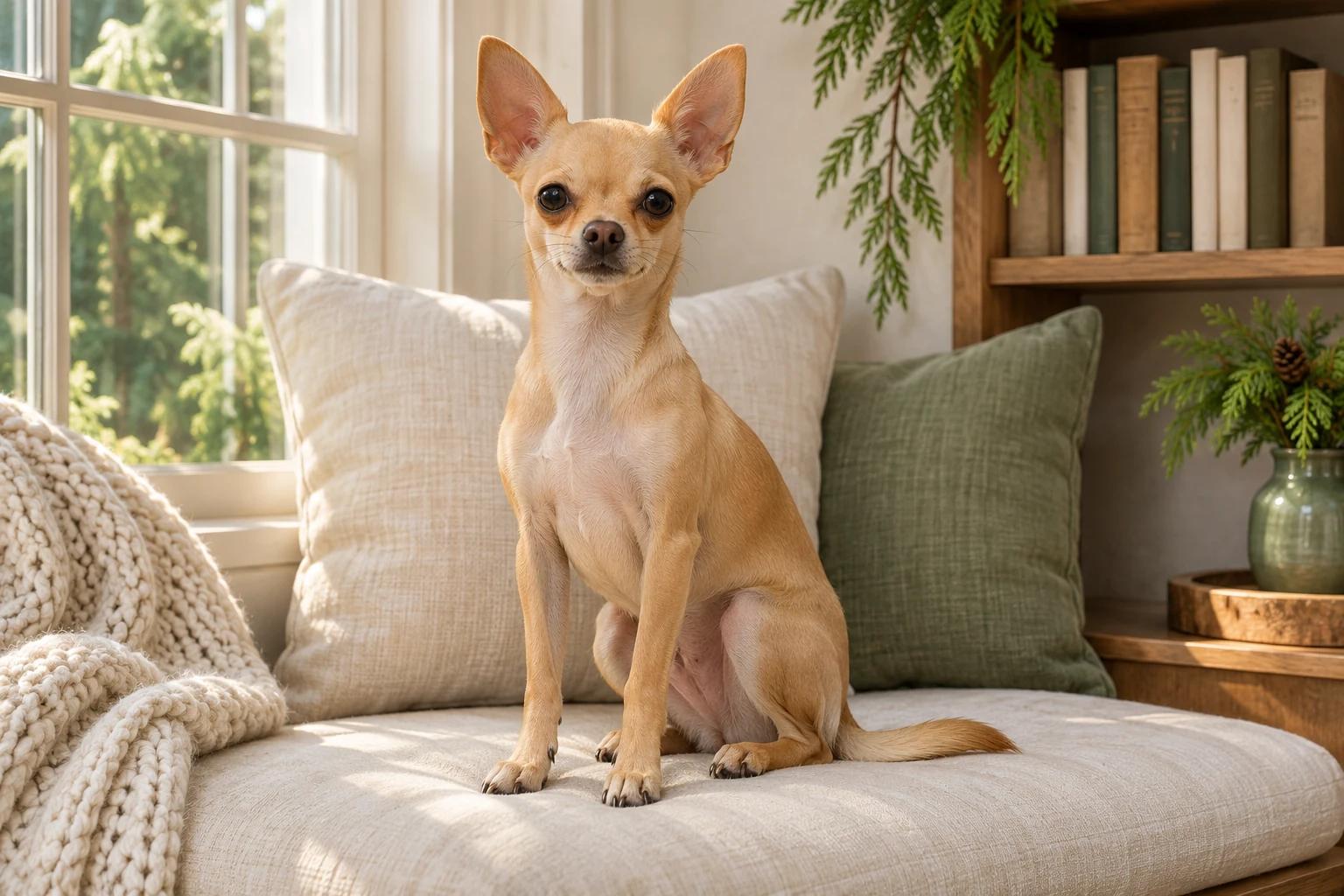
Chihuahua training should give a small dog useful ways to participate in daily life, not merely make it easier to carry the dog through awkward moments. Coming when called, stepping into a carrier and standing calmly for a harness are worth teaching even when you could simply pick your dog up. These skills also make your own actions more predictable.
The Chihuahua profile is a starting point for understanding this alert companion. The American Kennel Club also highlights the breed's alert character. Treat that awareness as something to work with: choose where your dog learns before expecting attention in a busy doorway. AKC Chihuahua reference.
Chihuahua training begins at floor level
Start by looking at the lesson from your dog's position. Your hand may be far overhead, the reward difficult to reach and a chair leg blocking the route toward you. A Chihuahua can be trying to follow the exercise while the human interprets an awkward setup as disobedience.
Use a clear patch of floor with secure footing. Sit or crouch comfortably rather than repeatedly bending over the dog. Arrange the reward so you can deliver it without encouraging a jump. If you cannot reach comfortably, change your own position before beginning.
Choose one visible action for each lesson. “Stand here while I attach the lead” is clearer than “behave.” First reward standing beside you; introduce a brief touch of the equipment separately. Combine the pieces only when the dog understands them. This is a practical way to make an everyday task teachable instead of rehearsing a daily struggle.
How to train a Chihuahua without a contest
VCA's smooth-coat Chihuahua guide recommends reward-based learning and notes that force-based methods are a poor fit. That is not a claim that coat length determines learning style. It supports a patient teaching approach, not a battle over who has the stronger personality. VCA Chihuahua guide.
Prepare several repetitions, not an exhausting drill. Ask for something easy, acknowledge the response and deliver the reward where you want the dog to remain. Then pause. A lesson can finish while both of you still want to continue.
If your dog stops responding, examine the setup. Did you move into a noisier room? Is your hand now out of sight? Did another person appear behind you? Return to an easier version rather than repeating the cue more loudly. Write down the circumstance in which the response worked; that gives you somewhere concrete to restart.
Keep household wording consistent. If “come” means approach closely enough for a lead attachment, do not also use it to mean glance in your direction. Explain the same definition to everyone who handles the dog.
Make coming closer a good experience
Practise recalls across a quiet room before trying them outside. Begin when your Chihuahua is already likely to approach. Give the cue once, acknowledge the approach and reward beside you. Occasionally release the dog to explore again so that coming over does not always end an enjoyable activity.
Think about what your hands do afterward. Calling a dog over and immediately grabbing from above may undermine the response you are trying to build. Practise the gentle handling required for an ordinary lead attachment as its own lesson, without a rush to leave.
Outdoors, use secure boundaries and suitable equipment rather than testing an unfinished recall near a road. Small size does not make a missed response less consequential. The purpose of practice is to build a skill, not discover the hardest situation in which it fails.
Include a carrier in Chihuahua obedience
A carrier can be part of transport planning, but entering it is a skill worth teaching before a journey. Put it on a stable surface at floor level, secure the door open and let the dog investigate without being pushed inside.
Reward interest, then a step toward the opening, then voluntary entry as it becomes comfortable. Do not turn the first successful entry into an unexpected long confinement. Practise leaving again, too. Later, introduce the ordinary movements involved in transport in manageable stages.
Keep this separate from harness practice. A dog that enters a carrier happily may still need help understanding a buckle near its body. Dividing tasks prevents one difficult step from making the entire departure routine feel confusing.
For handling associated with coat care, see the existing Chihuahua coat comparison. It explains the visible varieties without treating appearance as a personality test.
Chihuahua socialization is not a greeting quota
Plan opportunities to notice people, movement and everyday sounds without requiring contact with everyone. A quiet place with room to step away is more useful for observation than a crowded entrance where strangers immediately reach toward your dog.
Ask visitors to leave the first approach to the Chihuahua. Give the dog somewhere to retreat and avoid passing it between people. You can reward calm attention to you while the visitor remains at a comfortable distance.
Record useful details: the location, how close the person was and whether the dog could return attention to you. That is more informative than counting introductions. If the dog becomes distressed, increase space and simplify the situation. Persistent fear or defensive behavior warrants help from a qualified reward-based professional; sudden behavior changes also deserve veterinary discussion.
Fit lessons into the routine you actually have
Choose three everyday moments for practice: before the lead goes on, when you move between rooms and before settling for the evening. Keep each goal small enough that you can repeat it on an ordinary workday.
Review progress by task rather than giving the dog a global label such as stubborn. Perhaps carrier entry is easy but standing for the harness is not. Those are separate results requiring separate next steps. If you are still deciding whether this routine suits you, use the breed quiz alongside the practical demands, not instead of them.
FAQ
Can a Chihuahua learn ordinary obedience skills?
A Chihuahua can learn useful skills such as recall, settling and standing for equipment. Adapt the teaching setup to the dog's scale and practise one clear response at a time rather than relying on lifting the dog into place.
Should I pick up my Chihuahua whenever training gets difficult?
Picking up a dog may be necessary in a particular situation, but it does not teach the missing skill. Arrange separate practice for approaching, handling and transport when you have time and a manageable environment.
Does socialization mean letting everyone hold my Chihuahua?
Chihuahua socialization does not require being held by strangers. Observing people from a comfortable distance, having an exit and learning predictable routines can be more useful than repeated forced contact.
Sources behind this article
Article source checked: November 15, 2026. Source checked 2026-11-15
Keep reading

Affenpinscher Training: Build Useful Everyday Habits
Read article →