Chesapeake Bay Retriever Exercise Requirements: A Plan
Plan Chesapeake Bay Retriever exercise requirements with varied outings, purposeful games and carefully prepared swimming opportunities.
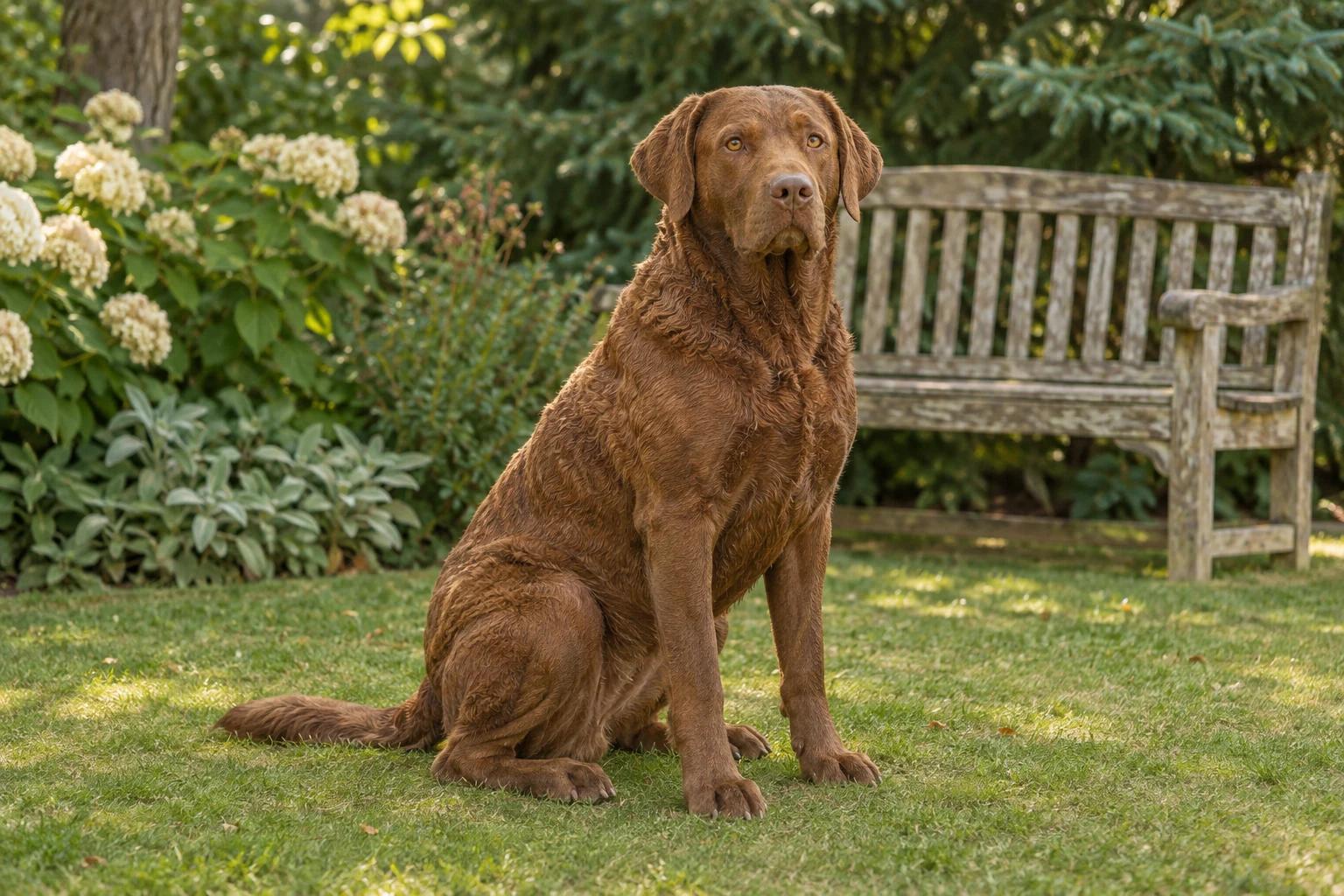
Explore the
Chesapeake Bay Retriever
Background, care, and everyday considerations.
View breed profile →Chesapeake Bay Retriever exercise requirements are best met with a varied, repeatable routine rather than one heroic weekend outing. This is an active retriever, so ordinary days need room for movement and purposeful engagement. The practical challenge is fitting those opportunities into your real schedule without treating every outing as an endurance test.
Begin with the Chesapeake Bay Retriever profile, which places activity needs toward the higher end of its reference scale. Then consider the dog in front of you: its age, current experience and any limits your veterinarian has identified matter more than a universal timetable.
Chesapeake Bay Retriever exercise requirements need a daily plan
VCA's breed guide identifies regular physical activity alongside mental work, with retrieving and swimming among possible outlets. That supports a mixed plan rather than the idea that distance alone completes the job. VCA Chesapeake Bay Retriever guide.
Divide your plan by purpose. One outing might allow exploration, another might include a small retrieving exercise, and a home session might practise a useful skill. Those categories help you see what the day contains without pretending that all activity is interchangeable.
Next, give each opportunity a realistic place in the calendar. An unspecified promise to “do more outside” is easy to lose when meetings run late. Identify who handles the first outing, what happens during the working day and which evening activity remains possible when you are tired.
Keep a backup that preserves engagement without copying the intensity of the original plan. If the usual outdoor location is unavailable, a suitable shorter outing and a quiet searching game may be more practical than improvising vigorous exercise in a cramped room.
How much exercise does a Chesapeake Bay Retriever need?
There is no single duration that describes every Chesapeake. A puppy, a conditioned adult and an older dog should not inherit the same plan simply because their breed name matches. Ask your veterinarian about appropriate activity and progression for your dog's circumstances rather than taking an online number as a prescription.
For planning, record what you actually do. Note the kind of activity, the setting and whether it was familiar. A walk with many pauses is a different experience from repeated retrieves, even when the clock shows the same time.
Do not respond to every unsettled evening by automatically adding more intensity. Look at the whole day: opportunities to rest, interruptions, learning demands and changes in routine. If behaviour or tolerance changes unexpectedly, seek professional advice rather than trying to exercise the problem away.
The aim is a sustainable pattern you can review, not an escalating target. A routine that depends on doing more each week eventually stops fitting ordinary life and may not address what the dog needs.
Give retrieving a beginning and an end
For an interested Chessie, retrieving can be a shared project rather than an endless sequence of throws. Choose an appropriate open area, suitable equipment and a simple goal. Perhaps you are practising a neat return over a short distance, not trying to send the toy as far as possible.
Arrange the space before starting. Keep the line of travel away from roads, other people's picnics and dogs that may join the game. If the setting becomes crowded, choose a different activity instead of assuming your dog will ignore every interruption.
Include pauses while the dog is still able to respond. Put the toy away at a predictable finish and move on to a quieter part of the outing. A game with clear boundaries gives you something repeatable; throwing until either participant can no longer continue does not.
Remember that retrieval interest is useful information, not permission to overlook the environment. You still choose where the game happens, how difficult the task becomes and when to stop.
Chesapeake Bay Retriever swimming needs preparation
A water-retrieving reputation is not a water-safety guarantee. Before planning swimming, check that the location allows dogs, that the conditions are suitable and that there is an accessible way in and out. If you cannot establish those basics, keep the outing on land.
AKC's water-safety guidance recommends a properly fitted life jacket, gradual introduction, continuous supervision and breaks. It also advises bringing fresh drinking water and not forcing a dog that is uncomfortable. AKC water-safety guide.
Make the first visit about the location rather than an ambitious swim. Identify the exit together and keep the experience manageable. Do not add a distant thrown toy as a test of courage or assume that another swimming dog removes the need for preparation.
Plan the return home too. Pack what you need for the car and leave time for checking the dog over and settling afterward. Swimming should be one considered option in the routine, not the only activity you can offer if your local water access closes.
Balance the Chesapeake Bay Retriever activity level with thinking tasks
A short search for a familiar object can give the outing a different purpose. Begin where the dog can succeed easily, then change one feature at a time. You might move the object slightly farther away or use a different familiar area, rather than hiding it somewhere impossibly difficult.
At home, practise a useful action such as waiting while walking equipment is arranged or moving onto a resting mat. These tasks connect engagement with daily life. They also give household members something constructive to practise when a large outdoor session is not available.
Do not measure mental work by frustration. If the dog stops engaging, simplify the task or finish. A puzzle that nobody can solve is not automatically a better activity than a clear, successful lesson.
Test the routine before choosing the breed
Try the calendar without a dog first. Walk the likely routes at the times you expect to use them and check which locations remain available in ordinary weather. Account for travel, cleanup and equipment rather than counting only time spent actively walking.
Our Chesapeake and Labrador coat comparison addresses a separate ownership question. For activity fit, the breed match quiz can help organise your preferences, but your weekday schedule is the more revealing test of what you can sustain.
FAQ
Does a Chesapeake Bay Retriever need to swim every day?
No. Swimming is one possible activity, not a daily requirement. A Chesapeake's plan can include suitable walks, retrieving, learning and other shared activities, with swimming added only when the dog and conditions are appropriate.
Is a large garden enough exercise for a Chesapeake?
A garden provides space, but space alone does not create a varied routine. Plan shared activity, exploration and learning rather than assuming the dog will organise all of its own engagement outside.
Should I follow a fixed exercise time from a breed chart?
Treat a chart as a broad planning prompt, not an individual prescription. Ask your veterinarian about activity appropriate to the dog's age and circumstances, and review the routine as experience and needs change.
Sources behind this article
Article source checked: November 15, 2026. Source checked 2026-11-15
Keep reading

Afghan Hound Exercise Needs: Build a Workable Active Day
Read article →