Cherubim cat size: adult weight, build and development
Understand Cherubim cat size with current female and male weight ranges, physical proportions and the distinction between size, coat and maturity.
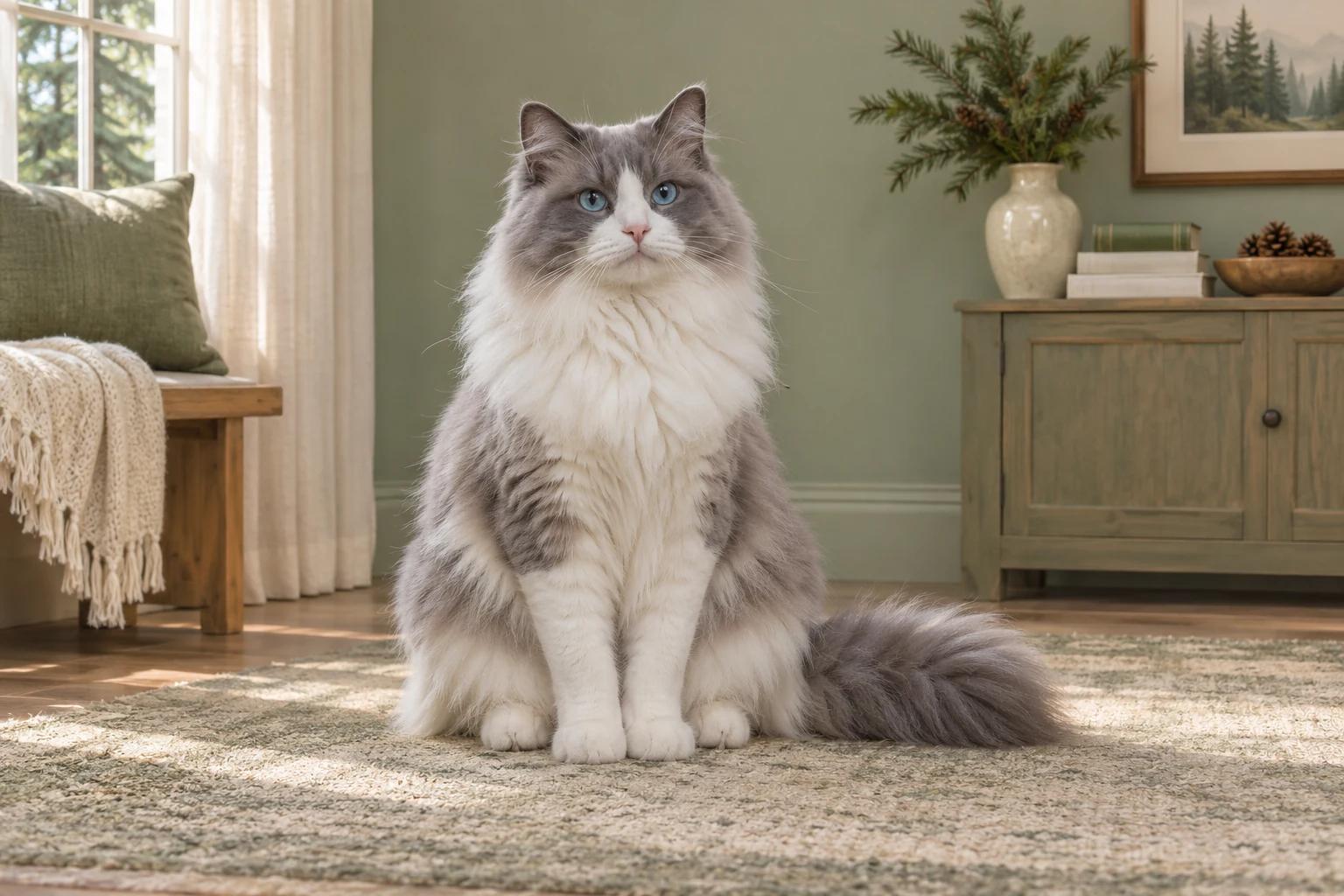
Cherubim cat size has a useful numerical starting point: the current profile lists adult females at 10–15 pounds and adult males at 15–20 pounds. Keep those sex-qualified figures together with the individual cat's actual measurements. A breed reference can help you understand the scale of the animal without becoming a compulsory target for every kitten or adult.
Cherubim cat size: read the female and male ranges separately
The current Cherubim profile gives an overall adult reference of 10–20 pounds. Its more specific intervals are:
- Females: 10–15 pounds, approximately 4.5–6.8 kilograms.
- Males: 15–20 pounds, approximately 6.8–9.1 kilograms.
The kilogram figures are rounded conversions, not separate estimates from a second population. If you encounter a weight written in another unit, convert it before comparing it with these references. Five kilograms and five pounds are very different amounts, even though the printed number is the same.
Fifteen pounds is the upper endpoint of the displayed female range and the lower endpoint of the male range. It therefore needs context. A fifteen-pound female and a fifteen-pound male have the same measured mass, but occupy different positions within the two displayed references. Neither position by itself establishes whether the individual is at an appropriate weight.
The overall interval should not replace the sex-qualified one when that information is available. For example, twelve pounds falls within the overall reference and the female interval, but below the displayed male interval. This is an interpretation of the numbers, not a diagnosis or a reason to change a cat's food.
Likewise, twenty pounds is not a promised outcome for every male. The top of an interval does not tell you how frequently that weight occurs. It supplies neither an average nor a percentile, and it cannot predict the final weight of a particular kitten. Use the actual adult's measurement when you have it, and ask your veterinarian about the appropriate weight for that individual.
The frame beneath the outline
The LOOF Ragdoll and Cherubim standard describes a long, powerful, rectangular body. The chest is broad and rounded, with similar width through the shoulders and hips. That is a description of the torso's proportions, rather than a claim that all Cherubims will have the same dimensions.
The legs have substantial bone and muscle and are proportionate to the body. The hind legs are slightly higher than the forelegs. Strong, rounded feet support that frame, while the tail is long, broad at its base and carried as a plume. The neck is short and muscular.
Together, these features explain why a side view and a view from above answer different questions. The side view shows the relationship between trunk, legs and tail; the view from above shows how shoulder and hip widths relate. Do not try to reduce the whole build to the length of one leg or the width of the head. These are complementary features of the breed's shape, not interchangeable measures of overall size. A long tail, in particular, is not additional torso length.
Size, color and coat do not finish on one date
TICA's breed-group standard says full weight and size may take four years to develop, while full color is reached on a different timetable, around three years. It also allows seasonal changes in coat length and shorter coats in kittens.
These are separate aspects of appearance. A young cat's developing color is not a ruler for its remaining growth, and a seasonal change in the coat does not by itself establish a change in body dimensions. Keep the distinction between the animal's frame and its changing presentation. The maturity statement is a broad breed description, not a month-by-month forecast or an instruction to make a cat gain weight until a particular birthday.
Growing well is not the same as growing fastest
VCA's guidance on growing kittens distinguishes optimal growth from maximal growth. It explains that growth rates involve interactions among genetics, nutrition and environment, and vary between breeds. Its goal is steady, appropriate development rather than making a kitten grow as fast as possible.
For someone wondering how big do Cherubim cats get, this changes the question from “How can I reach the upper number?” to “How is this particular kitten developing?” A larger result on the scale is not automatically a better result. The published adult reference is background, not a growth competition between littermates or an instruction to accelerate development.
Leave individual feeding and growth decisions to your veterinarian rather than using a breed-size article to select portions or supplements. A broad reference cannot account for everything affecting one kitten. Nor does a single measurement explain its whole development. The useful takeaway is to separate an expected adult range from the process of growing appropriately, without inventing a universal target or trying to force every Cherubim toward the same endpoint.
The Cherubim identity and care records guide covers the separate recordkeeping question. For a broader match with your preferences, use the cat match quiz.
Frequently asked questions
What is the current Cherubim cat weight reference?
The current Cherubim profile lists adult females at ten to fifteen pounds and males at fifteen to twenty pounds, with ten to twenty pounds overall. Keep the sex qualifiers when comparing figures.
Can Cherubim cat height be worked out from its weight?
Cherubim height cannot be calculated from weight. Weight measures mass; height measures a distance. Converting pounds into kilograms still produces a weight, not a height in inches or centimeters.
Is the middle of the range the breed's average?
The midpoint of the Cherubim weight range is not necessarily the breed’s average. A measured average would require weights from an identified group of cats; the displayed interval does not provide those data.
Sources behind this article
- LOOF 2026 Ragdoll and Cherubim standard ↗
- TICA Ragdoll and Cherubim standard ↗
- VCA Feeding Growing Kittens ↗
Article source checked: November 16, 2026. Source checked 2026-11-16
Keep reading
Cherubim Cat Personality: What Is Documented and What Varies
Read article →