Cavalier King Charles Spaniel Training: Manners for Company
Teach a Cavalier useful greetings, attention and settling skills while making room for sniffing, learning and comfortable social experiences.
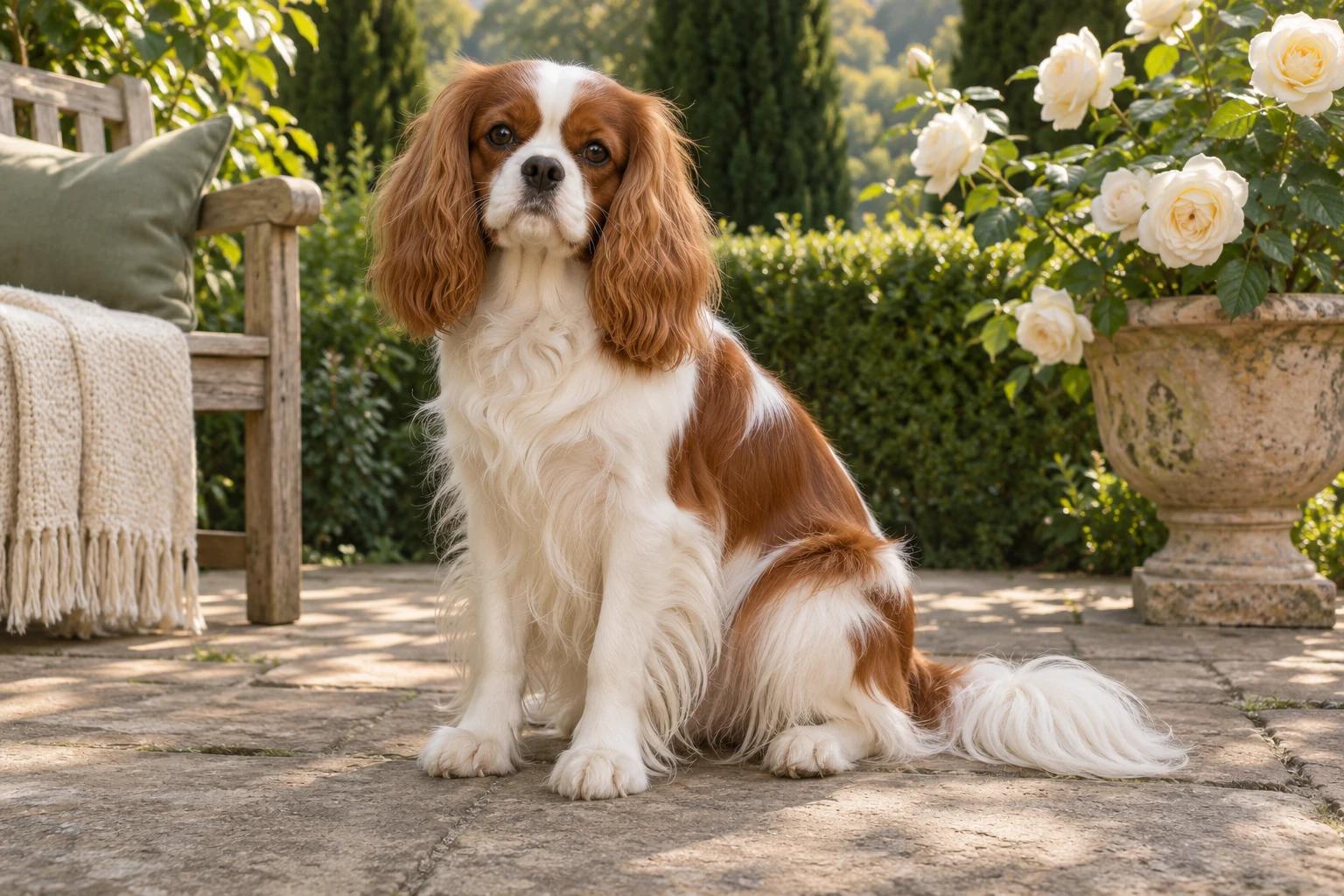
Explore the
Cavalier King Charles Spaniel
Background, care, and everyday considerations.
View breed profile →Cavalier King Charles Spaniel training is an opportunity to turn a companion's interest in people into useful everyday manners. Think of the small moments that make shared life easier: four paws on the floor when a friend arrives, a willing turn toward you outside, or resting nearby while you finish a conversation. These skills are more helpful than assuming a sociable dog will work everything out alone.
The Cavalier King Charles Spaniel profile provides breed context. Your dog's experience and current understanding determine where each lesson should begin.
Cavalier King Charles Spaniel training needs a clear first success
Choose one behavior you can recognize immediately. “Be polite” is vague. “Keep paws on the floor while a familiar person approaches” tells you what to reward. Begin with the person far enough away that the dog can remain comfortable and engaged, then make the exercise easier or harder according to the response.
Ask the helper not to improvise. If one person rewards jumping with enthusiastic attention while another expects quiet waiting, your Cavalier receives inconsistent information. Agree on the same approach before beginning. The helper can pause at a distance while you reset, rather than repeatedly leaning into an excited greeting.
AKC's Cavalier training guide recommends short lessons, rewards, and praise instead of punishment. It also identifies focus on the handler as a useful foundation. Those are starting principles, not a timetable that every puppy must follow. AKC training guide.
Teach attention without asking for constant eye contact
When people ask how to train a Cavalier King Charles Spaniel, they often want a dog that listens outside as well as indoors. Begin by rewarding voluntary check-ins in an easy setting. Say the dog's name once when it can respond, then acknowledge the turn toward you. Avoid making the name background noise through constant repetition.
Outside, leave room for sniffing and looking around. An outing does not have to become a continuous obedience test. Select a quiet moment for one familiar response, reward it, and let the dog return to an appropriate activity. This creates a useful exchange rather than a demand to ignore everything interesting.
The AKC breed description combines companion-dog attentiveness with sporting-spaniel character. It is a reminder not to confuse a small, affectionate dog with a decorative accessory. AKC breed reference.
Use secure equipment and an appropriate enclosed setting for recall practice. Do not remove the lead in an unsecured place to discover whether training has worked. Record where the response is reliable and where you still need easier practice.
Give companionship a resting place
Picture a friend visiting for coffee. Your Cavalier has already greeted them, but you would like to talk without repeatedly lifting the dog away from cups. A resting mat can make your expectation visible. Teach it before the visitor arrives, not in the middle of the conversation.
Start by rewarding interest in the mat, then comfortable time on it. Add your own seated position and ordinary movements gradually. If every repetition ends with you immediately standing up, the dog has little practice resting while a person remains seated.
A mat is a location cue, not a device that guarantees relaxation. Watch the individual and keep the task achievable. Your first success might be a brief pause beside you, not an entire afternoon with guests. Avoid repeatedly sending the dog back while everyone else continues to excite it.
This is especially useful for a companion-focused breed because it gives closeness a practical form. The goal is not to exclude your dog from shared time, but to make that time easier for everyone involved.
Social experiences should include choice and quiet observation
Cavalier King Charles Spaniel socialization is not a competition to meet the greatest number of people. A puppy can watch a neighbour moving a bin, hear ordinary sounds, or observe a calm dog from a comfortable distance without direct contact.
Ask your veterinarian how to arrange outings for your puppy's circumstances. When choosing a class, ask how greetings are managed and what happens if a puppy needs more space. A small dog should not have to endure crowding because people assume it welcomes attention.
For an adult Cavalier, learn about established preferences from the current caregiver. Ask what the dog enjoys, what it avoids, and how it responds after an unfamiliar experience. There is no need to recreate an upsetting situation to verify the account.
With visitors, make opting out ordinary. Provide a resting area and ask guests not to follow the dog when it moves away. A social reputation does not oblige an individual to accept every offered hand.
Put the useful details into your progress notes
Cavalier King Charles Spaniel obedience becomes easier to assess when you separate the cue from the setting. Write “came across the quiet room” rather than “recall finished.” Later, note whether another person, a toy, or a new location changed the response.
This also helps when more than one person teaches the dog. Agree on cue words, reward timing, and what counts as success. A brief shared note is often better than a long conversation after someone has already introduced a different rule.
If you encounter persistent difficulty, ask a qualified reward-based trainer to observe an ordinary session. Describe what happens before and after the problem rather than calling the dog spoilt. Sudden changes, discomfort, or concerns about behavior warrant a veterinary conversation; this article cannot determine the cause.
Training is one part of ownership, separate from the documentation discussed in Cavalier heart records. If you are still choosing a companion, the breed quiz can help identify the shared activities and care commitments you want.
FAQ
Is an affectionate Cavalier automatically easy to train?
Affection does not replace teaching. A Cavalier still needs clear cues, appropriate rewards, and practice in different settings. Begin with a response the individual can achieve and build gradually instead of expecting sociability to produce finished manners.
Should everyone greet my Cavalier puppy?
No. Socialization can include comfortable observation without touching or close greetings. Let the puppy have space, ask visitors to respect withdrawal, and discuss suitable outings with your veterinarian. The number of people met is not the only measure of useful experience.
What counts as progress with a settling mat?
Progress may begin with choosing the mat and pausing comfortably while you sit nearby. Increase distractions gradually and record what the dog can manage. A brief successful practice is more useful than repeatedly demanding a long stay during an exciting visit.
Sources behind this article
Article source checked: November 15, 2026. Source checked 2026-11-15
Keep reading

Affenpinscher Training: Build Useful Everyday Habits
Read article →