Catahoula Leopard Dog training: purposeful learning
Give Catahoula Leopard Dog training a practical purpose, with thoughtful search projects, clear teamwork and realistic goals beyond physical effort.
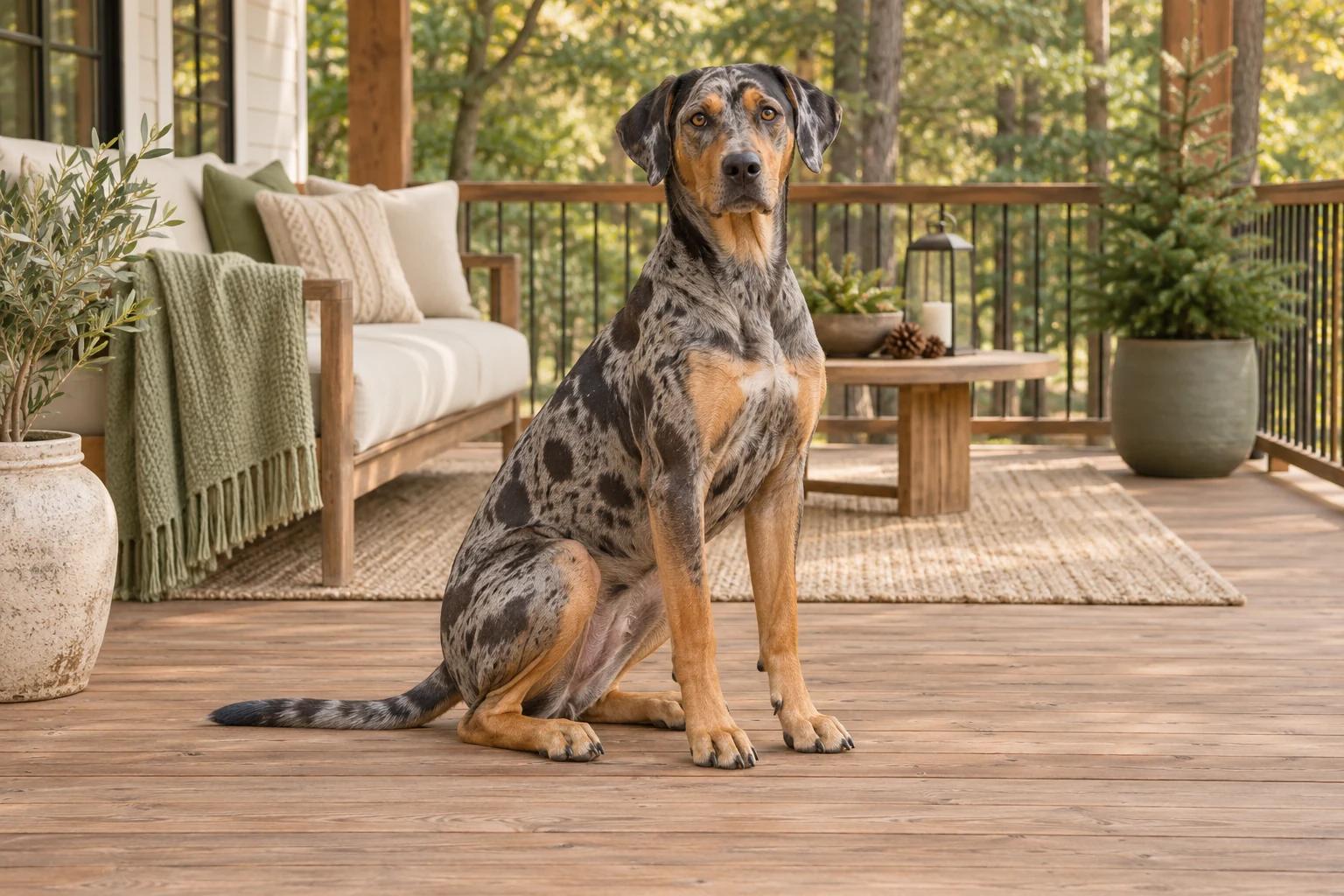
Catahoula Leopard Dog training should give an active mind a clear task, not simply add more movement to an already energetic day. The Catahoula Leopard Dog profile records substantial activity and mental-engagement needs. Teaching useful skills is part of meeting that commitment, not an optional extra after exercise.
The American Kennel Club describes a versatile working dog with strength and agility. That background makes purposeful learning worth investigating, but it does not tell you which activity your individual will enjoy or what it already understands. Begin with the dog in front of you.
Catahoula Leopard Dog training: give the task a definition
A working project needs more than the instruction to “find something.” Decide what the dog is meant to locate, what counts as success and how you will make the lesson understandable. Otherwise, an apparently busy session may contain very little clear learning.
For a companion, the project can be recreational. You do not need livestock, a hunting role or a dramatic demonstration to make participation meaningful. Choose a suitable activity with qualified instruction and keep ordinary household skills in the plan alongside it.
The important distinction is between providing a task and merely creating difficulty. A puzzle the dog cannot understand is not automatically valuable because it takes a long time. Good teaching helps the learner discover what works without turning every attempt into a frustrating test.
Investigate search work as a shared hobby
AKC Scent Work involves locating a target scent and communicating the find to a handler. A beginner instructor can help you investigate the sport without improvising odor materials or competition setups at home. Treat it as one possible learning project, not a requirement for every Catahoula.
As an original planning exercise, divide the hobby into three questions: what must the dog learn, what must you learn, and what preparation does the setting require? The handler's job includes understanding the exercise and giving the dog a fair opportunity, not standing nearby and expecting instinct to supply everything.
Ask an instructor how a first lesson differs from an assessment. A lesson should teach something at an appropriate level. An assessment checks what is already understood. Confusing the two can make a beginner look unsuccessful simply because nobody explained the task first.
Prepare the space before bringing in the dog
Clear away unrelated objects that could make the exercise confusing or unsuitable. Make sure the area is available for the session rather than being used simultaneously for another activity. This is ordinary preparation, not a reason to build an elaborate training facility.
Follow your instructor's advice on materials and setup. Do not use household chemicals, unfamiliar substances or difficult hiding places to make an exercise more impressive. A simple appropriate setup is more useful than an ambitious one you cannot explain or manage.
Learn to distinguish help from interference
If you are wondering how to train a Catahoula Leopard Dog, consider your own tendency to intervene. It can be tempting to repeat a cue, point toward an answer or restart whenever the dog does something unexpected. Sometimes that means you are changing the task faster than the dog can understand it.
Ask your instructor what to do during uncertainty. Which responses deserve waiting, which suggest the exercise is too difficult, and when should you end it? Having those decisions explained beforehand helps you avoid inventing a new rule in the middle of every attempt.
This is not a recommendation to let confusion continue indefinitely. It is a reason to make your help deliberate. A well-timed adjustment based on a teaching plan is different from a stream of hints that changes whenever you become impatient.
Keep obedience connected to ordinary life
Catahoula Leopard Dog obedience also includes the unglamorous skills that make outings and care manageable. A hobby does not replace coming when called in an appropriate secured setting, moving with a handler or participating in necessary handling. Prioritize those needs with a reward-based trainer.
Be specific about what success means outside the hobby. A dog may work well on a familiar search exercise yet need separate practice walking to the training area. That is not hypocrisy or selective loyalty. They are different tasks, and each needs to be understood.
Do not use physical fatigue as proof that teaching occurred. A dog can run a great deal without learning the cue you intended. Review the skill itself: what was requested, what response was taught and whether the dog can repeat it in the conditions you have actually practiced.
Social learning needs its own boundaries
Catahoula Leopard Dog socialization is not synonymous with attending a busy class. Before enrolling, ask how dogs are spaced, how arrivals are managed and what happens if an individual needs more distance. A useful learning environment should not depend on every dog welcoming close contact.
Think about the surroundings as part of the lesson. Waiting near a training building, passing unfamiliar equipment and hearing activity elsewhere can all be new experiences. There is no need to combine them into one overwhelming first visit merely because the formal exercise is simple.
Discuss puppy health precautions with your veterinarian and individual behavioral concerns with an appropriately qualified professional. Social learning is not a promise of universal sociability, and a working-breed label is not a reason to intensify difficult encounters.
Decide what to carry forward from a lesson
After a session, choose one useful point rather than rewriting the entire program. Perhaps you need to prepare the area more carefully, make a cue clearer or ask about a confusing transition. Take that point to the next lesson so the project develops coherently.
Do not measure the partnership by how advanced someone else's dog looks. Your goal may remain a manageable hobby and reliable household skills. That can be a complete and worthwhile plan without progression toward demanding work or competition.
For prospective owners, the breed match quiz can help clarify whether you want this kind of active participation. The separate Catahoula coat and eye article addresses appearance. Neither a striking pattern nor an athletic silhouette supplies a training plan.
FAQ
Does a Catahoula need livestock work to have a useful task?
No. A suitable recreational learning project can provide purposeful participation. Choose activities for the individual and obtain appropriate instruction. Do not introduce livestock or demanding work simply because of the breed's background.
Is scent work compulsory for Catahoulas?
No. It is one possible hobby to investigate, not a universal prescription. A beginner instructor can help you understand the activity and decide whether it suits you and your dog without improvised materials or excessive difficulty.
Can exercise replace obedience practice?
No. Physical activity and learning a specific response are different tasks. A tired dog has not necessarily learned what you meant. Teach useful skills clearly and assess them in the settings where they have actually been practiced.
Sources behind this article
Article source checked: November 15, 2026. Source checked 2026-11-15
Keep reading

Affenpinscher Training: Build Useful Everyday Habits
Read article →