Why a Carolina Dog’s fishhook tail changes position
The UKC describes a hooked tail tip with several possible carriage positions. Shape and position are separate observations, and one photograph cannot show them all.
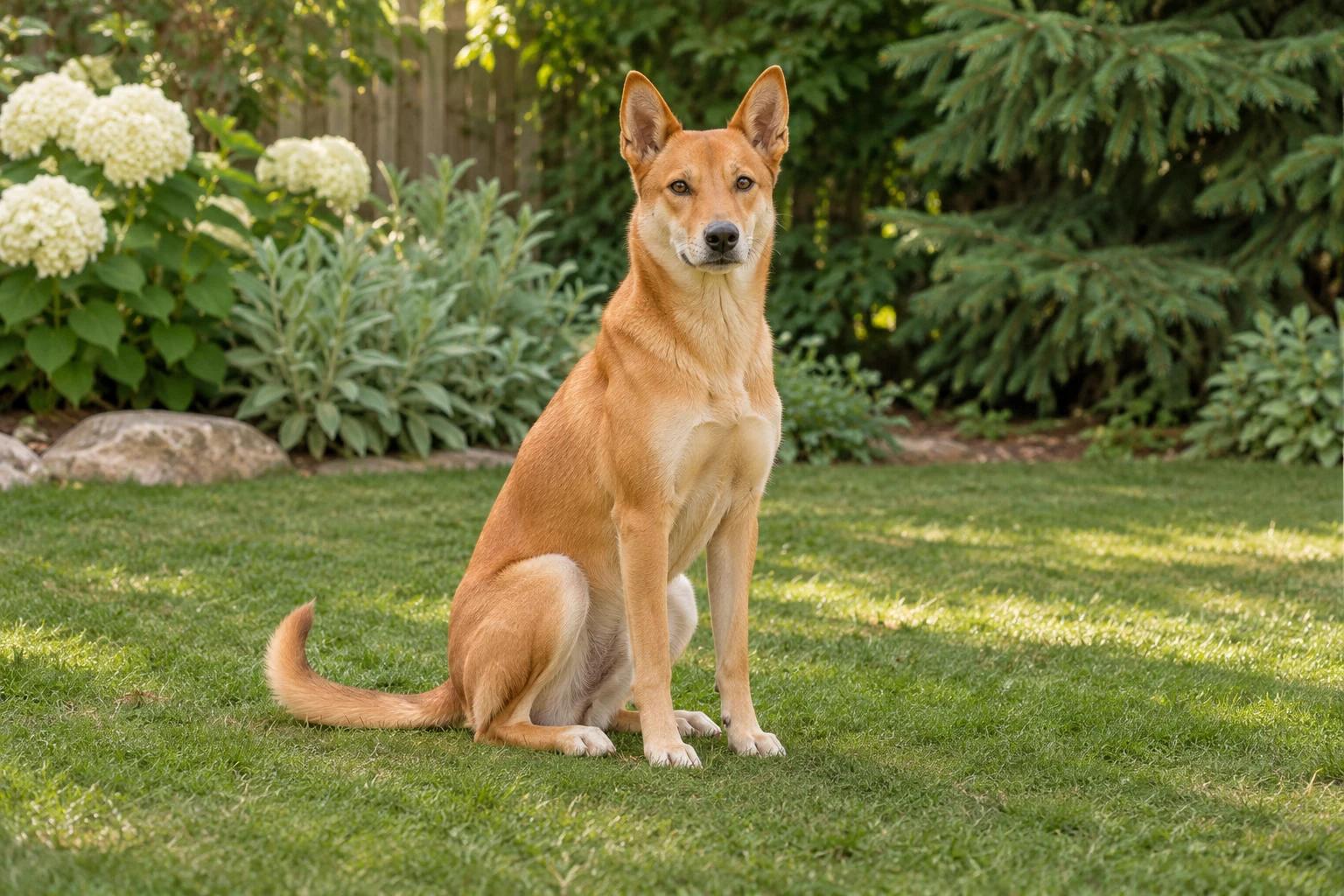
The hook is near the end
The Carolina Dog’s UKC standard describes an ideal tail whose final third bends back toward the head. That is the “fishhook” feature. It distinguishes this shape from a tail making a complete curl over the back and touching it. The recognizable feature is therefore more specific than simply having an upward-curving tail.
Carriage changes with the situation
The same standard describes several positions. An alert dog may carry the tail about 45 degrees above horizontal. During movement it may be held downward while still showing the hook. At other times, including an approach by a stranger, the tail may be low or tucked; the curvature can become less evident when tucked.
These descriptions explain why two photographs of the same dog can look different. Tail shape and tail carriage are related observations, but they are not interchangeable. A lowered tail does not erase the dog’s underlying structure, and a single raised-tail portrait cannot show the full range of positions.
Describe the moment accurately
When looking at photographs, note what the dog is doing before comparing outlines. Is it moving, standing alert or interacting with somebody? If that context is missing, say so instead of assigning a precise emotion from the tail alone.
For an owner sharing pictures, a short sequence in an ordinary setting can be more informative than repeatedly trying to obtain one dramatic pose. Let the dog move naturally; there is no need to manipulate the tail into a preferred silhouette. The standard helps explain the feature, while the individual dog and the surrounding situation supply the context.
Sources behind this article
Article source checked: October 20, 2026. Source checked 2026-10-20
Keep reading
Carolina Dog temperament: understand the individual
Read article →