Canadian Eskimo Dog temperament: energy and engagement
Explore Canadian Eskimo Dog temperament through activity, attention, everyday handling and practical care arrangements, beyond the powerful appearance.
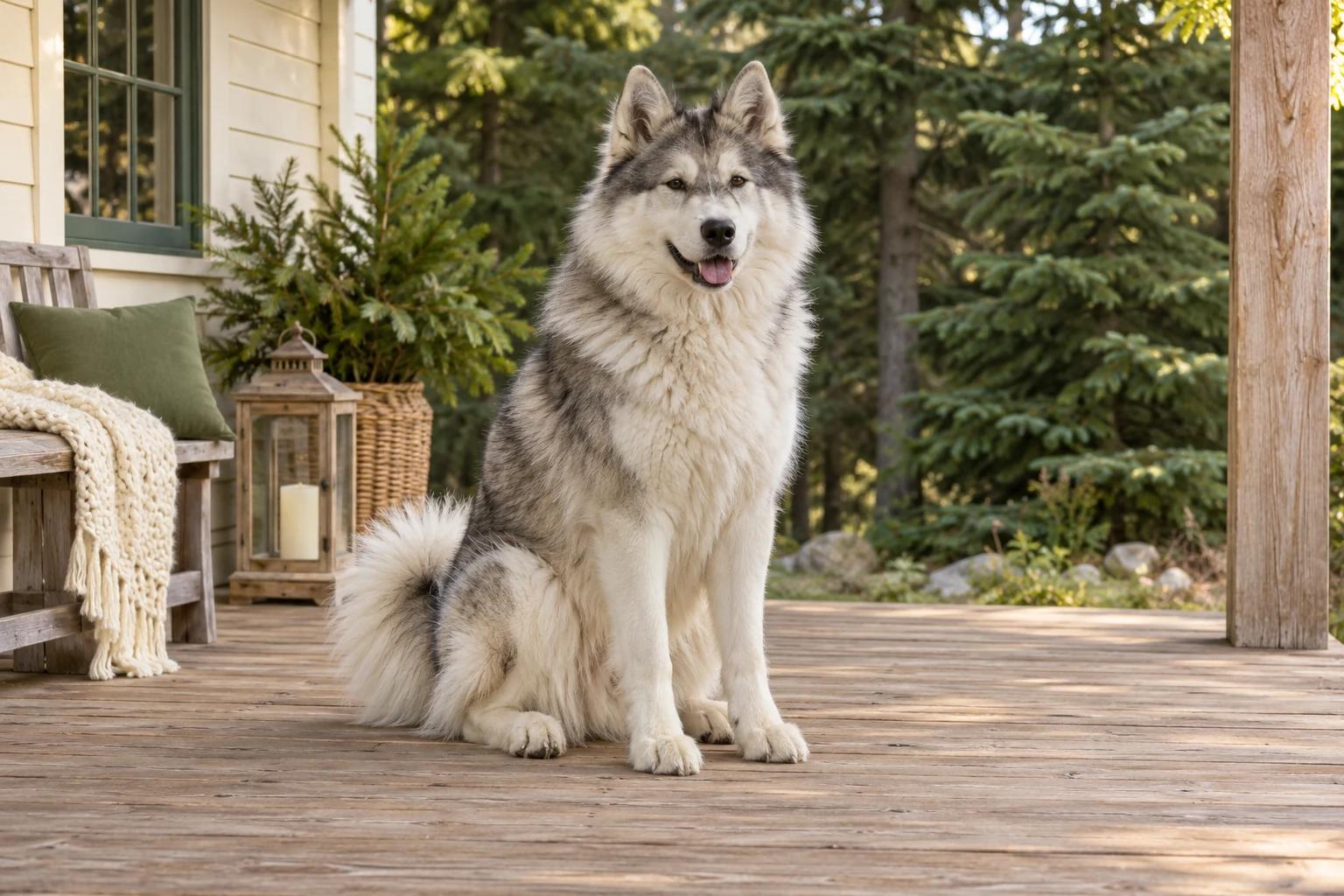
Canadian Eskimo Dog temperament belongs in a conversation about substantial daily involvement, not just admiration for a powerful northern dog. A household needs to account for activity, learning, handling and the individual dog's responses to its surroundings. Affectionate descriptions do not remove those responsibilities.
The Canadian Eskimo Dog profile places physical activity and mental engagement at the high end of its reference scale. If this breed interests you, begin by considering how you would participate in that daily life. A spacious property or an adventurous holiday is not, by itself, a complete plan.
Canadian Eskimo Dog temperament calls for engaged ownership
The Canadian Kennel Club standard describes attention-seeking companionship alongside strong responses to stimulation. That combination makes it important to look beyond whether a dog seems sociable. Interest in people and ease of managing every exciting situation are different questions.
Imagine preparing for an outing when everyone is already rushing. It is useful to know how this particular dog handles the transition, what it has learned and which parts still require patient practice. An affectionate greeting does not answer those questions, and a moment of excitement does not describe the entire personality.
Ask the current caregiver what an ordinary active day looks like from beginning to end. Include the quieter intervals, not only the most appealing photographs or activities. You need to understand the arrangement that supports the dog, as well as the moments that make ownership rewarding.
Build the human side of the routine first
Canadian Eskimo Dog personality research should include an honest look at your own availability. Who will provide daily outings? Who will continue the routine when your work changes? Who is comfortable handling the individual dog rather than merely enthusiastic about its appearance?
Try writing a handover for an ordinary weekday. Explain what happens, who is responsible and what knowledge the helper needs. If several sections are blank, that is useful information before a commitment. You can improve the arrangement instead of expecting the dog to absorb its gaps.
Make the plan specific enough to survive a disrupted day. A friend who likes dogs is not automatically prepared to take over an unfamiliar, active adult. Introduce support arrangements appropriately and give helpers information about the actual dog, including established cues and situations that need management.
Treat activity as participation, not a punishment
The Canadian Kennel Club profile emphasizes a considerable outdoor exercise commitment. Use that as a reason to investigate suitable activities, not to impose a heroic distance or attempt unfamiliar pulling work without instruction.
There is a difference between planning engagement and trying to exhaust every behavior you find inconvenient. If the dog struggles in a particular situation, ask what is happening there. A longer outing cannot explain a cue, resolve an unclear routine or replace help with a handling difficulty.
Choose activities with appropriate guidance for the dog's age, experience and circumstances. Your veterinarian can advise on health-related limits, while an experienced instructor can help with a relevant skill. Keep historical descriptions of work separate from a modern program for an individual companion.
Make practical learning part of the relationship
Among Canadian Eskimo Dog characteristics, the physical presence is easy to notice. The less visible work is teaching everyday cooperation. Being able to move with a handler, accept necessary care and understand familiar requests matters more than an impressive collection of tricks.
Pick a task that has a clear place in the day. For example, you might work with a trainer on an orderly transition between an activity and the next routine. Define what the dog is meant to do and teach it in a manageable setting rather than expecting it to emerge automatically.
Avoid interpreting difficulty as a contest between personalities. Review what the dog already understands and what you have changed. If the task is not working, obtain help adjusting it. A strong dog does not need a stronger argument; it needs a plan the people responsible can implement consistently.
Include coat handling in your temperament questions
The site records a demanding coat-care commitment. That means grooming is also a recurring interaction, not merely a cosmetic appointment. Ask how the dog currently participates and which tasks require professional help before assuming that friendliness makes prolonged handling straightforward.
A useful handover might explain the familiar care location, what has been practiced and when the caregiver stops. Do not attempt an unfamiliar technique simply because a thick coat makes the dog look rugged. An experienced groomer can demonstrate appropriate handling and tools for the individual coat.
If handling produces discomfort or a new concern, pause and consult the appropriate professional. Questions about pain or skin changes belong with your veterinarian. Temperament language should never become a reason to dismiss signs that something needs attention.
Do not generalize one relationship to every setting
A dog's behavior with familiar people is only one part of the ownership picture. Canadian Eskimo Dog behavior around other animals, new caregivers or unfamiliar activities needs its own discussion. A working background does not establish compatibility with every dog, and a sociable description does not make introductions unnecessary.
If you already have animals at home, describe that situation accurately to the people advising you. Discuss individual histories and a suitable introduction plan. Do not assume that a group-working image provides enough information to predict a particular household relationship.
Likewise, be honest about how much public activity you want from a companion. A home routine and a busy social calendar create different demands. You may be able to adapt your plans, but those adaptations should be deliberate rather than a surprise after the dog arrives.
Decide whether the whole commitment appeals to you
The practical question is whether you want the daily work as well as the memorable moments. Include training support, coat care, reliable help and realistic activity arrangements in that decision. If your plan relies on having more free time someday, it is not yet a plan for today.
For cultural and working background, the separate article on Inuit fan-hitch context explores a different topic. The breed match quiz can help organize lifestyle preferences, but individual assessment and practical arrangements still do the essential work.
FAQ
Is a Canadian Eskimo Dog a low-involvement companion?
The My Breed Atlas profile indicates substantial activity, mental engagement and coat-care needs. Ownership should include reliable daily participation and support arrangements. Do not choose the breed expecting its appearance or independent moments to make care largely self-managing.
Does sociability mean every situation will be easy?
No. Interest in people does not establish a dog's comfort with every handling task, activity or unfamiliar animal. Ask about the individual's experience and teach practical skills instead of treating one friendly interaction as a complete assessment.
Can I use working history as an exercise program?
Historical work descriptions are not a program for an individual dog. Discuss suitable activities with appropriate professionals and obtain instruction before attempting unfamiliar work. Age, current condition and experience all matter to the arrangement.
Sources behind this article
- Canadian Kennel Club: Canadian Eskimo Dog standard ↗
- Canadian Kennel Club: Canadian Eskimo Dog breed profile ↗
Article source checked: November 15, 2026. Source checked 2026-11-15
Keep reading
Canadian Eskimo Dog size: read the adult ranges
Read article →