Canadian Eskimo Dog size: read the adult ranges
Understand Canadian Eskimo Dog size by sex, distinguish a breed range from an individual prediction and read weight and height information carefully.
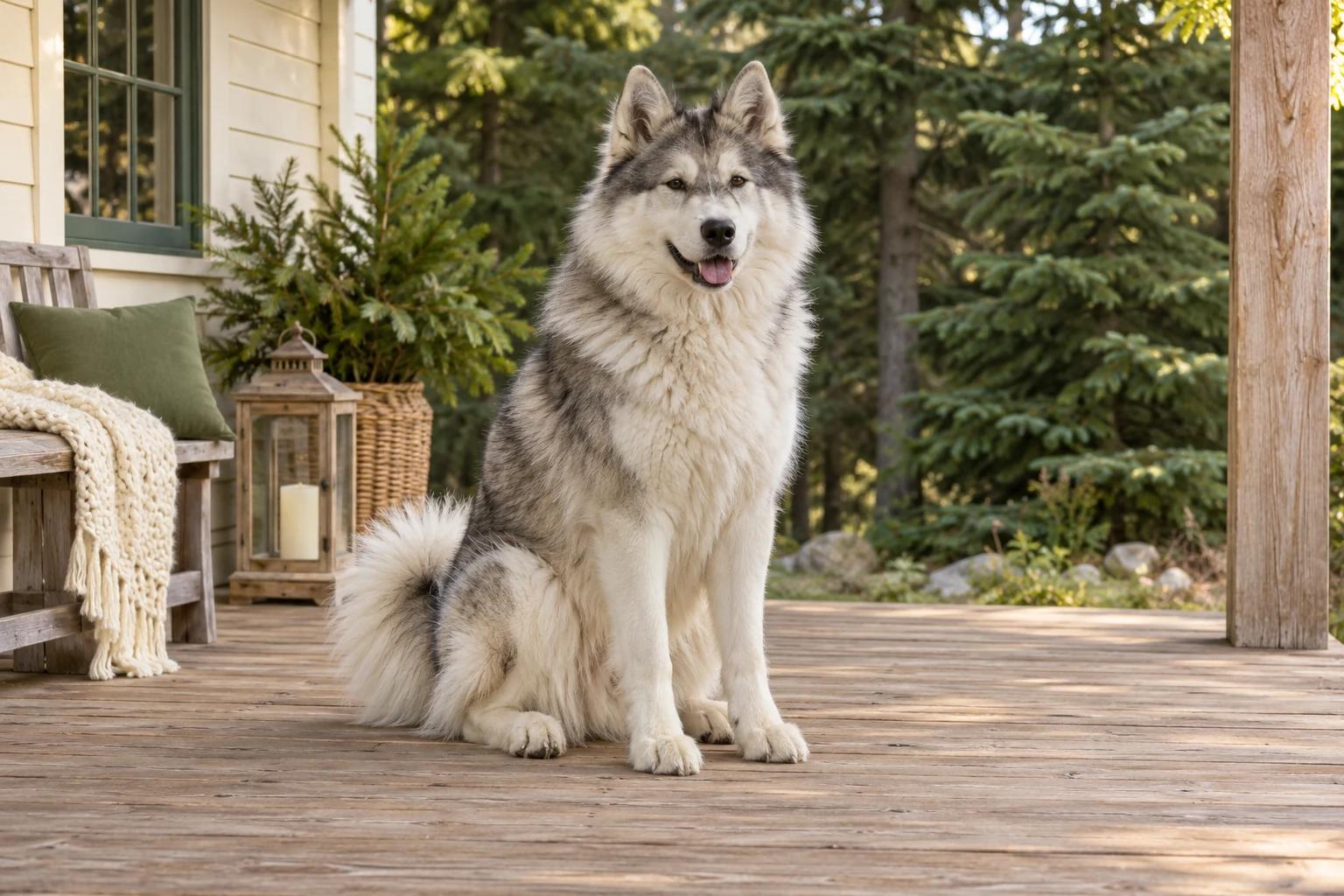
Canadian Eskimo Dog size is easier to understand when you keep the male and female reference ranges separate. A single combined range hides useful information. The Canadian Eskimo Dog profile records adult males at 23–27.5 inches and 66–88 pounds, and females at 19.5–23.5 inches and 40–66 pounds.
Those values describe adult references, not a promise about a puppy or a target to pursue through feeding. The useful next step is to understand what the numbers tell you, what they leave unknown and which facts matter when considering a particular dog.
Canadian Eskimo Dog size: retain the two sets of figures
The Canadian Kennel Club standard separates height and weight by sex. Its height measurements refer to the withers, around the shoulders. The weight ranges are described for dogs in working condition, rather than as universal instructions for every individual.
If you combine both sexes into one short description, the resulting range becomes much broader. That may be convenient for a quick overview, but it is less helpful when discussing a particular adult. Keep the original categories visible so that a reader can see which reference they are using.
This is especially important when comparing information from different listings. A seller may give an individual dog's weight, a general breed range or an expected future figure. Those are three different kinds of information even when all appear beside the same word, size.
Test the height overlap with a specific example
Consider a hypothetical adult with a Canadian Eskimo Dog height of 23.25 inches at the shoulders. That measurement fits inside both published height intervals. It sits above the male interval's lower boundary and below the female interval's upper boundary. Height alone would not tell you which sex the dog is.
This is a useful correction to the shorthand that males are larger. The references differ, but they overlap. Turning a general size distinction into a rule about every possible pair would say more than the figures support. A comparison of two actual adults needs their individual information.
Try a second hypothetical example: a 26-inch adult. That measurement falls within the recorded male interval but above the recorded female interval. You have located a number relative to a reference; you have not established the dog's identity, condition or ancestry. Those are separate questions that a height chart cannot answer.
Understand the shared weight endpoint
The two Canadian Eskimo Dog weight intervals meet at 66 pounds. In an explicitly hypothetical comparison, a male and a female could each weigh that amount while occupying different positions within their respective reference intervals. The male would be at the lower endpoint and the female at the upper endpoint.
That arithmetic does not make either hypothetical dog better, fitter or more typical. It simply shows why a weight needs context. If someone calls a 66-pound adult small or large, ask what they are comparing it with. The same number can prompt different descriptions depending on the chosen reference.
Nor does a shared endpoint imply identical proportions. Knowing that two dogs weigh the same does not tell you whether their shoulder heights match. Keep height and weight as separate fields rather than treating one as a conversion formula for the other.
The coat can influence the impression of scale
The Canadian Kennel Club profile describes a thick coat and mane-like growth around the neck and shoulders. That is one reason to distinguish the visible outline from the dimensions of the dog underneath it.
Consider how you would describe the dog to someone who has never met it. “Substantial coat around the shoulders” describes appearance; “measured at the shoulders” describes the basis of a height figure. Keeping those statements separate makes your account clearer without requiring either detail to be ignored.
Avoid trying to calculate a correction for the coat. The reference does not give you a universal amount to subtract from apparent size. If your question concerns dimensions, use an actual measurement; if it concerns care, ask about the coat itself. A single visual impression should not have to answer both questions.
Ask about weight without prescribing a goal
Canadian Eskimo Dog weight should not become a competition to reach the largest number in a reference. An adult's appropriate condition requires individual assessment. Questions about feeding, unexpected changes or growth concerns belong with your veterinarian, not a generic breed-size article.
When receiving records, distinguish the date of measurement from the date of the conversation. “Last weighed at the previous appointment” is more useful than a number with no context. If a practical arrangement needs a current weight, explain that requirement and obtain suitable information.
Do not infer a complete care plan from size alone. Two dogs of similar weight may have different ages, routines and histories. Knowing the number answers a size question; it does not settle food portions, appropriate activity or whether the dog fits your household.
Do not turn the interval into a growth ladder
“How big do Canadian Eskimo Dogs get?” is answered here with adult reference intervals. It is tempting to read from the lower endpoint to the upper as if those numbers describe successive stages in one dog's development. They do not. They describe a span of adult sizes, not a sequence every dog travels through.
For example, an adult near the lower end of its reference is not necessarily an unfinished version of one near the upper end. Nothing in the size interval alone tells you that it should progress to a higher number. Growth and body-condition concerns require individual veterinary assessment rather than that assumption.
The same mistake appears when the midpoint is called the average. Calculating halfway between two endpoints does not reveal how many measured adults fall above or below it. Without population data, you cannot infer that most dogs cluster there. Use the interval for context and resist adding a distribution that the source has not supplied.
Use the information to answer a real decision
Before collecting more figures, identify the decision you are trying to make. Perhaps a caregiver needs a current weight, or you are comparing the adult scale of different breeds. Ask for the information relevant to that decision instead of accumulating numbers without knowing what they establish.
The separate article on the breed's Inuit fan-hitch working context addresses heritage rather than size. Use the breed match quiz to consider activity, care and household preferences alongside adult dimensions; size is only one part of the commitment.
FAQ
What adult size ranges are recorded for Canadian Eskimo Dogs?
The reference gives males at 23–27.5 inches and 66–88 pounds, and females at 19.5–23.5 inches and 40–66 pounds. Height refers to the shoulders. These are adult reference ranges, not exact predictions for a puppy.
Does the middle of the weight range represent the average dog?
Not necessarily. The midpoint of a range is a calculation, not evidence of a measured population average. The range alone does not show how adult weights are distributed or predict where one puppy will finish.
Does a 66-pound weight identify a male or female?
No. That figure is the shared endpoint of the recorded male and female weight intervals. The number alone cannot identify sex, establish body condition or tell you the dog's shoulder height. Read each piece of individual information separately.
Sources behind this article
- Canadian Kennel Club: Canadian Eskimo Dog standard ↗
- Canadian Kennel Club: Canadian Eskimo Dog breed profile ↗
Article source checked: November 15, 2026. Source checked 2026-11-15
Keep reading
Canadian Eskimo Dog temperament: energy and engagement
Read article →