Reading the Calupoh’s wolf-like breed description
The Mexican federation describes a wolf-like outline with specific coat, eye and maturity details. Those appearance rules do not measure an individual’s ancestry.
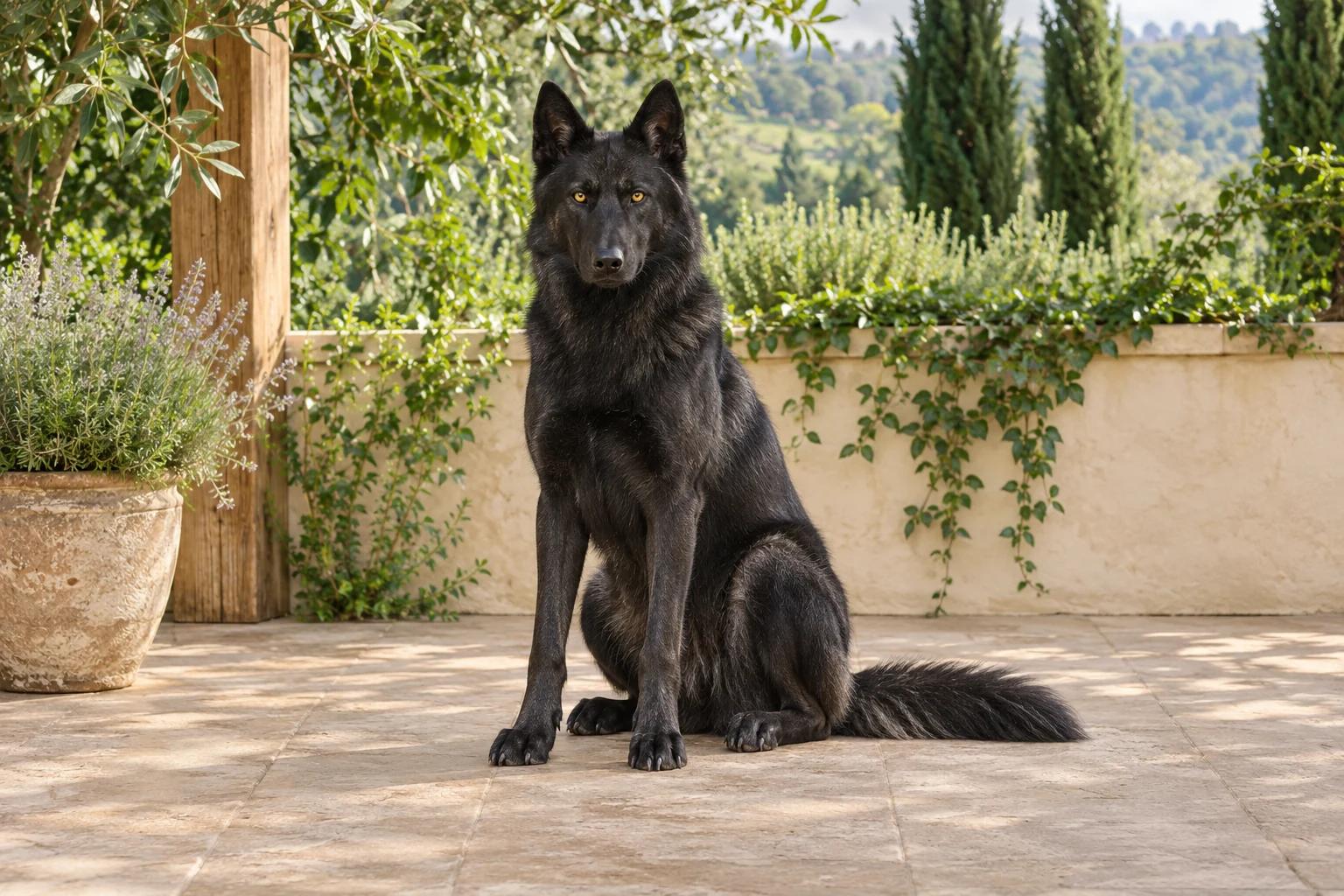
An outline with several moving parts
The Federación Canófila Mexicana’s English Calupoh standard describes a dog intended to resemble a wolf, with long legs and balanced proportions. It also describes development: a young dog’s narrower head broadens with maturity, and a mane contributes to the adult outline. A puppy photograph and an adult portrait therefore need not show identical proportions.
The document places a modern genetic project in the mid-1990s. That dated statement is useful context for the contemporary breed description; it should not be stretched into proof of an uninterrupted pedigree reaching back to archaeological dogs.
Dark coats and yellow eyes are not the whole text
The standard prefers black or smoky coloration, while noting that some adults develop silver coloring. It allows dark eyes as well as the characteristic yellow ones. The standard also allows coats it describes as ‘white/sable’ or completely sable, although these are not preferred. Reading those qualifications prevents a single dramatic photograph from becoming an overly narrow definition.
A description of preferred appearance tells a reader what the federation is looking for. It does not provide a measured percentage of wolf ancestry for the particular dog in that photograph.
Keep the question beside the evidence
When someone offers an ancestry percentage, ask what records or analysis support that number. Eye color, a dark coat and a wolf-like silhouette are appearance observations; they are not numerical ancestry results. Likewise, a temperament ideal in a standard does not demonstrate how one dog behaves with visitors or other animals.
Keeping those questions separate makes a breed conversation more useful. You can appreciate the Calupoh’s distinctive outline while asking for individual records and firsthand observations when evaluating a particular dog.
Sources behind this article
- Federación Canófila Mexicana: English Calupoh standard ↗
- Federación Canófila Mexicana: Spanish Calupoh standard ↗
Article source checked: October 20, 2026. Source checked 2026-10-20
Keep reading
Calupoh temperament: getting beyond first impressions
Read article →