Bull Terrier training: channel the enthusiasm
Make Bull Terrier training practical with clear play rules, cooperative handling, manageable distractions and a taught transition to calm.
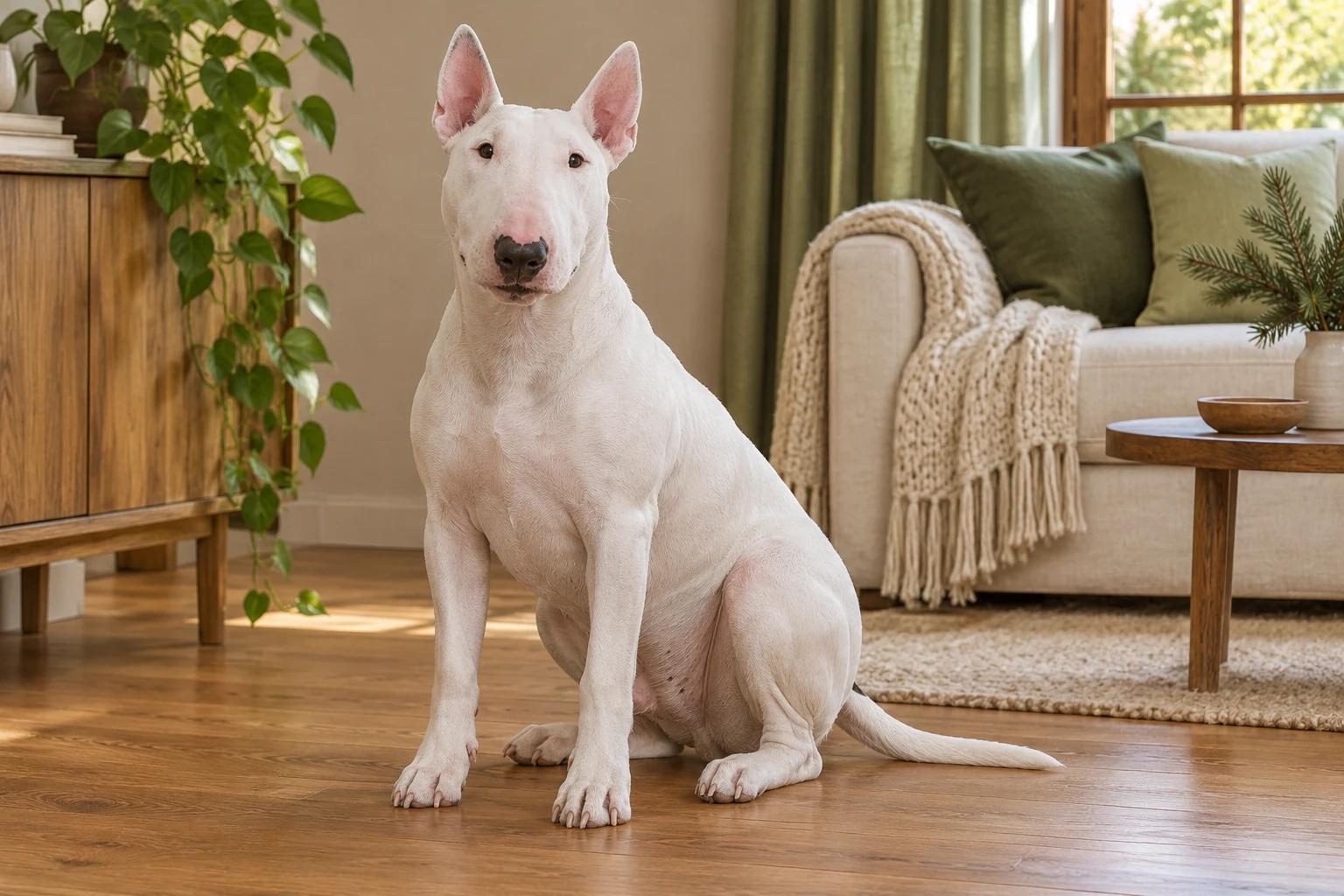
Bull Terrier training can become frustrating when the dog's enthusiasm is mistaken for understanding. A dog may throw itself into a game without knowing how you want it to begin, pause or finish. Teaching those transitions gives the activity a useful shape instead of leaving you to improvise when excitement rises.
The Bull Terrier profile combines strong activity and mental-engagement references with a middle training-responsiveness rating. Expect to participate actively in learning. Your job is to make the next step clear and worthwhile, not to win an argument about which of you is more determined.
Bull Terrier training needs a purpose for each lesson
The American Kennel Club describes a playful, muscular companion with an independently minded streak. Translate that description into planning: choose a small task with an obvious result rather than asking for an entire perfect afternoon.
If greetings are chaotic, the task might be keeping feet on the floor while a familiar person approaches. If preparing for a walk is difficult, teach a calm equipment routine separately from the full outing. If a game becomes hard to finish, practice its ending before excitement has built.
Write the task in observable terms. “Less silly” is not something you can teach directly. “Move to the mat when I put this toy away” gives you a sequence to build. Start with its separate pieces and seek a reward-based trainer's help if you are unsure how to connect them.
Give play a beginning and an ending
Play can be a productive part of learning when everyone understands the arrangement. Choose suitable toys and a clear space, then decide how you will invite interaction and how you will pause it. Avoid turning access to an item into a wrestling match.
Begin with a simple game the dog already understands. Keep the first practice easy enough that you can stop before either of you becomes frustrated. A trainer can help you teach exchanging an item and restarting the game without grabbing at the dog's mouth.
If the dog guards an object, do not use a training article as a reason to challenge it. Manage access to the situation and obtain individual professional guidance. The aim of play practice is communication, not proving that you can remove anything whenever you wish.
Make lead skills possible before making them difficult
When considering how to train a Bull Terrier, cooperative walking deserves early attention. The breed's adult reference is 44–66 pounds. A manageable walk depends on learned coordination and suitable equipment, not simply on the handler being stronger.
Choose a setting with room to move away from distractions. Begin with a short stretch of walking together, then allow an appropriate break to investigate. Teach the transition between these modes instead of changing your expectation every few steps without a cue.
A narrow path beside unfamiliar dogs is not the place to introduce the skill. Plan a route with options to turn away or create distance. Ask a trainer to observe your handling and equipment fit if walking is already difficult. That is more useful than repeatedly practicing a route where the dog cannot manage what you are asking.
Socialization is not compulsory group play
Bull Terrier socialization should help the dog navigate ordinary situations, not require it to enjoy every dog it encounters. The live profile specifically advises care when considering other-dog relationships. A busy off-leash group is therefore not a default training venue.
Practice noticing the environment from a workable distance, returning attention to you and leaving a situation calmly. Arrange any introductions thoughtfully, using the individual dogs' histories and qualified help where needed. Do not treat a tense meeting as something that must continue until the dogs work it out.
Include non-dog experiences too: equipment, different walking surfaces, a quiet waiting area and familiar people moving around normally. For puppies, coordinate appropriate outings with veterinary advice. The target is useful experience at a manageable level, not a checklist completed through repeated overwhelm.
Teach the quiet part as deliberately as the active part
VCA's settling guidance treats calm settling as a learned skill and distinguishes relaxed posture from simply holding still. That is a helpful correction to the idea that more exercise automatically teaches every dog how to rest.
Give the resting arrangement a place on your household plan. Who will teach it, which cue will everyone use, and where will visitors put their bags so that the chosen spot stays available? Ask a reward-based trainer to demonstrate the lesson rather than improvising during a busy evening.
Practice care without forcing stillness
Bull Terrier obedience should support care too. Keep the brush and equipment together so that preparation does not interrupt an appointment. VCA advises against forced stillness during uncomfortable handling; resistance, tension or growling calls for professional help before progressing.
Tell the professional exactly which part is difficult: approaching with an item, touching a particular area or remaining in position. That description makes the problem easier to address than the general label “won't behave.” Concerns about pain or a new change in tolerance should go to your veterinarian.
Review the lesson before blaming the learner
When a skill stalls, examine the setup. Did you move from a quiet room to a busy street too quickly? Did different people use different cues? Did you ask for a longer wait without first practicing a shorter one? Change one difficulty at a time so you can understand the result.
Keep ordinary training separate from concerns that need clinical assessment. The existing Bull Terrier behavior article addresses one such separate topic. If you are deciding whether this is your kind of partnership, the breed match quiz can help you weigh the ongoing learning commitment.
FAQ
Does a Bull Terrier need harsh training because it is strong?
No. Physical strength does not make confusing or forceful teaching more useful. Prioritize clear, reward-based lessons, manageable settings and professional guidance when handling or behavior is difficult.
Is dog-park play essential for Bull Terrier socialization?
No. Socialization can include observing at a comfortable distance, practicing attention and leaving situations calmly. Other-dog interactions should be chosen for the individual rather than treated as a compulsory group activity.
Why teach settling if my Bull Terrier gets exercise?
Exercise does not explain a household routine to your Bull Terrier. Agree on a resting place and a shared cue, and ask a reward-based trainer how to teach the transition. Make sure every caregiver knows the arrangement.
Sources behind this article
Article source checked: November 14, 2026. Source checked 2026-11-14
Keep reading

Affenpinscher Training: Build Useful Everyday Habits
Read article →