Brussels Griffon training: small lessons that work
Build Brussels Griffon training around clear rewards, toilet routines, comfortable handling and everyday skills suited to a small companion.
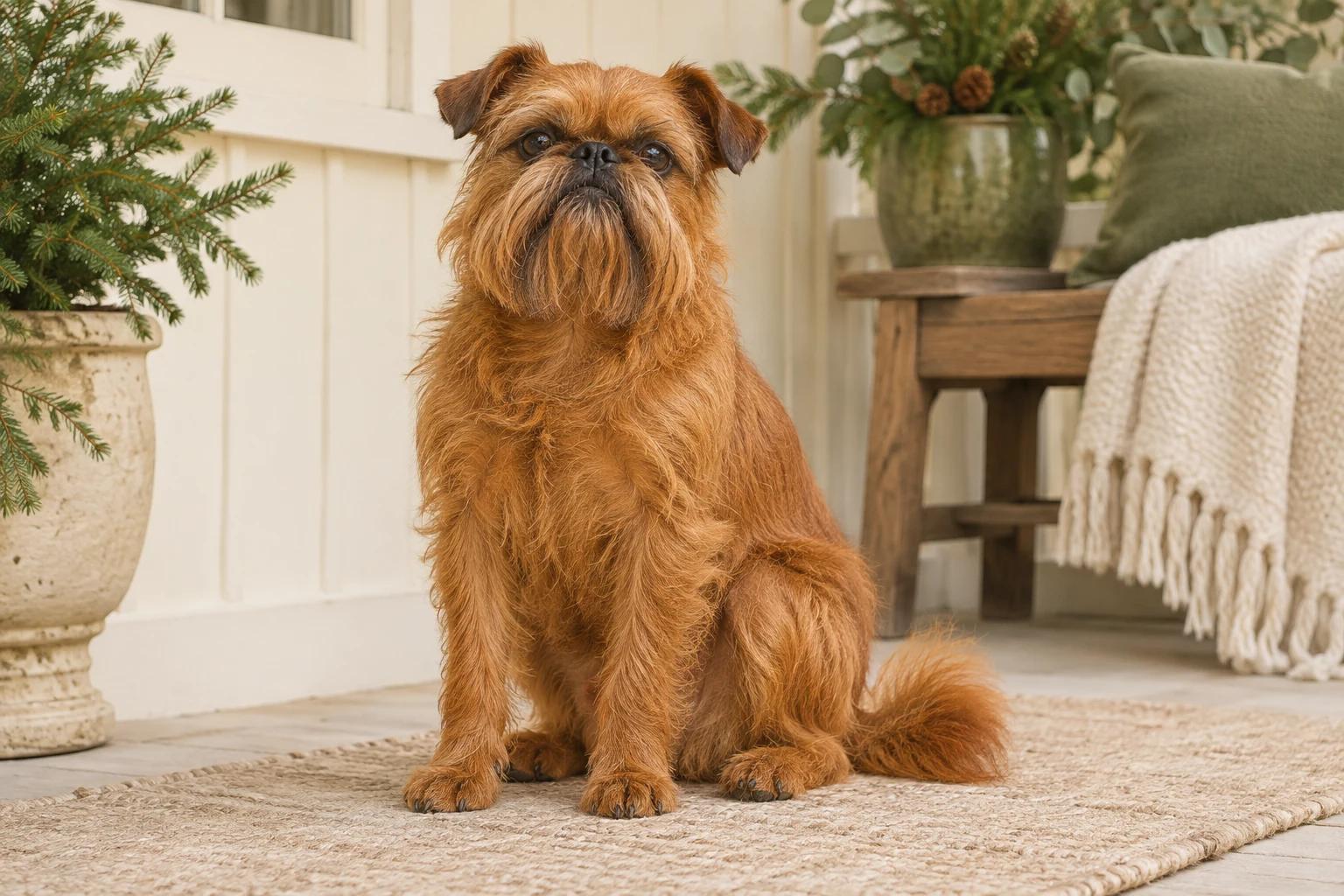
Brussels Griffon training works best when small size does not become an excuse to skip teaching. It is easy to pick up a little dog instead of showing it where to go, or laugh at a noisy demand that would be inconvenient in a larger dog. Over time, those shortcuts can leave important skills unfinished.
The Brussels Griffon profile describes a responsive learner with a noticeable vocal tendency. Give that learner clear tasks. A useful first aim is not an impressive routine of tricks, but a dog that understands how to take part in ordinary household life.
Brussels Griffon training begins with a clear picture
The American Brussels Griffon Association emphasizes kind, consistent teaching for a sensitive dog. That does not mean avoiding rules. It means making the rule understandable and giving the dog a workable way to succeed.
Before a lesson, decide exactly what success looks like. “Be good while I get ready” is vague. “Stand on this mat while I put on my shoes” gives you a behavior to teach, a location and a manageable starting point. Initially, success might be simply stepping onto the mat.
Choose a quiet, uncluttered space where you can see the dog without bending over it throughout the session. Place rewards within reach before you begin. If you are still finding equipment while the dog waits, the lesson can become confusing before you have asked for anything.
Make the reward reach the right moment
VCA's reward guidance explains that a reward should closely follow the behavior you want and must matter to the individual dog. Those two ideas are enough to improve many muddled sessions.
For a small Griffon, think about the physical delivery as well. If reaching down causes you to drop the reward far away, the dog may leave the spot you were trying to reinforce. Practice your own movement first so the exchange is easy to follow. Ask a trainer to demonstrate if your timing feels awkward.
Watch the result rather than assuming that any offered reward is useful. The dog may be interested in a toy in one setting and not another. If it is disengaged, simplify the task or take a break. More enthusiasm from you does not automatically make a difficult lesson clearer.
Build a toilet routine you can actually repeat
When people ask how to train a Brussels Griffon, housetraining often deserves its own plan. The breed association recommends a regular pattern of bathroom opportunities, including after waking and eating. Ask the current caregiver what pattern the dog already knows, then make the route to the chosen toilet area straightforward.
Put your own supplies where you need them. If an outing requires searching for shoes, keys and a lead, reorganize that sequence. In a shared building, account for the journey from your room to the outside rather than assuming that opening your apartment door completes the task.
Keep a brief record of successful outings and accidents. It can reveal that a particular transition keeps being missed. Avoid treating an accident as a statement about the dog's attitude. If there is an unexpected change, persistent difficulty or concern about elimination, consult your veterinarian rather than trying to solve everything through training alone.
Teach movement instead of relying on lifting
Brussels Griffon obedience can begin with moving between two nearby points. A recall across a quiet room, stepping onto a mat or following a familiar cue away from a chair all give you alternatives to physically relocating the dog.
Choose a secure setting and a short distance. Make reaching the destination rewarding, then release the dog rather than immediately adding a long wait. Once the movement is familiar, practice in another easy part of the home. Do not assume the dog understands the same request everywhere after learning it in one corner.
Handling still matters, including when lifting is necessary. Ask a veterinarian or qualified trainer to demonstrate appropriate handling for your dog. Avoid surprising it with repeated grabs. Giving small dogs opportunities to move cooperatively does not eliminate care tasks, but it can make everyday transitions less dependent on being picked up.
Treat noise as information, not a personality joke
A Griffon may attract laughter when it announces a visitor or protests a delay. Before that becomes the household's running joke, decide what you want the dog to do instead. Look for the recurring scene: footsteps outside, activity at a window or excitement when you prepare an outing.
You might move the resting spot away from the busiest view, prepare outing equipment before inviting the dog over, or teach a familiar move to a mat. Choose one manageable adjustment rather than trying to demand silence in every context at once.
Do not shout back or repeatedly stage a difficult event as a test. If barking accompanies distress, seek individual help from a veterinarian or behavior professional. A breed reference can explain why noise belongs on your planning list; it cannot identify the cause of a particular dog's barking.
Socialization includes being small in a busy world
Brussels Griffon socialization should include ordinary experiences at a comfortable intensity, not a requirement to greet everyone. From a small dog's position, a crowd of legs and reaching hands can be a very different scene from the one you see standing above it.
Choose space where the dog can observe without being surrounded. Tell people how you want an introduction handled and make touching optional. A calm moment watching from a suitable distance may be more useful than several hurried greetings.
For a puppy, select locations and classes with veterinary advice about its stage of care. For an adult, ask what experiences are familiar and what remains unknown. Keep any group setting appropriate to the individual rather than assuming that all friendly dogs make suitable play partners.
Keep care practice separate from a full grooming job
A little preparation can make routine care less abrupt. Introduce the place and equipment before expecting a complete session. A groomer or trainer can show you how to divide handling into comfortable steps and recognize when to pause.
The existing Brussels Griffon coat guide explains a separate appearance question. Here, the training goal is cooperation with whatever care this dog needs. If you are still choosing a breed, the breed match quiz can help you weigh that ongoing teaching commitment alongside size and companionship.
FAQ
Are Brussels Griffons easy to train?
The breed is described as responsive, but learning still depends on clear teaching and the individual dog. Kind, consistent lessons with manageable steps are more useful than expecting intelligence to produce instant obedience.
Should I carry my Griffon whenever it ignores a cue?
Do not make lifting the automatic substitute for teaching. Practice simple movements in secure, easy settings so the dog learns how to respond. When handling is necessary, use appropriate methods demonstrated by a veterinarian or qualified trainer.
What should a new Griffon learn first?
Begin with its toilet routine, responding to attention cues, moving to a resting place and comfortable handling. Add distractions gradually, and give noise-related situations their own practical plan rather than waiting for barking to become disruptive.
Sources behind this article
- American Brussels Griffon Association: Is this the breed for you? ↗
- VCA: Using Reinforcement and Rewards to Train Your Pet ↗
Article source checked: November 14, 2026. Source checked 2026-11-14
Keep reading

Affenpinscher Training: Build Useful Everyday Habits
Read article →