Brittany training: bring outdoor attention back to you
Build Brittany training around outdoor attention, recall practice, lead manners and settling, with clear rewards and manageable distractions.
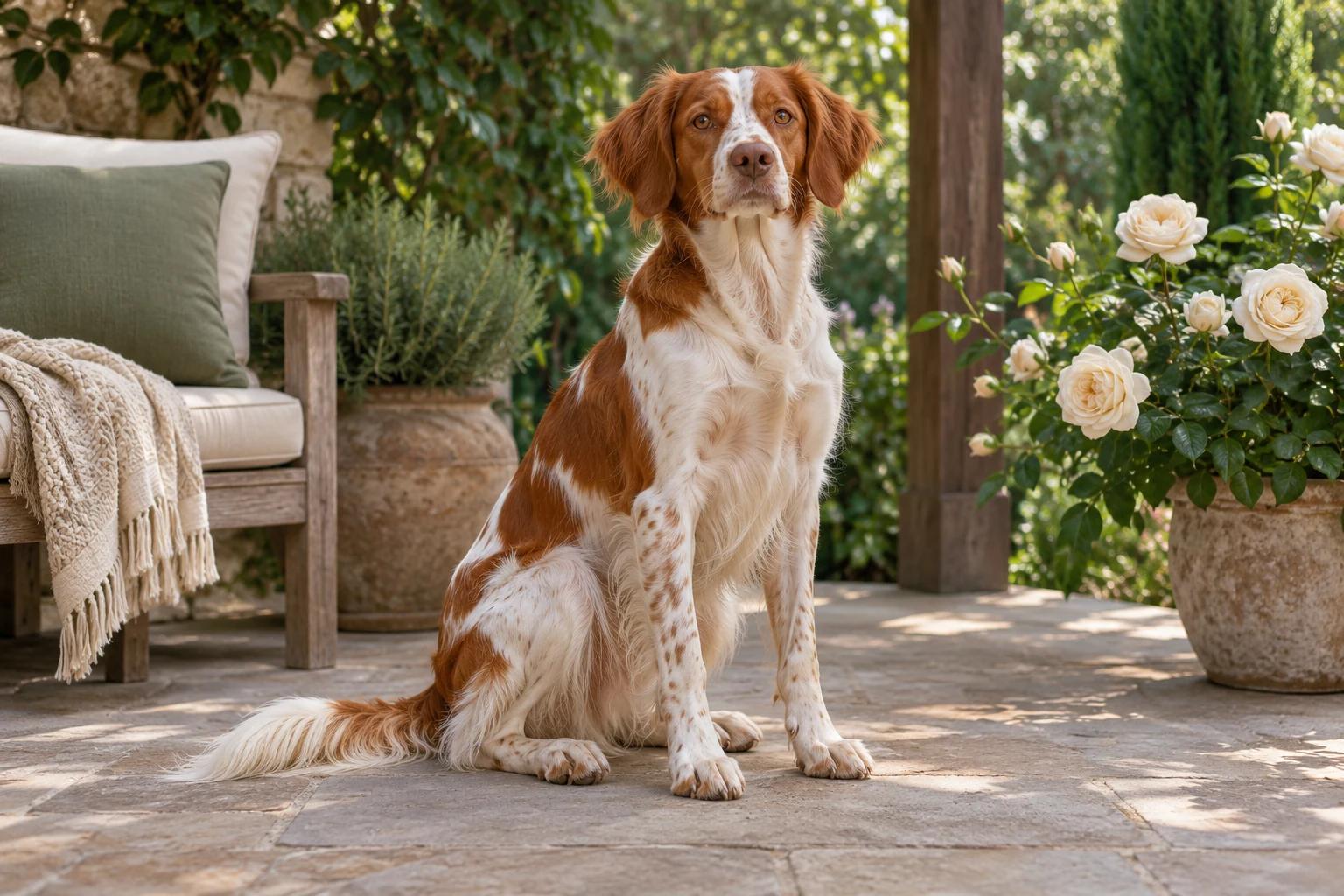
Brittany training has a familiar challenge: the dog that can perform a task in your kitchen may seem to forget the lesson beside an interesting hedge. The solution is not to assume the dog has become deliberately difficult. Outdoor attention is a skill to build, especially for an active sporting dog with plenty to investigate.
The Brittany profile combines strong training responsiveness with high activity needs. That is an encouraging partnership to develop, but it still requires clear teaching. Begin with skills that make exploration manageable, then carry those skills into progressively more interesting places.
Brittany training starts before the exciting part
The American Brittany Club describes an energetic hunting dog with a keen nose. For an owner, the practical consequence is that the environment may offer something more compelling than your next instruction. Plan for that attention shift before opening the car door at a new walking spot.
Practice the beginning of an outing at home. Attach the lead in a clear area, wait for a manageable moment and move through the doorway together. If the whole sequence becomes frantic, divide it into smaller pieces. You can rehearse the equipment and doorway separately from the full walk.
Make arrival at a destination part of the plan too. Keep the dog secured while you organize yourself. Choose a place where you can step away from traffic and avoid starting directly in the busiest patch of activity. A calmer beginning gives you a more workable first lesson.
Teach attention without demanding constant eye contact
A Brittany does not need to stare at you throughout a walk. The useful goal is being able to return attention when needed while still enjoying the outing. Start by recognizing the moments when the dog voluntarily checks where you are in a quiet setting.
VCA's reward guidance explains that rewards need to be meaningful to the individual and closely linked to the desired behavior. Apply that principle to a small task, rather than waiting for an entire perfect walk before acknowledging anything.
For example, when the dog turns toward you in an easy setting, reward that moment. Build a familiar response to its name or another attention cue with help from a trainer if needed. Later, practice the same skill somewhere slightly more interesting, without immediately choosing the spot where the dog is most absorbed.
Recall is a project, not a test of loyalty
When learning how to train a Brittany, treat coming back as a skill with its own progression. Begin in a secure, low-distraction area over a short distance. Make reaching you worthwhile and easy to understand. Do not wait until the dog is already disappearing toward a distraction to discover whether it knows the cue.
Use secure containment and appropriate lead management while you practice. Ask a qualified trainer to show you how to handle a long line safely if you want to use one. An open space is not automatically a safe training space simply because no other people are visible.
Think about what happens after the dog returns. Sometimes the next step may be another simple activity together rather than the immediate end of the outing. Keep the lesson clear, and avoid turning the cue into background noise by repeating it when the situation is beyond the dog's current skill.
Separate walking manners from exploration time
A loose-lead lesson and a sniffing outing can share a walk without being the same task. Decide when you are asking for a short stretch of coordinated movement and when you are allowing more exploration within safe boundaries. Clear transitions help you avoid constantly changing the rules without noticing.
Practice the walking portion where you have room. Start with a few successful steps, not an entire route filled with tempting smells. Reward the position or movement you want, then reset. Build enough familiarity that the dog understands before trying it beside a busy verge.
You can also choose routes with different purposes. A quiet paved section may suit early walking practice, while a secure, suitable area can offer more room for investigation. Having both options is more useful than trying to make one difficult route meet every need.
Socialization should include the things you will actually do
Brittany socialization is not limited to meeting people and dogs. Think about the ordinary experiences ahead: car travel, waiting while a gate opens, a person carrying a walking pole, or the sounds around a local park. Introduce those experiences at a level the dog can manage.
A puppy's outings also need to fit veterinary advice about its stage of care. Ask before selecting locations or classes. An adult new to your home may need a gradual introduction to your routine even if it already knows many cues.
Keep a simple note when an experience is difficult. Record the setting, distance and what happened, rather than writing only “bad at the park.” That makes it easier to choose a gentler next step or explain the issue to a trainer.
Include a finish to the lesson
Brittany obedience should help with transitions as well as movement. After an activity, give the dog a predictable opportunity to rest in an appropriate place. Practice that resting routine when the household is quiet before expecting it to work during a busy gathering.
A mat near your desk, for example, can become a familiar place for calm time. Teach going there as its own task and begin with a manageable duration. Avoid using the place only when you are frustrated and want the dog out of the way.
Watch whether your plan is balanced. More repetitions are not always the answer to a muddled session. A brief successful attempt followed by a break may be more useful than continuing until neither of you is paying attention. If progress stalls, ask a reward-based trainer to observe what you are doing and help adjust the task.
Use the breed match quiz if you are still considering whether this kind of active partnership suits you. The existing Brittany pedigree-title article is useful background for breeder conversations, but your daily training plan should focus on the dog and the situations in front of you.
FAQ
Why does my Brittany respond indoors but not outside?
Outdoor smells, movement and space can make a familiar task much harder for a Brittany. Return to an easier setting and build the skill through gradual changes instead of assuming indoor success means the dog is ready for every distraction.
Should a Brittany be allowed off lead to learn recall?
Recall should first be practiced with secure containment or suitable lead management. A Brittany's sporting background does not make an untrained return reliable, and an open field is not automatically a safe place to test it.
Is settling part of Brittany training?
Yes. Learning to rest in a familiar place and transition away from activity is a useful part of Brittany training. Teach that routine alongside outdoor skills rather than expecting more exercise alone to explain what happens afterward.
Sources behind this article
- American Brittany Club: About the Brittany ↗
- VCA: Using Reinforcement and Rewards to Train Your Pet ↗
Article source checked: November 14, 2026. Source checked 2026-11-14
Keep reading

Affenpinscher Training: Build Useful Everyday Habits
Read article →