Bracco Italiano training: skills for everyday life
Build Bracco Italiano training around useful household skills, calm greetings, recall foundations and manageable outdoor distractions.
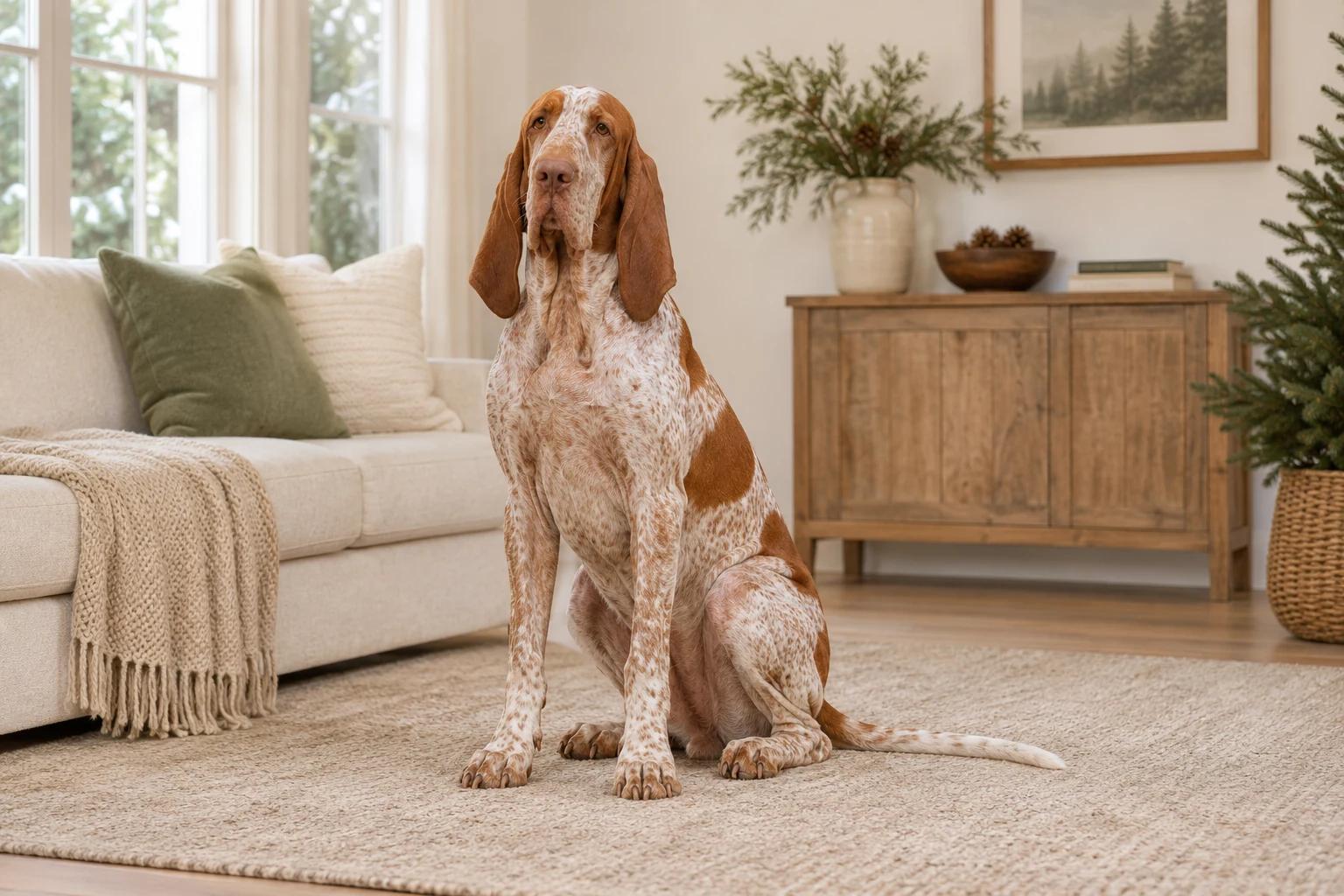
Bracco Italiano training should make ordinary days easier, not simply produce a dog that sits when a treat appears. Think about walking past an interesting hedge, waiting while a door opens and resting while people eat. These practical skills matter for a substantial pointing dog whose interests extend beyond the living room. Start small enough that your dog can understand the task, then practise where you will actually need it.
The Bracco Italiano profile sets out the breed's size and care commitments. Its responsive-learning tendency is an invitation to teach, not a substitute for teaching.
Bracco Italiano training starts with a clear job
When deciding how to train a Bracco Italiano, describe the behavior you want to see. “Behave on walks” is vague. “Turn toward me when I say your name on a quiet pavement” gives you something observable. Pick one version of that task before adding a more exciting location.
VCA's training guidance explains that rewards should matter to the puppy and that management helps learning succeed. The following household exercises apply that principle rather than prescribe a breed-specific timetable. A reward might be food, a brief game or permission to investigate a safe patch of ground.
Make a short list of priorities with everyone who handles the dog. Agree on the same words for coming back, waiting and finishing a game. Decide whether greetings happen standing or sitting. A consistent arrangement is easier to teach than several people correcting one another while the dog guesses.
Build attention before testing it outdoors
Make your name cue worth noticing
Begin in a quiet room when your dog is awake and available. Say the dog's name once. Reward a turn toward you, then pause. You are teaching a brief connection, not demanding prolonged eye contact. If the dog is busy with something else, wait for a better moment instead of repeating the cue louder.
Next, try the same interaction near the back door, then in a quiet enclosed area. Keep the reward ready before you start. A sudden jump from kitchen practice to a busy park does not tell you much about the dog's willingness to learn; it mostly changes the difficulty.
Give sniffing its own place
For this pointing breed, outdoor interests deserve room in the plan. Alternate easy walking practice with opportunities to investigate safe places on lead. Choose a release word that means the short exercise is finished. This makes the walk more understandable than insisting on uninterrupted attention from the front door to the end of the street.
Our existing article about the Bracco's working search explores its field heritage. Here, the aim is everyday cooperation, not reproducing hunting work or encouraging pursuit of wildlife.
Teach the skills that protect ordinary routines
Bracco Italiano obedience is most useful when it fits your actual home. Practise waiting behind an indoor boundary while you put on shoes. Teach a move-away cue before you need to carry a full laundry basket through a narrow hallway. Place the dog's resting mat where it is not constantly crossed by people.
For recall practice, start over a short distance in a secure space. Call when you expect success, reward the arrival and sometimes release the dog back to a permitted activity. Avoid making every return the end of enjoyment. Outdoors, use suitable containment or a properly handled long line rather than treating a good indoor response as proof of off-lead reliability.
A large, enthusiastic dog also benefits from a workable greeting routine. Arrange one calm helper rather than inviting a whole group to test the lesson. Have the helper approach only as far as the dog can manage. Reward the chosen greeting behavior, then finish before excitement takes over. Distance is a useful adjustment, not a failure.
Make social experiences manageable
Bracco Italiano socialization is not a competition to collect encounters. Plan brief, comfortable experiences with the kinds of people, surfaces, sounds and transport your household actually uses. Ask your veterinarian about appropriate outings for your puppy's vaccination stage and local risks.
A visit can consist of watching from a distance. Your dog does not need to greet every stranger or join every group of dogs. If an encounter becomes difficult, create space and leave. Write down what happened so that the next attempt can be easier, rather than arranging the same overwhelming situation again.
The AKC breed standard describes an intelligent, friendly temperament as the ideal. That wording cannot predict how an individual puppy will feel on a crowded station platform. Use the dog's response in front of you to guide the next step.
Keep a small progress record
Choose three situations to track for a week: clipping on the lead, passing a quiet driveway and settling during a short household task. Note the setting, the response and the reward. Avoid scoring the whole dog as “good” or “stubborn.” A useful entry might read, “Returned indoors immediately; outside needed more distance from the hedge.”
Change one thing at a time. If a task is too hard, reduce distance, duration or distraction rather than increasing all three. End while you still have a small success to repeat later. Training can be woven into daily routines without making every interaction a formal lesson.
If you are still choosing a dog, use the breed quiz to examine the time you can give this work. If training brings persistent fear, defensive behavior or sudden changes, involve your veterinarian and a qualified reward-based professional. More repetition is not always the right answer.
FAQ
Are Bracco Italianos easy to train?
Bracco Italianos are described as responsive learners, but everyday reliability still requires clear instruction and practice. Begin in an easy setting and add distractions gradually. A dog that learns quickly indoors may need considerable help applying that skill outside.
What should I teach a Bracco Italiano first?
Start with responding to a name, returning over a short distance, comfortable handling and a simple household resting routine. Select skills that make your own home manageable rather than working through a long list of tricks first.
Can a Bracco Italiano learn without hunting?
A Bracco Italiano can learn useful household skills and take part in suitable structured activities without being used for hunting. Plan meaningful shared work and outdoor opportunities. Discuss activities and physical demands with professionals who know your individual dog.
Sources behind this article
Article source checked: November 14, 2026. Source checked 2026-11-14
Keep reading

Affenpinscher Training: Build Useful Everyday Habits
Read article →