Boxers and children: plan the moments around play
Build an adult-led plan for Boxer and child interactions, with clear supervision, quieter transitions and a resting place where the dog can be left alone.
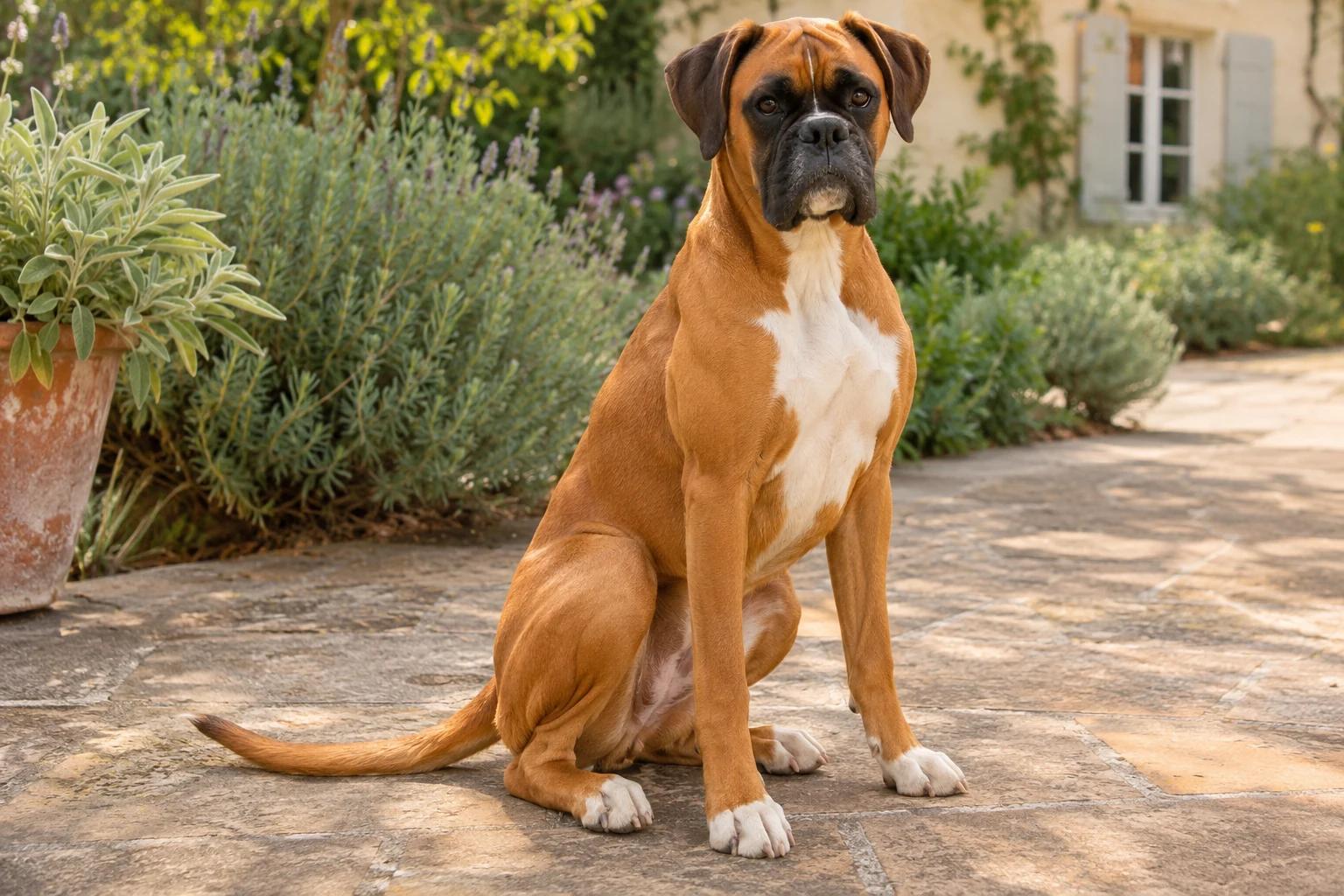
Put an adult into the plan
A Boxer may bring plenty of movement to a room. The American Boxer Club describes the breed as strong and active, and its guidance for dogs and children puts responsibility with the adult. A reputation for being a family dog cannot tell you how an individual animal and child will interact on a particular afternoon. Plan for the pair in front of you.
Name the adult who will supervise before play begins. Being somewhere in the house is different from watching the interaction. If that person needs to cook, answer a work call or help another child, arrange separation before their attention moves away. Do not make the child responsible for noticing when the situation needs an adult.
Choose an activity with a clear ending
Instead of opening the whole room to a chase game, choose a brief, familiar activity that the adult can manage. One example is letting a child help count rewards while the adult practices an already learned cue with the dog. The child's role can be adjusted to their age and ability without requiring them to hold a strong dog or manage its behavior.
Decide in advance what happens when the activity ends: the materials are put away, the child moves to a separate activity, and the dog has space to rest. This is a household planning example, not a training prescription or a promise that every Boxer will enjoy participating. If either participant seems uneasy, choose separate activities instead.
Teach space as part of kindness
The club advises gentle interaction, attention to the dog's behavior and intervention when play becomes rough. Teach children that touching is optional: they should not pull ears or tails, poke, or pursue a dog that needs space. An adult must model and enforce those boundaries rather than expect the dog to tolerate mistakes.
Give the resting area a simple household rule: leave the dog alone there. Practice what the child should do instead, such as asking the adult for another activity. A predictable alternative is easier to use than a stream of corrections after the child has already followed the dog. Keep the route to that resting area free of play equipment.
Review the difficult transitions
Notice whether problems cluster at school pickup, when toys come out or as everyone becomes tired. Change the arrangement before repeating a difficult interaction. If you cannot comfortably manage the pair, keep them separated and seek qualified professional guidance. The goal is a household routine with adult responsibility and room for both participants to opt out, not proof that a breed stereotype is correct.
Sources behind this article
Article source checked: October 20, 2026. Source checked 2026-10-20
Keep reading
Boxer Dog Training: Turn Enthusiasm Into Useful Skills
Read article →