Bouvier des Flandres Training: Useful Skills First
Build Bouvier des Flandres training around handling, calm arrivals, practical obedience, and social experiences suited to the individual dog.
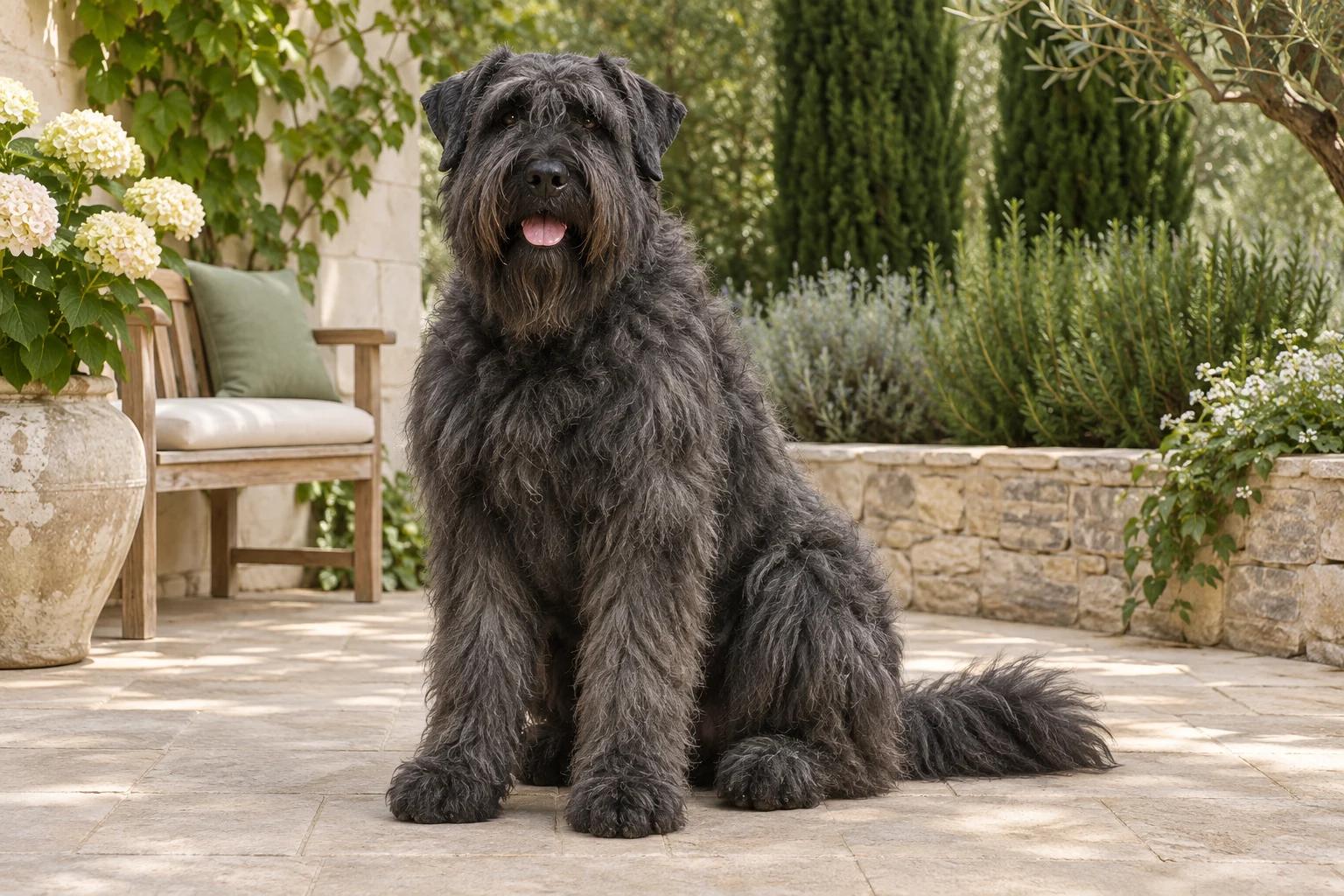
Bouvier des Flandres training is worth planning around the adult dog from the beginning. A small puppy may be easy to move around, but the habits you teach now need to remain workable when that dog occupies much more of the doorway. Focus on cooperation rather than relying on physical management.
The Bouvier des Flandres profile describes a responsive learner and makes daily training games part of its everyday picture. You do not need an elaborate program to begin. You do need a few clear goals and people willing to practice them consistently.
Bouvier des Flandres training starts with useful cooperation
The AKC breed overview presents the Bouvier as an intelligent working dog. Intelligence is not a substitute for teaching. Decide what you want the dog to do in recurring situations rather than expecting it to infer your preferences.
Start by listing three moments that happen every day: preparing for an outing, moving through a doorway, and settling while people eat or work. Choose one behavior that would make each moment easier. The list should describe actions you can observe.
For instance, “move onto the mat” is more teachable than “stop being in the way.” A trainer can help you build the first small step and identify suitable rewards. Progress may be a few calm seconds, not an entire meal spent in place.
Practice before the situation becomes urgent
Do not make a delivery driver's arrival the first rehearsal of your doorway plan. Use a familiar helper when you have time to pause. Explain the intended behavior and keep the first version uncomplicated.
Prepare the environment as well as the cue. If the dog has nowhere sensible to wait while the door opens, repeated requests cannot solve the layout. An appropriate barrier or resting position may make practice clearer.
How to train a Bouvier des Flandres without confrontation
When considering how to train a Bouvier des Flandres, choose teaching that makes the desired response understandable. The American Bouvier des Flandres Club flier recommends positive-reinforcement puppy classes. Use that reward-based principle, not outdated ideas about proving authority through physical control.
Ask a prospective trainer how lessons are structured and what happens when a dog is worried or confused. You should understand the method before enrolling. A suitable class also needs enough space and a manageable level of distraction for your individual dog.
Notice what your dog finds rewarding. A lesson can become unnecessarily difficult when the reward matters more to the person than to the dog. Keep food rewards within the wider feeding plan discussed with your veterinarian, and ask your trainer about other appropriate options.
If a task repeatedly fails, change the task. Reduce distance, shorten the requested duration, or return to a quieter setting. Repeating a cue more loudly does not supply the missing explanation.
Bouvier des Flandres obedience for a large companion
Bouvier des Flandres obedience is most useful when it improves daily handling. Walking with you, entering suitable transport equipment, and moving aside in a narrow space may matter more than a polished demonstration in the garden.
Break a routine into its components. Leaving home includes approaching equipment, accepting it, waiting while a person prepares, and moving through the entrance. If one part is difficult, practice that part separately instead of repeating the whole rushed sequence.
Keep the household's language simple. Agree on one cue for one action, and make sure helpers know what the dog has actually learned. Avoid expecting a visiting friend to discover the system while holding the lead at the front door.
Measure progress in context
A short note such as “waited by the door while I picked up my bag” records useful progress. Include what help you gave and how busy the environment was. That lets you choose a sensible next step.
Do not compare your dog with a heavily edited training video. A real routine includes ordinary distractions, imperfect timing, and adjustments. The important question is whether communication is becoming clearer.
Bouvier des Flandres socialization is not forced greeting
Bouvier des Flandres socialization should help the dog encounter the world in manageable ways. It is not a requirement to meet every stranger, dog, or noisy object at close range.
Discuss appropriate experiences with your veterinarian and trainer, especially for a young puppy. Ask how to balance current health precautions with opportunities to learn. Select settings where you can control distance and leave if the experience is too much.
Watch rather than demand a particular reaction. A dog may need time to observe before approaching. Give that time, and avoid letting others surround or restrain the dog simply to complete an introduction.
In a family home, adults should supervise contact with children and provide an undisturbed resting area. Training a useful cue does not remove the need for management, and a breed's affectionate reputation does not guarantee compatibility with every situation.
Handling practice belongs in the training plan
The Bouvier's coat brings frequent handling into ordinary life. Teach familiarity with the grooming space and easy touch separately from solving a difficult tangle. Ask a groomer to explain what cooperation would make appointments more comfortable and practical.
You might work on calmly approaching a chosen area or remaining in a comfortable position briefly. Build from what the dog can manage. A full grooming session should not become a test of whether a new lesson has succeeded.
If handling suddenly becomes difficult or seems painful, contact your veterinarian. Do not automatically classify the change as a behavior problem. The same applies when a previously familiar activity becomes unexpectedly uncomfortable.
For a separate health-record question, read the Bouvier eye-certification guide. Keep that clinical topic distinct from judging how well the dog follows training cues.
Choose a routine you can keep
Review your goals after a week. Which moments improved? Where did people give mixed messages? What environmental change would make the next attempt easier? Keep the useful lessons and remove unnecessary complexity.
The breed quiz can help prospective owners consider training alongside coat care, activity, and available company. With a Bouvier, regular practice should be something you are willing to include in life, not a brief puppy project you hope to finish permanently.
FAQ
What should a Bouvier des Flandres learn first?
Start with practical cooperation: approaching you, moving to a resting area, accepting appropriate equipment, and navigating doorways. Choose small versions of the tasks that matter in your home.
Do Bouviers need harsh training because they are strong?
No. Physical strength is a reason to teach useful cooperation early, not to use intimidation. Choose reward-based instruction and ask for professional help with difficulties.
Does socialization mean greeting every dog?
No. Social experiences should be manageable for the individual Bouvier. Observing calmly at a suitable distance may be more appropriate than direct contact, and you should be able to end the outing.
Should grooming count as training?
Handling preparation is a useful training goal. Practice easy cooperation separately from demanding coat work, and ask your groomer what skills would help. Pain or sudden handling changes need veterinary attention.
Sources behind this article
- AKC Bouvier des Flandres overview ↗
- American Bouvier des Flandres Club flier: coat and reward-training principles only ↗
Article source checked: November 14, 2026. Source checked 2026-11-14
Keep reading

Affenpinscher Training: Build Useful Everyday Habits
Read article →