Bombay cat size
Understand Bombay cat size using current female and male weight ranges, muscular build, proportions and individual growth rather than guessed heights.
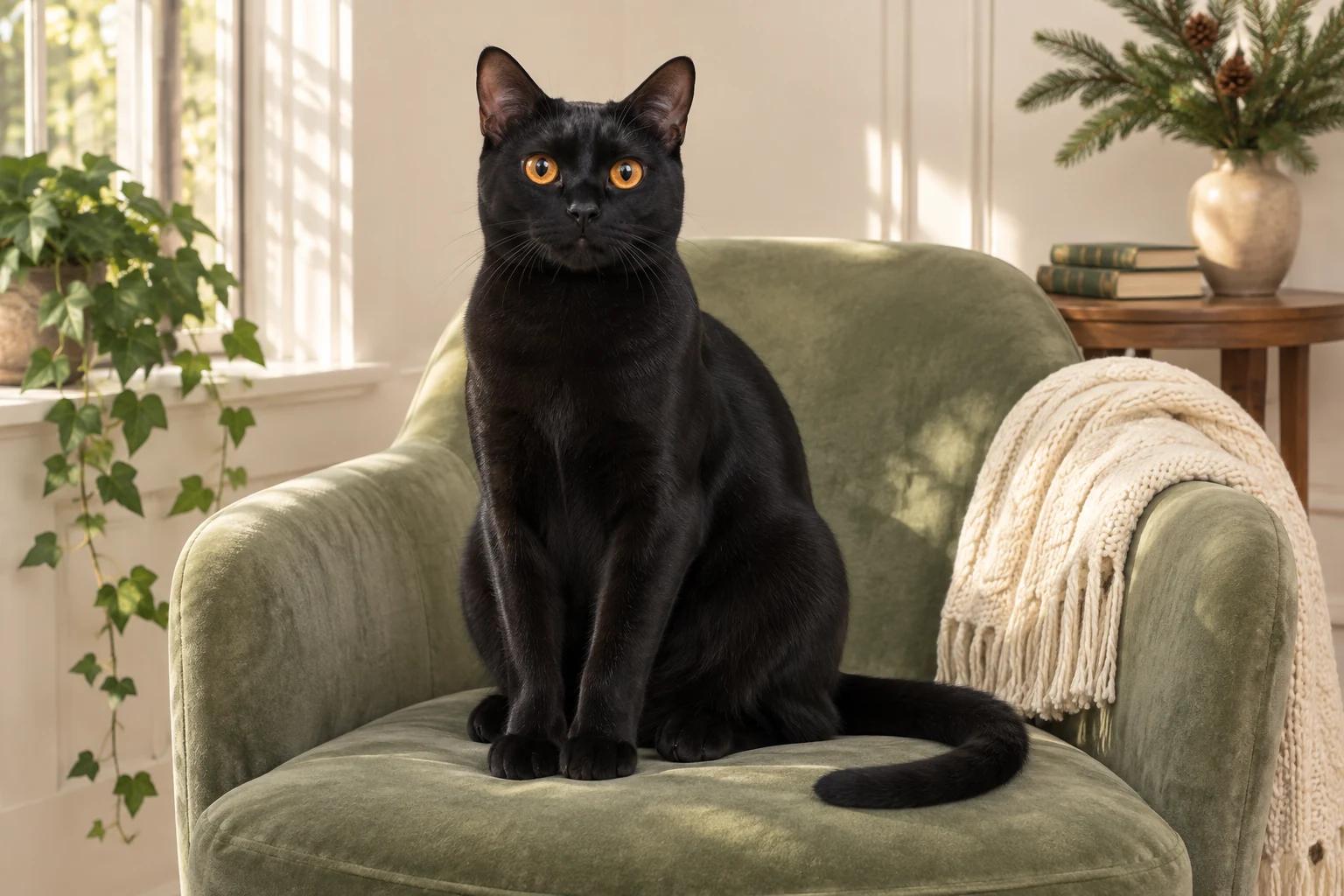
Bombay cat size is best understood through both weight and proportions. The current Bombay profile lists adult females at 6–9 pounds and adult males at 8–11 pounds. These are reference bands, not a promised finishing weight for a kitten or a reason to prefer the heaviest animal available.
Bombay cat size: read the female and male bands separately
The combined adult reference is 6–11 pounds, but the sex-qualified figures are more useful than that single span. An eight- or nine-pound adult can fall within either band. A female does not need to reach the male upper reference to be a full-sized individual.
Bombay cat weight also cannot tell you the animal's shoulder width or standing height. An eight-pound figure is a measure of mass, not a scaled drawing. If you are comparing two adults, keep their actual measurements attached to the correct individual rather than assuming the heavier one must be taller in every direction.
For someone asking how big do Bombay cats get, the practical answer begins with these adult ranges and continues with the animal in front of you. Do not convert a reference range into a numerical height by analogy with another breed. The shape of the body matters as well as its overall mass.
Muscle and bone give the body substance
TICA's Bombay description emphasizes a muscular body supported by robust bone. It also describes a rounded head without sharp angles, wide-set eyes and medium-sized ears tilted slightly forward. Together, those features create a substantial appearance without establishing a particular measurement for every cat.
Look at the head and body as related parts of the outline. A close face photograph can exaggerate the impression of a large head, especially if the camera is nearer the nose than the rest of the animal. It is not an accurate way to infer total size.
The muscular description should not be translated into a target of making the cat heavier. It concerns the breed's build, not a direction to increase food or chase a larger number on the scale. If you have questions about the individual cat's condition, ask the veterinary team rather than interpreting a breed description as an assessment of that animal. Substance and maximum weight are not interchangeable goals.
Proportions include the chest, legs, paws and tail
FIFe's Bombay standard describes a well-developed neck, a broad rounded chest and medium-length legs proportionate to the body. The paws are rounded, while the medium-length tail tapers toward a blunt tip. These details are more useful for understanding the whole outline than imagining a body with no limbs or tail attached.
For a resting space, consider the position the animal actually occupies. The chest needs usable width, and the tail can be part of the resting outline rather than something ignored because it contributes little to the weight reading. A circular opening and a rectangular sleeping surface present different fit questions.
This is also why Bombay cat height should be considered as an actual individual dimension, not a number invented from the word “medium.” Proportion describes relationships between body parts. It does not supply an inch measurement that can be applied to every adult, nor does a show description replace measuring the animal for a practical purpose.
The close coat does not add a longhaired silhouette
VCA's Bombay account identifies a short, satiny black coat extending in color to the roots, together with black paw pads and copper-colored eyes. These are distinctive appearance features, but none establishes the animal's weight on its own.
A short coat makes a different visual impression from an abundant long coat. It does not justify judging scale from color alone: a dark silhouette against a dark background can conceal where the body ends, while strong light can emphasize sheen instead of shape. Ask for a clear view of the whole animal if an image is your starting point.
Keep coat appearance separate from an equipment decision. A photograph may be excellent for appreciating the glossy finish and poor for showing a usable outline. A carrier or platform must fit the cat, not the amount of black visible in a picture. Even a distinctive coat cannot turn an unmeasured photograph into reliable dimensions for a purchase or a transport arrangement.
Growth is a sequence, not one kitten weight
Waltham's kitten-growth guidance describes charts for following repeated weights from eight weeks into adulthood. They cover cats expected to weigh 2–7 kilograms as adults, rather than offering a special Bombay-only curve. Discuss the individual kitten's development with your veterinarian rather than treating the breed's adult range as a growth timetable.
The date of birth matters when comparing weight with age. If it is estimated, make that uncertainty clear to the veterinary team. A series of measurements also needs to describe the cat itself: if a carrier is used on the scale, its weight must be subtracted from the combined reading.
These distinctions prevent two common misunderstandings. A kitten's current weight is not automatically its eventual adult weight, and an inaccurate age can make a precise-looking comparison misleading. Growth information is useful when it concerns the same animal over time, with understandable measurements, not when isolated numbers from unrelated kittens are assembled into a supposed prediction.
The Bombay front-door guide covers household entrance arrangements. The cat quiz helps you consider wider ownership preferences alongside physical fit.
FAQ
What are the current female and male adult weight references?
Adult Bombay females are listed at 6–9 pounds and males at 8–11 pounds. These are ranges, not individual targets.
Can a nine-pound adult fit either sex-qualified range?
A nine-pound adult Bombay fits both current female and male weight reference bands.
Can I calculate standing height from an adult weight?
A Bombay’s adult weight cannot establish standing height; they are different measurements. Use the individual cat's actual dimensions rather than converting pounds into inches.
Sources behind this article
Article source checked: November 16, 2026. Source checked 2026-11-16
Keep reading

American Bobtail cat temperament
Read article →