Bolognese Dog Training: Small Steps for Everyday Life
Make Bolognese dog training practical with clear cues, a manageable toilet routine, comfortable handling, and thoughtful small-dog learning.
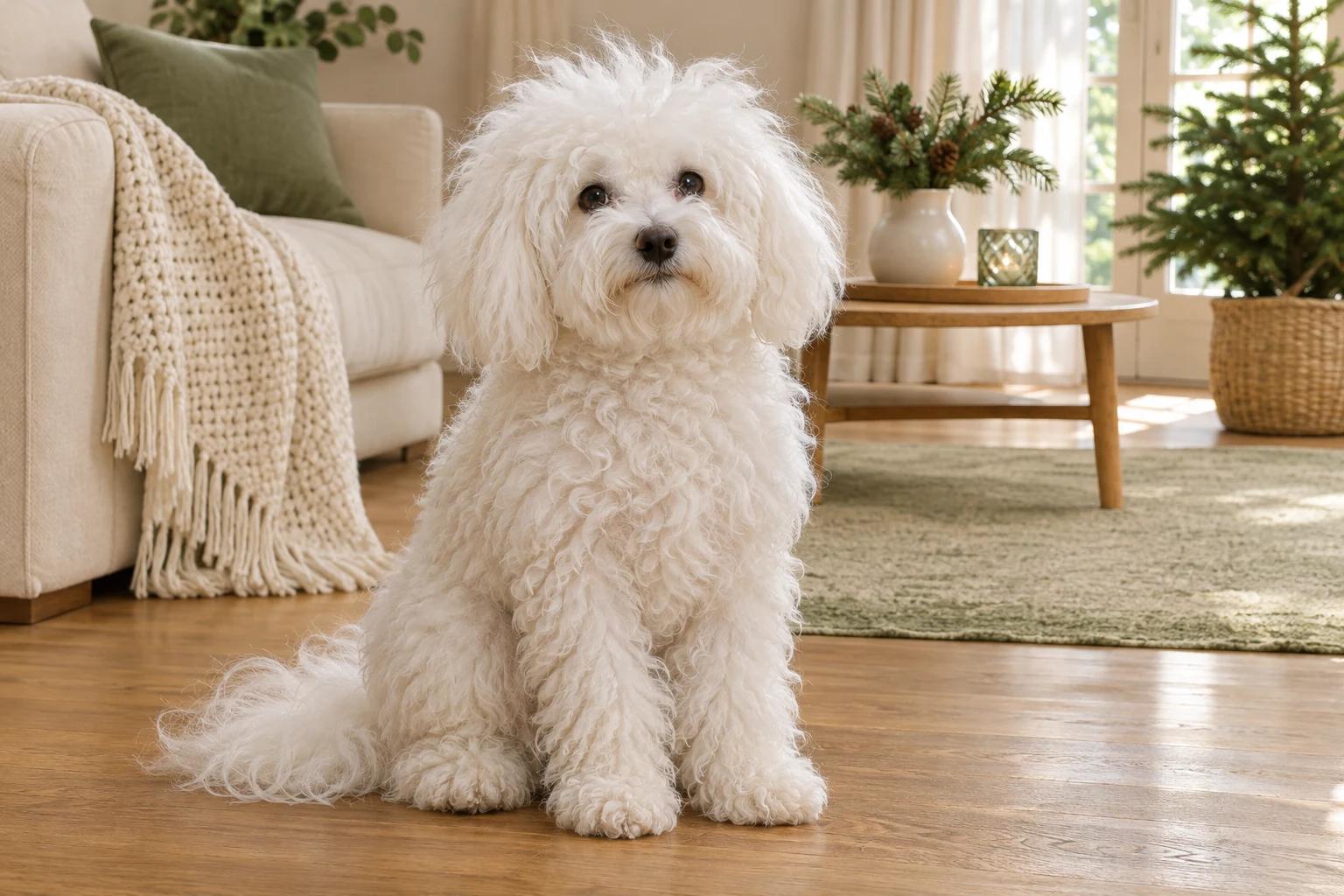
Bolognese dog training deserves the same thought you would give to teaching a larger companion. A small dog may be easy to lift, but being moved from place to place is not the same as learning where to go or what to do. Clear skills make everyday life easier for both of you.
The Bolognese profile describes a responsive learner whose day centers on people. Begin with useful routines: coming toward you, settling nearby, participating in care, and finding a predictable route outside. Keep the learning friendly and suited to the individual.
Bolognese dog training starts with the dog's viewpoint
The AKC small-dog training guide cautions against assuming that small dogs need less teaching. That principle matters for a Bolognese whose manageable size can make it tempting to solve every difficulty by picking it up.
Look at your practice space from near the floor. Chair legs, dangling bags, and moving feet may occupy much of the route you want the dog to follow. Clear enough room that an ordinary exercise does not require navigating a cluttered obstacle course.
Choose a comfortable human position too. You need to deliver rewards without repeatedly looming over the dog or losing your balance. A chair beside the practice area may be more workable than bending awkwardly through a long session.
Make the reward easy to understand
Decide which action you are rewarding before you begin. If you want the dog to approach a mat, acknowledge that movement rather than waiting silently for an entire finished routine. Build from an achievable first step.
Keep rewards suitable for the dog and account for food rewards within its normal feeding plan with veterinary guidance when needed. The teaching point is the clear connection between action and outcome, not the size of what you offer.
How to train a Bolognese without overcomplicating it
If you are wondering how to train a Bolognese, list three situations that happen daily. Perhaps you attach a lead, move between the kitchen and living room, and brush the coat. Each can become a small learning project with a practical benefit.
Teach one part at a time. Standing comfortably while you reach toward the harness is separate from waiting while you fasten it. A dog that understands the first step may still need practice with the next, particularly when an outing is about to begin.
Use a consistent cue for each familiar action. Share it with the household so the dog is not asked for the same behavior in several confusing ways. When a response is new, practice in quiet surroundings before expecting it during a visitor's arrival.
The AKC Bolognese overview describes a people-oriented companion. Shared practice can be part of that relationship without turning every interaction into a lesson. Leave room for quiet company as well.
Bolognese dog potty training needs a usable plan
Bolognese dog potty training begins with learning the current routine. Ask the breeder, rescue, or previous caregiver what surface and location the dog knows, how outings are arranged, and what signals they have noticed. That information helps you avoid changing every detail at once.
Map the route to the intended toilet area. A home with a lift, shared entrance, or several doors needs more preparation than one opening directly into a garden. Keep the necessary equipment accessible and decide who takes responsibility when more than one person is home.
Maintain a brief record of outings and accidents while you establish the pattern. Note what was happening beforehand rather than relying on memory. The record can help a trainer identify practical gaps, such as a handover between caregivers when nobody realized the dog needed an outing.
Respond to difficulties without a confrontation
If the routine is not working, review supervision, access, timing, and the dog's previous experience. Ask a qualified reward-based trainer to help build a suitable plan rather than punishing an accident after it has happened.
Sudden changes or signs of discomfort belong in a conversation with a veterinarian. Do not assume every toileting problem is a training failure or attempt to diagnose the cause from the breed name.
Bolognese obedience includes choosing a resting place
Bolognese obedience need not look formal to be useful. Moving to a bed beside your desk can help during calls; waiting briefly while a door opens can make departures more orderly. Pick behaviors that genuinely improve the day.
Put the resting place somewhere the dog can participate in household life without being in the path of feet or a rolling chair. A bed that must be moved repeatedly is harder to turn into a predictable destination.
Practice at an easy moment and reward the dog's interest in the place. Later, use the familiar routine while you do a short quiet task. Increase the challenge gradually rather than expecting a long period of settling the first time you need uninterrupted work.
Teach participation in care
A Bolognese's coat makes comfortable handling worth practicing. Introduce brief, manageable contact and pause before the dog becomes overwhelmed. Ask a groomer to demonstrate how to work with the actual coat and the dog's current tolerance.
Separate handling practice from completing every grooming task. You might spend a short session rewarding the dog for remaining comfortable beside the grooming kit, then tackle a different element another time. The aim is a workable relationship with care, not merely getting through one appointment.
For the distinct topic of coat texture, see Bolognese flocks and combing. Understanding the coat and teaching comfortable participation support each other, but they are not the same lesson.
Let social learning happen at a manageable distance
The AKC small-dog guide notes that socialization does not require greeting every dog. For your Bolognese, choose opportunities to observe without being crowded. Ask a class instructor how dogs of different sizes will be managed before joining an interactive session.
Do not make every unfamiliar person a test. A visitor can sit quietly while the dog decides whether to approach. If the situation becomes too much, give space and choose an easier version next time.
The breed quiz can help you think about your preferred daily involvement. Small size may simplify some arrangements, but thoughtful learning and company remain central parts of the commitment.
FAQ
Does a Bolognese need training if it is easy to carry?
Yes. Carrying can move the dog without teaching a useful response. Everyday skills give a small dog clearer ways to participate in the household and help caregivers communicate consistently.
Where should I start with toilet training?
Ask about the existing routine, choose a practical route to the intended area, and agree who manages outings. Keep a brief record so you can identify gaps and discuss persistent difficulties with a qualified trainer.
Can grooming be part of training?
Comfortable participation in care is a useful learning goal. Introduce handling gradually and get a demonstration from a groomer. Do not expect the dog to accept every procedure simply because it tolerates one familiar touch.
Must my Bolognese greet every dog to become social?
No. Calm observation at a manageable distance is valuable. Choose interactions thoughtfully and ask about size-appropriate arrangements in classes. A greeting quota is not a useful measure of progress.
Sources behind this article
Article source checked: November 14, 2026. Source checked 2026-11-14
Keep reading

Affenpinscher Training: Build Useful Everyday Habits
Read article →