Bengal vs Siberian
Compare Bengal vs Siberian domestic cats through current weight ranges, distinctive build, coat care and individual companionship.
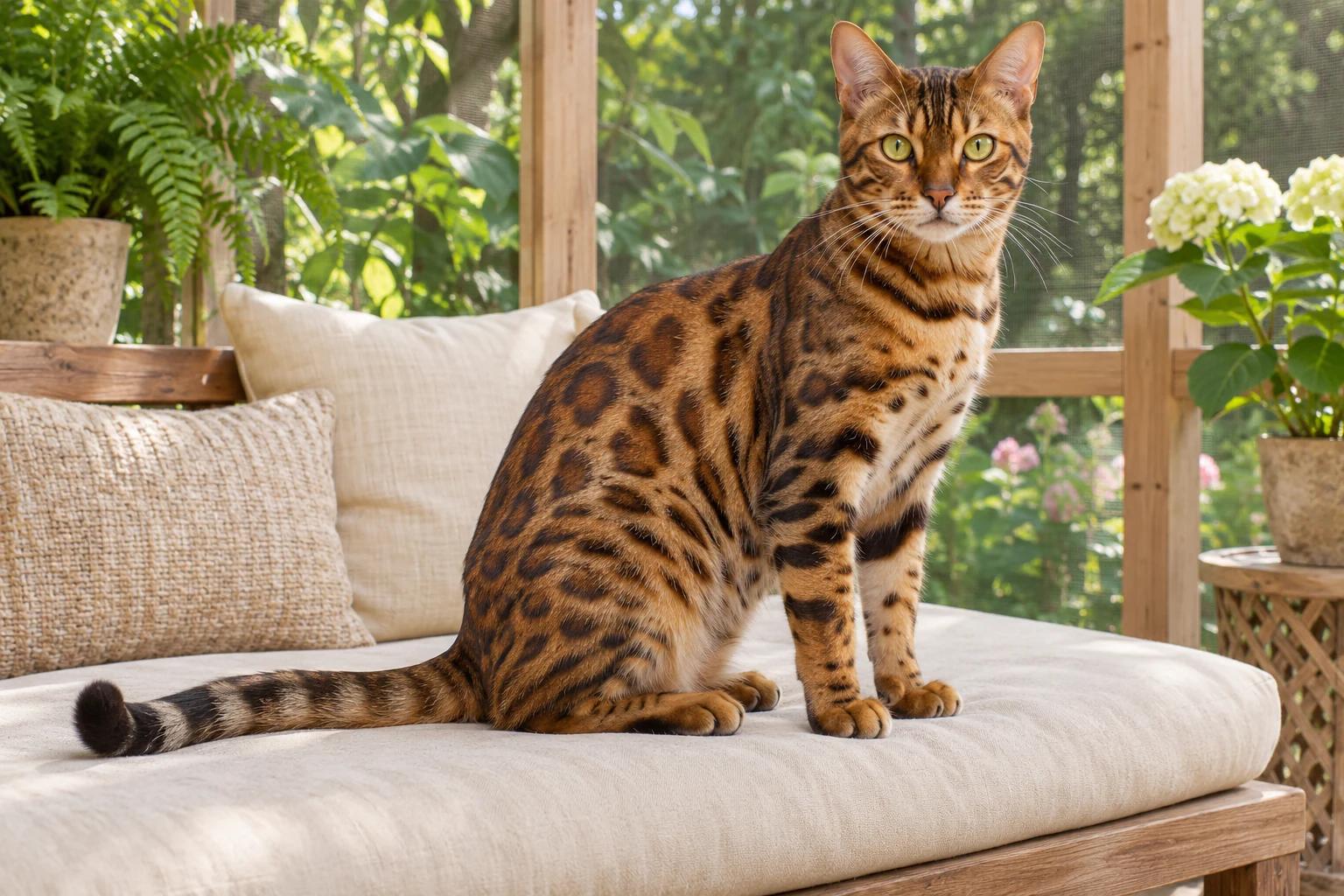
Bengal vs Siberian here means the domestic cat breeds, not tigers. The current Bengal profile and Siberian profile provide separate female and male weight references. Their adult weight references overlap, and neither the coat pattern nor the amount of fur supplies a complete answer about everyday companionship.
Bengal vs Siberian: markings and the athletic frame
CFA's Bengal account describes a muscular body, a wide nose and prominent whisker pads, with relatively small to medium ears emphasizing the eyes. The appearance is not just a pattern printed onto an otherwise anonymous cat: head and body structure contribute to the overall impression.
Its coat may display outlined rosettes or marbling with less symmetrical, dramatic markings. Some coats have a visible sparkle when light catches the hair. These are appearance features, not a temperament scale. A more dramatic-looking coat does not establish how that individual will behave around you.
When you compare photographs, look beyond the most eye-catching patch of color. Lighting can emphasize sheen or contrast, while pose can conceal the animal's actual outline. Meet the cat as a whole rather than using one striking marking to decide how powerful, active or socially confident it must be. The physical description helps identify features; it does not replace observing the individual.
The Siberian coat changes the silhouette through the year
CFA's Siberian account describes a dense coat that is fuller in colder months and less dense in summer. It also notes considerable variation in grooming needs between individual Siberians. A single photograph taken in one season is therefore a limited basis for imagining the coat you will care for throughout the year.
The underside, tail and britches are specific areas worth including in an agreed grooming routine. Ask an experienced groomer for practical help if you are unsure how to care for that individual coat, rather than treating a substantial layer of hair as something to work through by force.
A shorter summer appearance does not turn the cat into a shorthaired breed. Conversely, the visual bulk of a winter coat is not the same measurement as body weight. Keep coat volume and physical scale separate when comparing the Siberian with a shorthaired Bengal. The amount of fur visible in an image cannot tell you whether a platform or carrier fits.
Current adult weight references: overlap matters
The current profile figures are:
- Bengal females: 6–12 pounds.
- Bengal males: 9–15 pounds.
- Siberian females: 11–15 pounds.
- Siberian males: 15–19 pounds.
These are reference bands, not individual predictions. The female bands overlap at 11–12 pounds, and the male bands meet at 15 pounds. Do not turn the figures into a rule that every Siberian is larger than every Bengal.
If you are deciding between a Bengal or Siberian for a home with existing equipment, check both actual weight and usable dimensions. A product sold for a large cat may still have a small sleeping area or a narrow opening. The manufacturer's limits and the animal's measurements are more useful than a breed photograph on the box.
Look at the Siberian's underlying structure
GCCF's structural description describes a broad chest, a substantial neck, strong legs and large paws. Its head has rounded contours, with a broad muzzle and medium-sized ears. These details explain the difference between Bengal and Siberian structure.
Pay attention to the relationship between the chest, neck and head when examining its outline. Equally, do not assume that a strong-looking cat is heavy enough to exceed an equipment limit without checking the actual figure. Appearance and measurement answer different questions.
For an owner, this is most useful when considering physical accommodation. The space inside a bed or carrier needs to suit the body, not just the outline of the face visible in a photograph. A well-furnished tail also needs room within the chosen resting position. Compare real dimensions instead of trying to derive them from a weight range alone.
Companionship is not a contest between two breed labels
TICA's Siberian account describes interest in play alongside following family members and seeking company. It also describes problem-solving behavior around doors, food and favorite toys. That is a useful reminder that the individual may take an active interest in its surroundings.
For a prospective owner, the practical question is what form of involvement the individual already enjoys. A cat interested in investigating cupboards needs suitable boundaries and opportunities, not a presumption that exploration is irrelevant. Learn what the animal does, rather than only what it looks like while resting.
The same principle keeps this comparison balanced. Do not choose the Siberian solely as an imagined opposite to a Bengal's activity. Decide whether you can accommodate the cat's real interests and preferred company. A description of a breed helps identify possibilities, but an individual's existing habits provide the clearer picture of how daily life together may feel.
For enrichment planning, the Bengal indoor play-rotation guide addresses a separate practical task. The cat quiz helps you consider broader ownership preferences.
FAQ
Does Siberian vs Bengal weight always identify the larger cat?
Bengal and Siberian adult weight references overlap or meet; breed alone cannot identify the larger individual. Actual individual measurements are more useful for equipment decisions.
Can an eleven-pound female fit either current breed range?
An eleven-pound female fits both current Bengal and Siberian adult weight ranges.
Can a fifteen-pound male fall within either breed range?
For males, fifteen pounds fits both Bengal and Siberian adult references: it is both the upper end of the current male Bengal band and the lower end of the male Siberian band.
Sources behind this article
Article source checked: November 16, 2026. Source checked 2026-11-16
Keep reading

Abyssinian vs Somali: Coat, Size and Everyday Company
Read article →