What a natural Barbet coat should look like
The Barbet standard allows loose and tight curls, neat scissoring and a distinctive beard. Learn where natural presentation differs from an untouched coat.
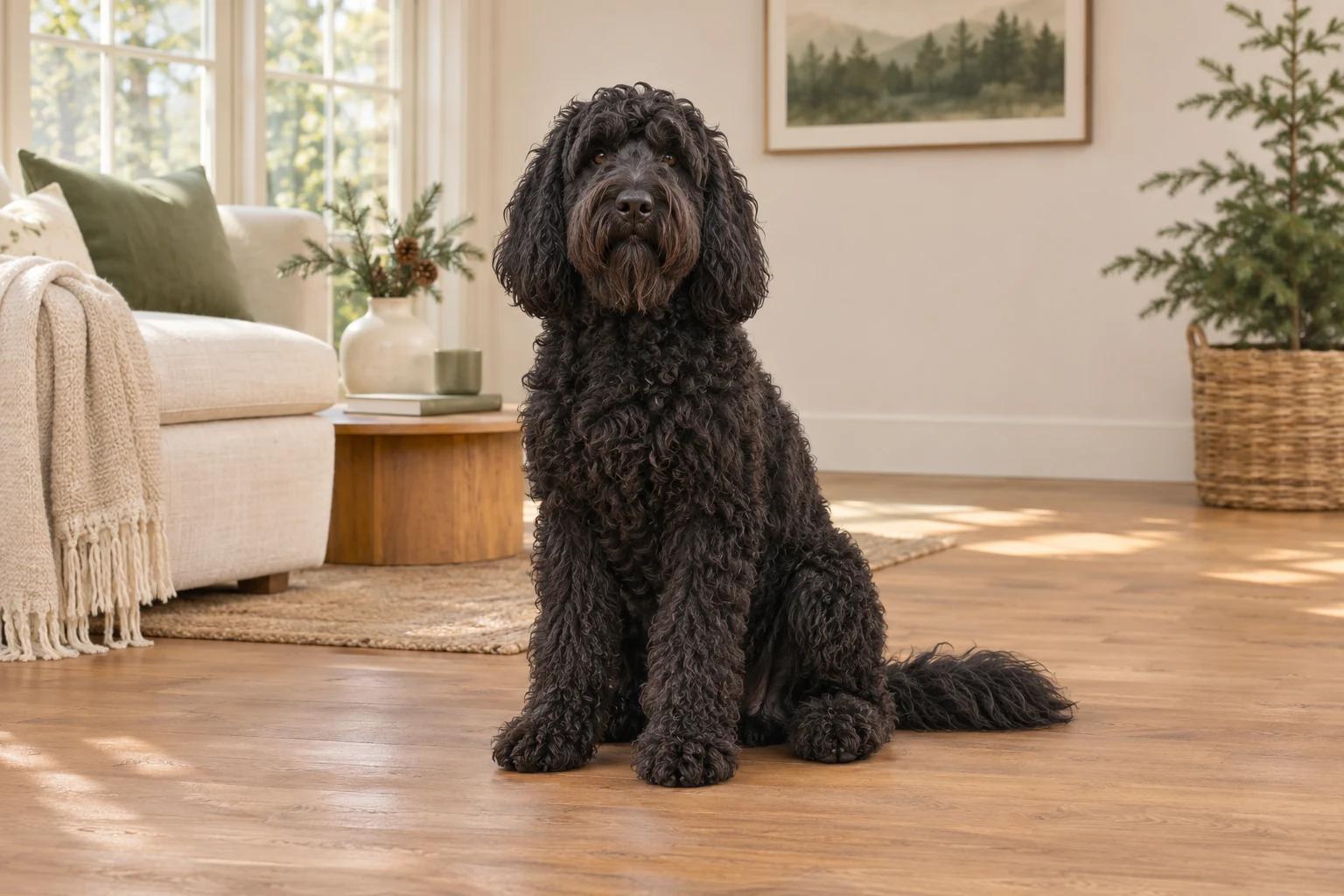
Natural describes the finish
A Barbet at a dog show should still look curly. Its AKC standard accepts a range from broad, relaxed curls to smaller, tighter ones. It also asks for an evenly abundant coat, a beard and long hair over the ears. There is no single ringlet diameter that every correctly presented Barbet must match.
Neatness without a sculpted silhouette
The same standard requires cleanliness and freedom from mats, permits the scissoring needed for neatness, and penalizes excessive shaping. Those requirements work together: natural presentation preserves the coat’s character while maintaining its condition. It does not mean allowing tangles to accumulate or refusing every use of scissors.
For a grooming consultation, separate two decisions: what condition needs attention, and what finished appearance you want. “Keep the curls visible and avoid a heavily carved outline” communicates more than “make it natural.” A photograph can help explain the finish, but should not become a demand to reproduce another dog’s curl pattern.
Keep the beard in the picture
The breed’s name comes from the French word for beard, barbe. Head hair reaching the bridge of the nose and the beard contribute to its recognizable face. When discussing a trim, identify those features explicitly instead of relying on a generic curly-dog haircut request. Show presentation is the subject here; an individual pet’s practical grooming plan should also account for coat condition and what its household can maintain.
Sources behind this article
Article source checked: October 20, 2026. Source checked 2026-10-20
Keep reading
Barbet Dog Training: Build a Useful Retrieve and More
Read article →