American Staffordshire Terrier Exercise Needs Explained
Plan AmStaff exercise around movement, learning, and rest, using the breed profile as a starting point for your individual dog.
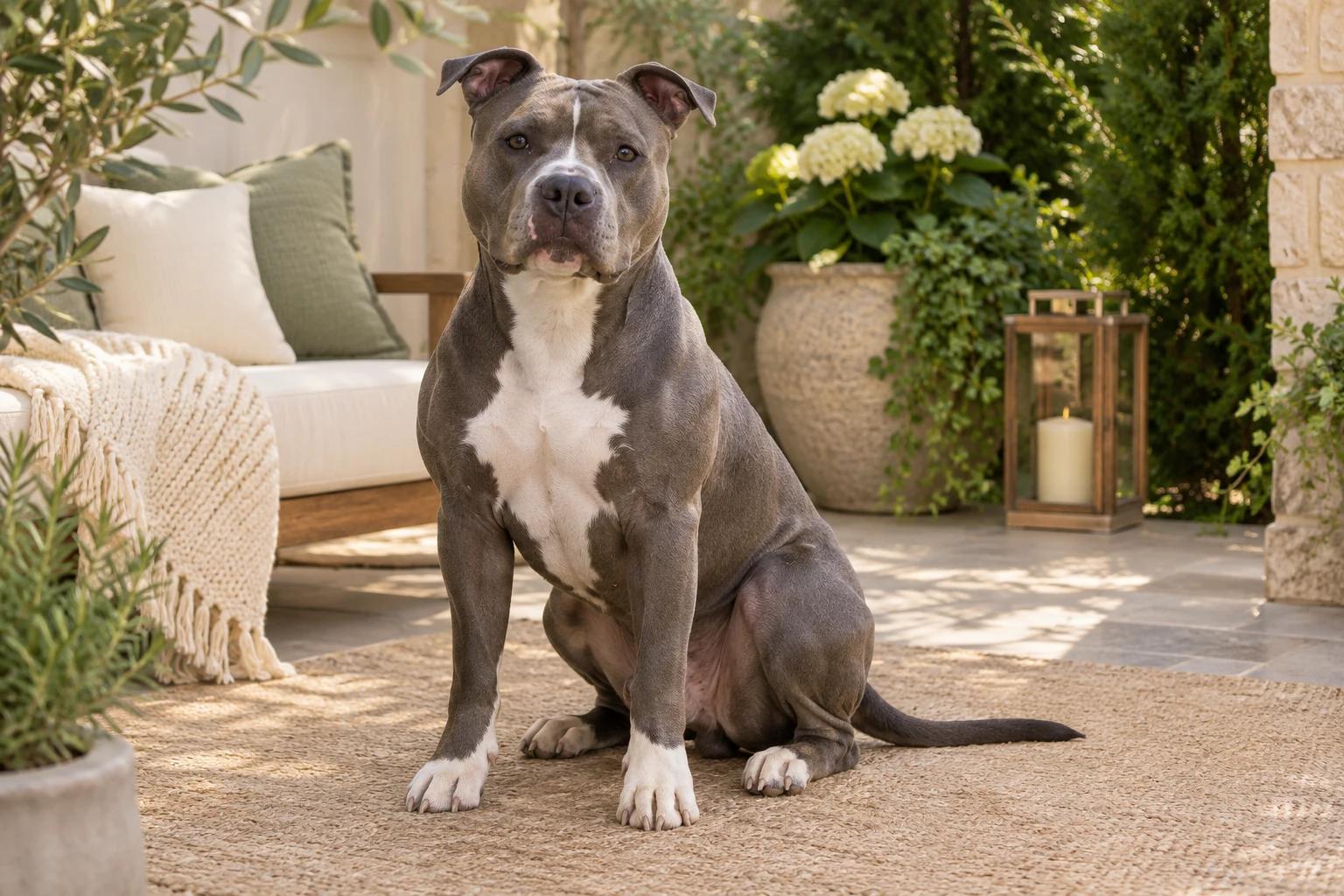
Explore the
American Staffordshire Terrier
Background, care, and everyday considerations.
View breed profile →American Staffordshire Terrier exercise needs are about a workable mix of movement, learning, play, and downtime. An active-looking dog does not need every outing turned into a demanding workout. The aim is a routine you can sustain and an individual dog can participate in comfortably.
Our American Staffordshire Terrier profile places the breed around an hour of active time in a typical day. Treat that as the site's planning reference, not a prescription for every age or circumstance. Talk with your veterinarian about an appropriate routine for your own dog.
American Staffordshire Terrier exercise needs: start with the whole day
Before adding another activity, look at what already happens. Count the actual outings and play sessions, not the time the dog simply spends in a yard. Note when the dog has company, opportunities to learn, and a place to rest.
AKC's exercise guidance emphasizes that age, health, and breed affect activity requirements. That is why a single online number cannot settle every dog's plan. The useful next step is to translate the breed profile into arrangements that fit the individual.
Consider the difference between an ordinary workday and a free day. If your plan only works when you have several uninterrupted hours, simplify it. A repeatable combination of familiar activities is more useful than an ambitious routine that exists only on paper.
Separate opportunity from participation
Having access to a garden, park, or training venue is not the same as using it. Decide what you will do there and when. A nearby park may be valuable for walking, while a smaller quiet space may be better for practicing a new skill.
Keep a realistic account of travel time too. A short class can take a much larger block of your evening once transport and preparation are included. Choose activities around the complete commitment, not only the advertised session length.
How much exercise does an American Staffordshire Terrier need?
If you are asking how much exercise does an American Staffordshire Terrier need, begin with the site's typical daily reference and then personalize it with veterinary guidance. Avoid treating the number as a minimum to exceed regardless of conditions or a maximum after which the dog should automatically settle.
The breed standard describes muscularity and agility. It does not give an individual exercise prescription. A dog's build is not proof that a particular sport, distance, or pace is appropriate today.
Ask about the dog's existing routine before making substantial changes. What activities are familiar? What does a normal outing involve? For questions about introducing a new physical activity or changes in stamina, talk with your veterinarian rather than setting a target from appearance alone.
AmStaff exercise can have several different purposes
One outing may be mainly about walking together. Another may offer time to investigate a familiar environment. A learning session might focus on a simple task. These activities are not interchangeable, even when they take the same amount of time.
For AmStaff exercise, choose the purpose before choosing the location. If you want quiet walking practice, a crowded event may be a poor match. If you want a change of scenery, choose a route where you can adjust distance easily rather than committing to a long loop.
You can also vary a familiar outing without making it harder. Start from another entrance, pause in a different open area, or practice a known skill in a quiet section. Variety does not require constant novelty or increasing intensity.
Plan an ending, not only a beginning
Decide how you will finish an activity before excitement builds. That may mean returning along a familiar route, putting game equipment away, and moving into the normal home routine. A clear ending makes the day easier to organize.
Do not judge an activity only by how tired the dog appears immediately afterward. Consider the overall experience: whether participation was comfortable, whether the setting worked, and whether the routine is something you can repeat. If you notice discomfort or an unexplained change, talk with your veterinarian.
American Staffordshire Terrier activity level and mental engagement
The American Staffordshire Terrier activity level described on the site includes daily training games. You can use those games to practice useful skills rather than searching for increasingly complicated entertainment.
For example, work on recognizing a familiar object by name, moving to a designated spot, or participating in a simple sequence of learned actions. Pick a task you can explain clearly and keep the first version achievable. The value is in shared attention and learning, not in how elaborate the finished trick looks.
Avoid making every indoor activity a physical challenge. If outdoor plans change, a quiet learning task may be a useful part of the alternative. It should not be presented as a universal replacement for movement, but it can give the day structure without requiring a demanding indoor workout.
Choose activities around the individual, not a stereotype
An AmStaff does not need to enjoy the same game as another dog of the breed. Observe what your dog willingly engages with and which settings make participation easier. The most useful activity is one that fits the dog and the people sharing it.
If you are interested in a sport, contact an instructor about beginner options before buying equipment. Ask what foundations are taught, whether the class can accommodate different experience levels, and what preparation is expected. Discuss physical suitability with your veterinarian.
There is no need to rush from a pleasant hobby into competition. You may find that introductory practice is exactly the level of commitment you want. Keep the activity's purpose connected to daily life rather than assuming every interest needs to become a major project.
Make rest part of the arrangement
Provide a resting place that does not require the dog to remain in the busiest route through your home. Consider where household activity continues after an outing and whether the dog can step away from it.
Keep downtime predictable enough that it has a place in the day. The plan should not rely on repeatedly adding stimulation whenever there is a quiet moment. If settling remains difficult despite a thoughtful routine, ask a qualified professional to help examine the whole picture.
The dog match quiz can help compare your preferred lifestyle with the breed's everyday profile. For a different topic, our AmStaff name-history article explains the terminology you may encounter in older records.
FAQ
Is an hour of exercise enough for every AmStaff?
No single amount fits every dog. The site's typical reference is around an hour of active time, but age, circumstances, and individual needs matter. Talk with your veterinarian about an appropriate plan rather than treating a breed-level number as a prescription.
Does an American Staffordshire Terrier need intense exercise?
A muscular appearance does not establish that intense activity is appropriate. Build a routine around the individual, familiar activities, and professional guidance when introducing a new physical challenge. Movement, learning, and rest all have a place in the day.
Can training games count toward an active day?
Training games provide engagement and can involve movement, but they do not automatically replace ordinary physical activity. Use them alongside suitable outings and play. Choose clear, achievable tasks that you and your dog can enjoy practicing.
What if the usual outdoor activity is unavailable?
Have a simpler alternative ready, such as an accessible familiar route and a quiet indoor learning task. Adjust plans to the conditions instead of forcing the original outing. Ask your veterinarian about activity questions specific to your dog.
Sources behind this article
Article source checked: November 14, 2026. Source checked 2026-11-14
Keep reading

Afghan Hound Exercise Needs: Build a Workable Active Day
Read article →