American English Coonhound Training: Work With the Nose
Make American English Coonhound training practical with controlled exploration, manageable distractions, recall practice, and scent-focused planning.
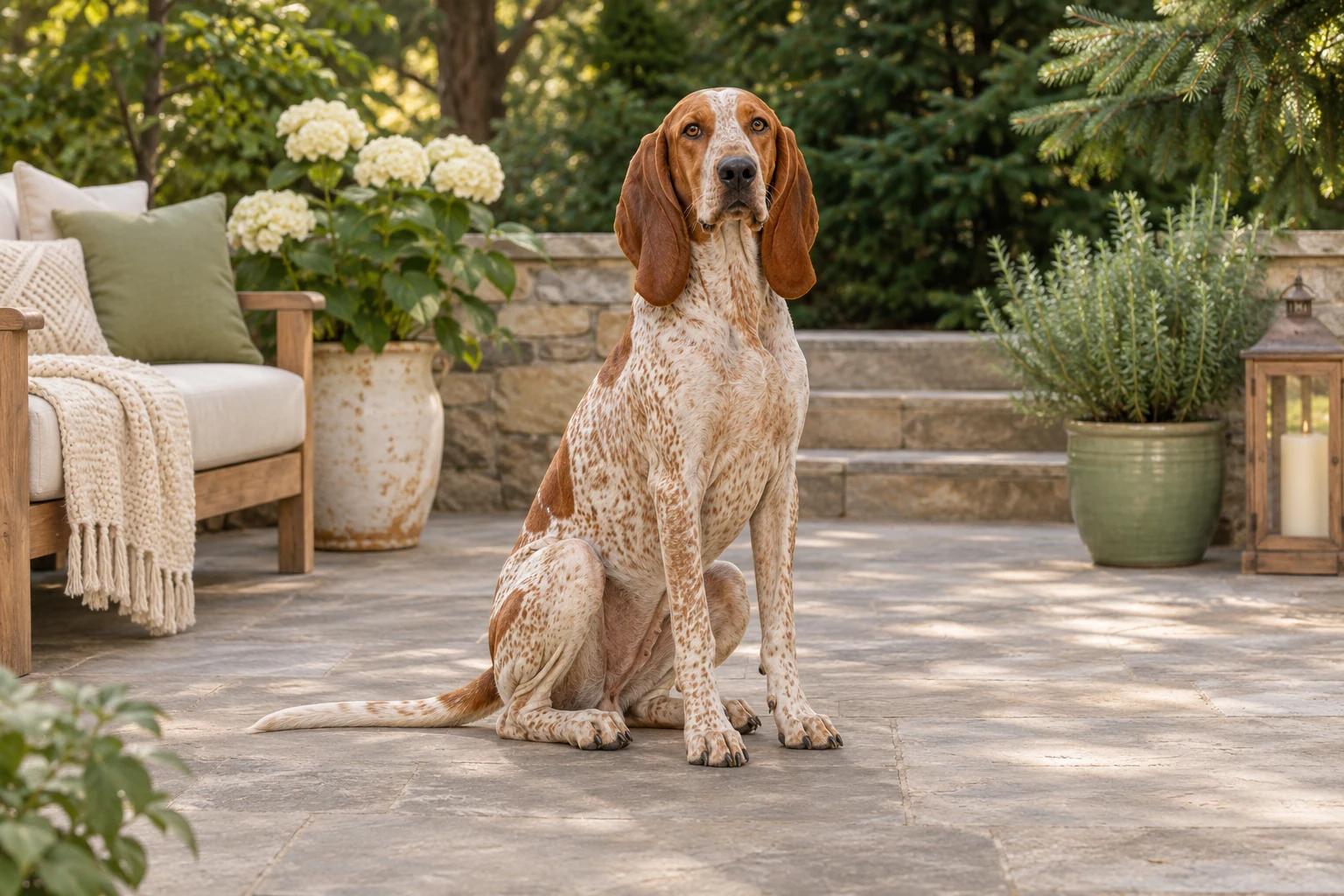
Explore the
American English Coonhound
Background, care, and everyday considerations.
View breed profile →American English Coonhound training becomes more useful when you stop treating every interesting smell as an interruption. The aim is not to erase the dog's interests. It is to build a workable way to explore, respond, and move together while keeping the environment manageable.
The American English Coonhound profile describes an active, vocal hound that benefits from learning and engagement. Start with that picture, then adjust to the individual. A dog learning to turn toward you on a quiet path is practicing a meaningful skill, even if the lesson does not look like a formal obedience routine.
American English Coonhound training needs a distraction map
The breed standard describes an avid hunting hound. That background is a reason to think carefully about where you teach, rather than deciding a distracted dog has failed an easy test.
Make a simple map of your practice options. One area might be familiar and uneventful, another might have regular pedestrian traffic, and another may be rich in animal scent. The same distance from you can represent very different levels of difficulty in those settings.
Begin where you can observe your dog's response without constantly managing something else. If the location is so absorbing that you cannot get a brief moment of attention, use a different location for the lesson. You can still visit interesting places as controlled outings without making them your starting classroom.
Record what changed
A useful training note describes the context: “turned toward me in the quiet corner, but not beside the hedge.” This tells you where the next manageable step might be. “Stubborn today” does not give you anything concrete to adjust.
Change one part of the setup at a time. Moving farther away, practicing in a new place, and adding another dog all at once makes it difficult to understand what changed. A simple record helps you avoid repeating a setup that was too demanding.
How to train a Coonhound with purposeful practice
If you are wondering how to train a coonhound, choose a small number of skills that support the activities you want to share. Turning toward you, moving along together, and returning within a controlled area are more useful foundations than an ambitious sequence of tricks nobody needs outside a lesson.
Decide what a successful repetition looks like before you begin. For an attention exercise, it may be a brief turn of the head. For moving together, it may be a few steps with slack in the lead. Those clear observations prevent you from shifting the goal after the dog has already responded.
Keep the reward accessible and the setup uncomplicated. If you must search through a bag or rearrange several pieces of equipment each time, the practical flow of the lesson becomes harder for both of you. Rehearse your own movements without the dog first if necessary.
Coonhound recall training: build the setting before the distance
The AKC recall guide recommends beginning with few distractions, rewarding returns, and building difficulty gradually. It also supports secure enclosures or a long line while practicing. Treat those as foundations, not a guarantee of a response everywhere.
For coonhound recall training, sketch the physical layout before starting. Where are the gates, obstacles, and other users? Can you see the whole area? Is there room to practice without the line becoming tangled around furniture, vegetation, or people?
A long line changes the amount of room available; it does not make every location suitable. If you have not used one before, ask a trainer to demonstrate handling. Choose a space where you can concentrate on the exercise rather than trying to learn equipment management beside a busy route.
Decide when a location is ready for practice
Use your observations to choose the next setting. If your dog can respond in a familiar enclosed space, the next step might be a different quiet enclosed space rather than a wildlife-rich trail. Novelty alone can add difficulty without also increasing distance.
Do not make an open area the final exam you feel obliged to take. You can continue enjoying controlled exploration while developing skills. Your training plan should serve real life, not pressure you into demonstrating a result in an unsuitable place.
Coonhound scent drive training is about workable outlets
Coonhound scent drive training is a useful search phrase, but it can suggest that scent interest is something to switch off. A more practical question is how to give exploration a defined place while maintaining the skills needed to navigate an outing.
Plan the walk in segments. One section may allow more time to investigate; another may need steady movement because the path narrows. Choose those sections beforehand when possible. That allows you to practice transitions in places where you have room, rather than waiting until a practical obstacle forces a hurried change.
If you are interested in organized scent activities, observe a beginner session and ask how the introduction works. Find out what equipment is needed, how dogs wait between turns, and whether the environment suits your dog. Participation should begin with a clear explanation, not assumptions based on the breed's name.
Voice and movement can complicate the same outing
An exciting setting may involve both vocalizing and pulling. Before trying to solve everything at once, identify the moment that starts the sequence. Is it arriving at a particular place, seeing another dog, or waiting while you prepare equipment?
Use that information to choose a simpler rehearsal. You might practice arriving somewhere quieter or shorten the waiting period while organizing yourself more efficiently. The point is to create an opportunity for learning, not to recreate the most difficult version repeatedly.
A trainer can help distinguish a skill that needs teaching from a situation that needs different management. For sudden behavioral changes or signs of discomfort, talk with your veterinarian rather than assuming the explanation is simply “hound behavior.”
Make progress useful to the next person
Write a short handover for anyone who walks your dog: the manageable routes, equipment used, rewards carried, and situations you are still working on. State what has actually been practiced. Someone else should not discover the limits of a skill in the middle of an outing.
Our Coonhound naming article covers the breed's terminology without turning coat pattern into a training prediction. If you are still deciding whether this kind of companion suits you, the dog match quiz can help clarify your preferences before you commit to a routine.
FAQ
Can American English Coonhounds learn recall?
American English Coonhounds can practice returning when called, but a response is not guaranteed in every setting. Begin in a manageable environment, reward returns, and increase difficulty gradually. Keep appropriate physical arrangements in place rather than relying on an unfinished skill.
Why does my Coonhound ignore me while sniffing?
A scent-rich setting may be more difficult than the places where your dog learned a cue. Note the context and practice an easier version elsewhere. Avoid interpreting every missed response as defiance; the skill may not yet transfer to that level of distraction.
Does Coonhound training require hunting?
No. Everyday training can focus on controlled exploration, attention, recall practice, and shared household routines. Organized scent activities are another option to investigate, but the choice should fit your interests, the dog's experience, and the arrangements available locally.
What equipment helps with recall practice?
A suitable secure enclosure or appropriately handled long line can support controlled practice. The location matters as much as the equipment. Ask a trainer to demonstrate unfamiliar equipment and choose an area without obstacles that make handling difficult.
Sources behind this article
Article source checked: November 14, 2026. Source checked 2026-11-14
Keep reading

Affenpinscher Training: Build Useful Everyday Habits
Read article →