American Bulldog Training: Everyday Skills That Matter
Build American Bulldog training around leash manners, calm greetings, clear cues, and useful household skills with practical reward-based guidance.
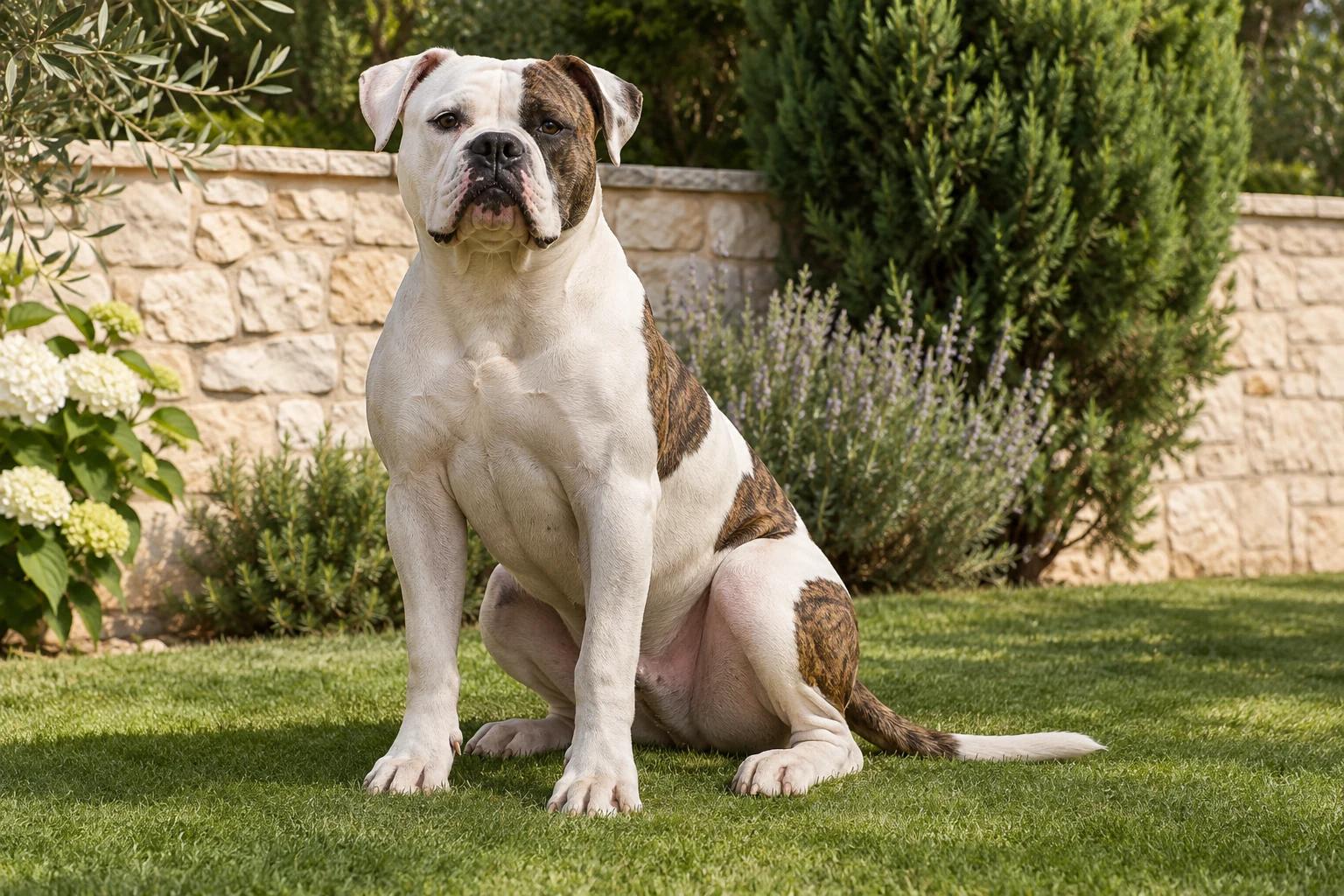
American Bulldog training should make ordinary life easier: walking through a doorway without a rush, passing a distraction, greeting a visitor, and resting while you do something else. Start with those useful moments rather than a long list of tricks. Clear teaching matters more than sounding stern.
The American Bulldog profile describes a substantial, active dog that benefits from ongoing learning. Breed tendencies are a starting point, but the individual in front of you determines the pace. A newly adopted adult may need the same patient introductions as a puppy learning your household routine.
American Bulldog training starts with specific outcomes
“Be good” is not an instruction a dog can practice. Choose a behavior you can recognize and reward: four feet on the floor, looking toward you, waiting at a doorway, or moving onto a mat. Make the first version simple enough that success is easy to notice.
The AKC breed overview describes the American Bulldog's athletic strength and farm-working background. For everyday teaching, the practical implication is straightforward: build cooperative habits instead of relying on physically moving the dog into position.
Write down three priorities for the coming week. Perhaps they are getting a lead attached calmly, walking from the house to the gate, and settling beside your desk. Work on those in manageable pieces. A small set of clear goals is easier for everyone to follow than changing the rules whenever a problem appears.
Include cooperation with equipment
Make being fitted with a harness a lesson in its own right. Put the equipment nearby, let the dog investigate without a wrestling match, and practice the small movements needed for fitting. Ask a trainer to demonstrate a gradual approach if your dog backs away or becomes excited.
Choose a position where both of you have room. Bending across a substantial dog while reaching for a buckle is harder than arranging the equipment first. Keep the lesson separate from a rushed departure until the routine is familiar. The goal is willing participation, not simply getting the harness on somehow.
How to train an American Bulldog without making it a contest
When people ask how to train an American Bulldog, the most useful answer is to arrange practice so the desired choice is clear. Teach a small action, reward it promptly, and make the next repetition only a little more demanding.
The AKC's basic obedience guidance supports reward-based teaching and choosing instruction that suits the dog and owner. You do not need to turn a missed cue into an argument about who is in charge.
If your dog does not respond, check the setup. Is the cue familiar? Is the location new? Have you added distance, movement, and distractions all at once? Going back to an easier version is often a better next step than repeating the word more loudly.
Use rewards your dog actually values in that situation. A favorite toy may be distracting when you want stillness, while a quiet food reward may be easier to deliver. Practice putting rewards away and bringing them out without making the whole lesson about rummaging through your pockets.
Build American Bulldog leash manners in stages
American Bulldog leash manners begin before the busiest part of the walk. Practice in a quiet area where you can concentrate on a few steps rather than navigating traffic, greetings, and a destination simultaneously.
Start with your dog near you and the lead loose. Reward a brief check-in and a few comfortable steps together. Change direction gently while there is room, rather than waiting until the dog has reached the end of the lead and you are both committed to opposing directions.
Pick a visible practice area, such as the space between two driveways. Give yourself permission to work there without completing the usual route. A walk devoted to learning does not need to cover the same distance as an outing devoted to exploration.
Plan the difficult moments ahead of time
A narrow entrance or crowded pavement is a poor place to introduce a brand-new skill. Choose a wider route while you build it. If an unexpected distraction appears, make room or turn away instead of forcing a close pass.
Notice where your own routine creates pulling. Do you open the gate while the lead is already tight? Do you stop to chat while the dog is trying to reach a person? Adjusting those predictable moments gives your practice a clearer structure.
Practice moving from play to a quieter activity
An active dog needs more than an invitation to get excited. Your household also benefits from a clear way to finish an activity and move on. Choose one easy play session and think about what should happen afterward: putting equipment away, taking a drink, and resting while you return to your own task.
Rehearse the quiet part when the dog is already relaxed, rather than introducing it at the peak of excitement. A mat beside your chair can give the routine a recognizable location. Reward brief, comfortable participation before expecting the dog to stay there through an entire meal or work call.
Keep the play space separate from a narrow passage or busy cooking area. That makes the transition easier to organize without bumping into people or furniture. If the dog struggles to disengage, shorten or simplify the activity next time and ask a trainer to help design an appropriate progression.
This is not a competition to produce stillness. Watch the individual and distinguish a skill that needs practice from a dog whose ordinary needs have not been met.
Keep American Bulldog obedience connected to daily life
American Bulldog obedience is most useful when it transfers to ordinary tasks. Practice a pause before opening the car door, a check-in before changing direction, or a comfortable position while you collect walking equipment. These small repetitions can make the day more predictable.
VCA's breed overview emphasizes consistent training alongside walks and play. Teaching and activity are complementary; neither needs to become a contest to exhaust the dog.
Keep a brief record of the context, not just whether a cue worked. “Waited at the kitchen door with nobody outside” tells you more than “knows wait.” It shows what to practice next without pretending the skill is finished everywhere.
For sudden changes in behavior or signs of discomfort, talk with your veterinarian. Our separate American Bulldog skin assessment article covers a different care topic; it is not a training explanation. If you are still choosing a breed, use the dog match quiz to compare your preferences.
FAQ
Are American Bulldogs easy to train?
American Bulldogs can learn useful household skills, but results depend on the individual dog, clear teaching, and repeated practice. Begin in an easy setting and reward the behavior you want. A breed description does not replace training or predict how quickly a particular dog will learn.
What should an American Bulldog learn first?
Start with practical skills such as responding to a name, walking with a loose lead, pausing at a doorway, and resting in a chosen place. Pick the skills that matter most in your home and teach one manageable version before adding distractions.
How can I improve American Bulldog leash manners?
Practice short stretches in a quiet area, reward a loose lead and attention, and choose routes with space to change direction. Avoid making the busiest part of a walk the first lesson. Ask a reward-based trainer for hands-on help if handling remains difficult.
Should an American Bulldog attend training classes?
A suitable class can provide instruction and structured practice, while individual sessions may fit specific household challenges. Observe a class before enrolling, ask about the methods used, and choose an instructor who explains how to adapt exercises to your dog.
Sources behind this article
Article source checked: November 14, 2026. Source checked 2026-11-14
Keep reading

Affenpinscher Training: Build Useful Everyday Habits
Read article →