Cat breed
Nebelung
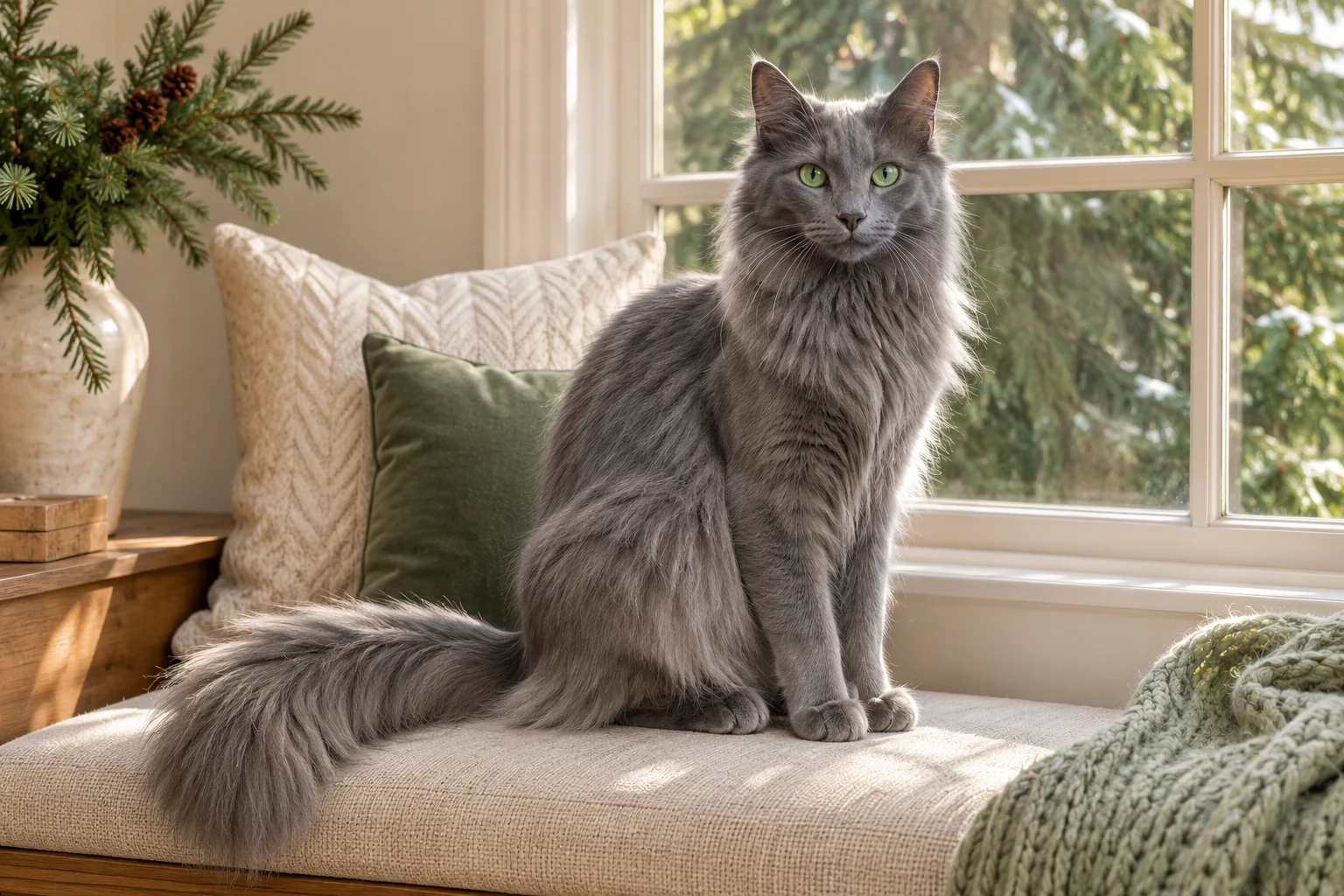
A blue, semi-longhaired cat with a silvery appearance, separate from Russian Blue.
- Adult weight
- Female: 8–11 lb; Male: 10–13 lbAdult reference weights; individual animals vary.
- Build
- Medium
Life with a Nebelung
- Company
- Attachment to familiar people and caution with strangers; allow unhurried introductions.
- Play & enrichment
- Playful despite a reserved manner; provide climbing, retrieval games and quiet observation points.
- Coat care
- Regular gentle combing helps prevent tangles in the semi-long coat.
Regular shedding is part of living with this coat.
Health to keep in mind
A Nebelung’s dense, semi-long coat is characteristic. Read the full Health guide.
Rescues & sheltersPrint or citeBreed articles
Read the complete profile and family fact sheet
Life with a Nebelung
Attachment to familiar people and caution with strangers; allow unhurried introductions.
Explore home life →Playful despite a reserved manner; provide climbing, retrieval games and quiet observation points.
Explore daily care →Regular gentle combing helps prevent tangles in the semi-long coat.
Explore daily care →Print or cite this breed
Nebelung family fact sheet
Breed-level references are a starting point. Ask about the individual animal’s routine and care needs.
- Build
- Medium
- Female
- 8–11 lb
- Male
- 10–13 lb
- Adult size
- Female: 8–11 lb. Male: 10–13 lb. Rounded adult reference weights; individual cats vary.
Company
Attachment to familiar people and caution with strangers; allow unhurried introductions.
Play & enrichment
Playful despite a reserved manner; provide climbing, retrieval games and quiet observation points.
Coat care
Regular gentle combing helps prevent tangles in the semi-long coat.
Everyday responsibilities
Plan food, supplies, routine care and veterinary visits. Agree who handles the everyday jobs and who covers absences.
Adult help
An adult should remain responsible for care, supervise children’s interactions and arrange help when needed.
My Breed Atlas. Nebelung breed profile. https://mybreedatlas.com/cats/breeds/nebelung
Read this profile’s sources →Adult ranges and source qualifications
- Build
- Medium
- Female
- 8–11 lb
- Male
- 10–13 lb
Reference ranges describe the breed, not a prediction for an individual.
Daily care
Play & enrichment
Playful despite a reserved manner; provide climbing, retrieval games and quiet observation points.
More about everyday care
Provide places to retreat, separated resources, chances to play and predictable interaction. These are feline needs, not breed compatibility scores.
Coat, grooming & daily care
Regular gentle combing helps prevent tangles in the semi-long coat.
Training & communication
Reward a behavior the cat chooses with something it values. Build tasks in small steps, including approaching a carrier or a grooming tool. Stop when the cat is frightened, unwell or in pain; ask your veterinarian about cooperative care.
Food, routine & costs
The everyday ownership plan
Planning for this breed
A predictable home and a private retreat may suit an individual who is wary of visitors.
Meals and body condition
Discuss portions and body condition with your veterinarian instead of using the registry weight range as a feeding target. Smaller meals and appropriate food puzzles can support natural feeding behavior. Give each cat a separate feeding station.
Time and costs
Before committing, budget for food, litter, equipment and continuing veterinary care. Agree who handles play, cleaning, grooming and care during absences. Obtain local estimates for the individual’s care instead of relying on an invented breed cost.
Individual variation
Temperament statements are registry tendencies, not guarantees or quiz scores. Evaluate the individual cat’s history, behavior, health and introductions.
Environment
Provide a secure retreat, separate food/water/toileting/resting/scratching resources, opportunities to play and express hunting behavior, predictable positive interaction and respect for scent. In multi-cat homes, provide genuine choices and enough resources for each cat.
Nutrition
Choose a complete, balanced life-stage diet and fresh water. Adjust portions using veterinary assessment of body condition, not a breed weight chart. Do not infer a need for raw or grain-free feeding from appearance or ancestry.
Ownership budget
Plan for daily care, veterinary visits, emergency costs and lifelong housing arrangements. Ask about documented health history and socialization rather than treating registry membership as a health guarantee.
Home life
Temperament & companionship
Attachment to familiar people and caution with strangers; allow unhurried introductions.
Home life & introductions
Prepare a quiet transition room with food, water, litter, hiding places and scratching options. Introduce resident cats gradually and proceed when both are comfortable. Breed reputation cannot establish compatibility with children, dogs or another cat.
Offer a quiet retreat and let the cat control its distance. Supervise children and introduce resident animals gradually; individual history matters more than a breed reputation.
Personality & care details
Personality & care profile
Breed tendencies vary by individual. Higher means more of the named tendency, not better.
What everyday life tends to involve
These notes describe a tendency for the breed. Every animal is an individual.
- Play
- Playful energy can last into later life: climbing, tricks, and sometimes a harness walk.
- Coat care
- Once a week or less is usually enough brushing.
- Loose hair
- Regular shedding is part of living with this coat.
- Company
- Many like to share the room without constant contact.
- Adult size
- Female: 8–11 lb. Male: 10–13 lb.
Rounded adult reference weights; individual cats vary.
- Time alone
- Long stretches alone are a poor fit. They want company nearby.
YOUR EVERYDAY LIFE
How could this breed fit your life?
See household examples or compare this breed with answers you chose to save. The examples show combinations where this breed appeared among the first five results. Other combinations can work too.
Saved matching preferences stay in this browser, never on your account. They expire after 30 days and are removed the next time this feature reads them. Health answers, children’s ages and free-text notes are not saved. This section does not reproduce those personal care notes.
Nebelung health
Grooming and weight
A Nebelung’s dense, semi-long coat is characteristic. Breed information reviewed here does not establish how often inherited disease occurs in Nebelungs.
Notice what the coat hides
If your cat stops grooming an area it used to reach or develops new mats over the back or hips, bring it up at an exam. Keep the cat’s recorded weights so gradual changes are easier to see.
Family history and screening
Ask for prior weights and examination dates, especially for adult cats. For a kitten, ask what illnesses have been diagnosed in older relatives rather than relying on a general statement that the breed is healthy.
Questions for your veterinarian
- Can we record weight and body condition now so I have a comparison for later?
Choosing a kitten? Ask to see both parents’ results, with the animal’s name and the date on each report. If you’re adopting an adult, ask which records come with that individual.
Health sources
Screening evidence and limits
No specific breed-level disease risk was established in the sources reviewed. That is not proof of absence. Request health and family records; ask a veterinarian which examinations or ancestry-informed tests are useful.
Preventive care
Arrange an individual veterinary prevention plan, including vaccination and parasite assessment. Prefer indoor living with enrichment or secure, supervised outdoor access over roaming. Request existing veterinary and screening records before bringing a cat home.
Screening limits
No evidence found is not evidence of no risk. A DNA result addresses its tested variant and cannot certify general health. Ask a veterinarian which examinations or tests fit the individual’s ancestry, family history and findings.
History & sources
Heritage & appearance
Meet the Nebelung
Adult ranges are reference examples, not targets or predictions for an individual cat.
Heritage & appearance
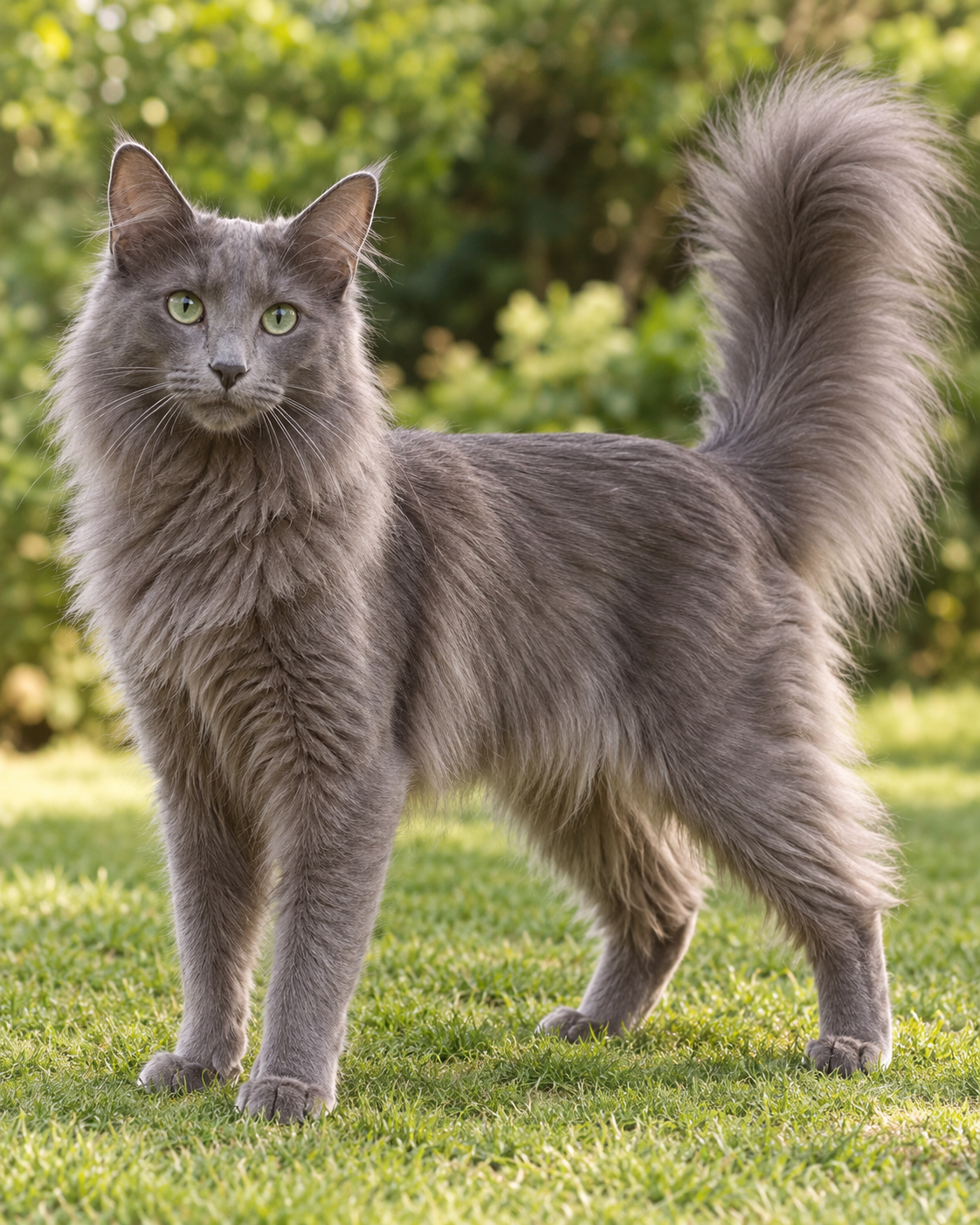
Cora Cobb developed the modern breed from blue longhaired foundation kittens in the United States in the 1980s.
Full breed details
- Adult weight
- Female: 8–11 lb; Male: 10–13 lb
- Reference lifespan
- TICA reports 11–16+ years; GCCF separately reports 15–18, showing registry estimates differ.
References & editorial notes
Adult-weight sources
Female: 8–11 lb; Male: 10–13 lb
direct: GCCF breed standard explicitly gives adult female 3.5-5 kg and adult male 4.5-6 kg; kg converted at 2.20462 and rounded.
- Using Positive Reinforcement to Train and Support Your Cat
- Making the Commitment to Adopt a Cat
- How to Feed a Cat
- Introducing a New Cat Into Your Home
- Meeting the Physical and Emotional Needs of Indoor Cats
- Cornell: Feeding Your Cat
- Cornell: What To Expect
- FelineVMA 2025: Meeting the Physical and Emotional Needs of Indoor Cats
- Cornell: Hypertrophic Cardiomyopathy
- UC Davis VGL: Sphynx and Devon Rex Congenital Myasthenic Syndrome
- TICA: Nebelung
- GCCF: Nebelung
- TICA Standing Rules Version C, 3 June 2026
- UC Davis VGL: Erythrocyte Pyruvate Kinase Deficiency
- Adult-weight reference
- Using Positive Reinforcement to Train and Support Your Cat Checked 2026-10-20.
- Making the Commitment to Adopt a Cat Checked 2026-10-20.
- How to Feed a Cat Checked 2026-10-20.
- Introducing a New Cat Into Your Home Checked 2026-10-20.
- Meeting the Physical and Emotional Needs of Indoor Cats Checked 2026-10-20.
- Cornell: Feeding Your Cat Checked 2026-10-20.
- Cornell: What To Expect Checked 2026-10-20.
- FelineVMA 2025: Meeting the Physical and Emotional Needs of Indoor Cats Checked 2026-10-20.
- Cornell: Hypertrophic Cardiomyopathy Checked 2026-10-20.
- UC Davis VGL: Sphynx and Devon Rex Congenital Myasthenic Syndrome Checked 2026-10-20.
- TICA: Nebelung Checked 2026-10-20.
- GCCF: Nebelung Checked 2026-10-20.
- TICA Standing Rules Version C, 3 June 2026 Checked 2026-10-20.
- UC Davis VGL: Erythrocyte Pyruvate Kinase Deficiency Checked 2026-10-20.
- Adult-weight reference
References
Breeders & rescues
Questions to bring
- What veterinary records and family health history are available?
- How does this individual cat’s coat and activity fit the care described here?
- Which screening findings and individual needs should I discuss with my veterinarian?